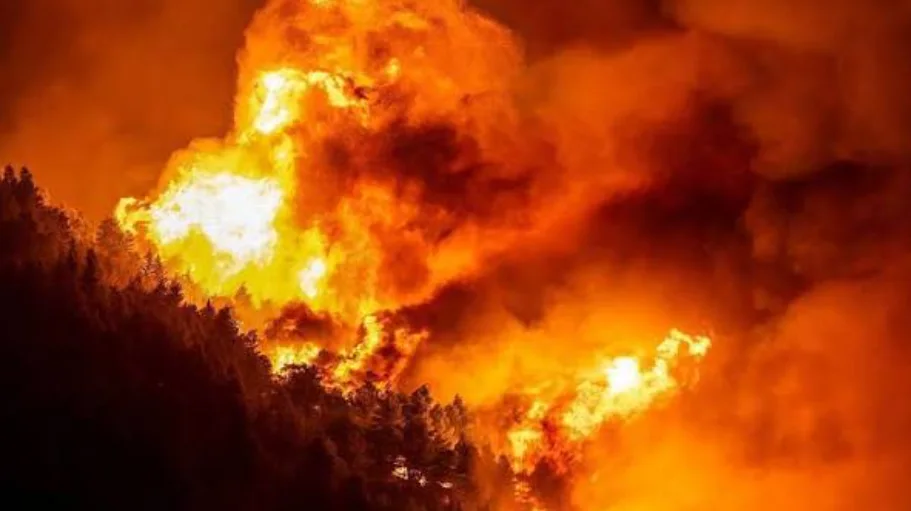
A frightening wildfire emergency unfolded across parts of southern Europe on 14 August 2026, as flames reached homes, tourist destinations and coastal communities, forcing residents and holidaymakers to abandon threatened areas.
One of the most serious situations developed along Croatia's Adriatic coast, where a wildfire swept through the area around Omiš and nearby settlements.
At least one person was killed and around 40 people were injured, according to authorities cited by Reuters. The fire damaged homes and forced hundreds of people from areas normally associated with beaches and summer tourism.
Flames reach homes during the night
The Croatian fire became particularly dangerous after spreading through populated areas overnight.
Rather than remaining confined to forests or remote vegetation, flames reached residential properties, creating an immediate threat to people sleeping or attempting to evacuate.
Firefighters, emergency personnel and local residents worked to protect buildings as the blaze advanced.
Images from the affected area showed the destructive aftermath, including burned vehicles and fire-damaged surroundings.
For tourists visiting Croatia during the peak European summer season, the emergency transformed coastal communities into evacuation zones.
Hundreds forced to evacuate
Authorities moved people away from threatened areas as firefighters attempted to prevent the flames from spreading further through communities.
The evacuation effort became especially significant because Croatia's coastline attracts large numbers of international visitors during August.
A rapidly moving wildfire in such an area presents additional difficulties: emergency authorities must protect local residents while also assisting visitors who may not know evacuation routes or speak the local language.
The danger was not limited to Croatia.
Greece and Montenegro battle fires
Serious wildfires were simultaneously affecting other parts of southern Europe.
In Greece, authorities were dealing with fires threatening communities and resort areas, while firefighters in Montenegro battled severe flames around Briska Gora mountain near Ulcinj.
Photographs from Montenegro showed firefighters confronting intense flames while residents attempted to protect homes with water hoses.
The simultaneous emergencies placed renewed attention on the vulnerability of Mediterranean countries during periods of extreme summer heat and dry vegetation.
Tourism faces an immediate shock
The location of the fires makes the crisis especially significant for Europe's tourism industry.
Croatia and Greece are among the continent's most popular summer destinations. During August, coastal towns can contain large populations of visitors staying in hotels, apartments, campsites and holiday homes.
When wildfire reaches those communities, authorities can suddenly face the challenge of evacuating thousands of people.
Road closures and smoke can further complicate departures, while firefighting aircraft and ground crews must work around populated areas.
The consequences can continue even after flames are extinguished as damaged accommodation, roads, electricity infrastructure and businesses struggle to reopen.
Why this is major breaking news
Wildfires are not unusual during European summers, but the events of 14 August 2026 became particularly serious because flames reached populated and heavily visited coastal areas.
A person has been killed, dozens have been injured, homes have burned and large numbers of residents and tourists have been forced to escape threatened communities in Croatia. Meanwhile, firefighters across several countries are confronting outbreaks at the same time.
The emergency also demonstrates how quickly a wildfire can shift from an environmental event into a humanitarian and economic crisis.
For the communities affected, however, the immediate priority is much simpler: protect lives, stop the flames from reaching more homes and get displaced residents and visitors to safety.