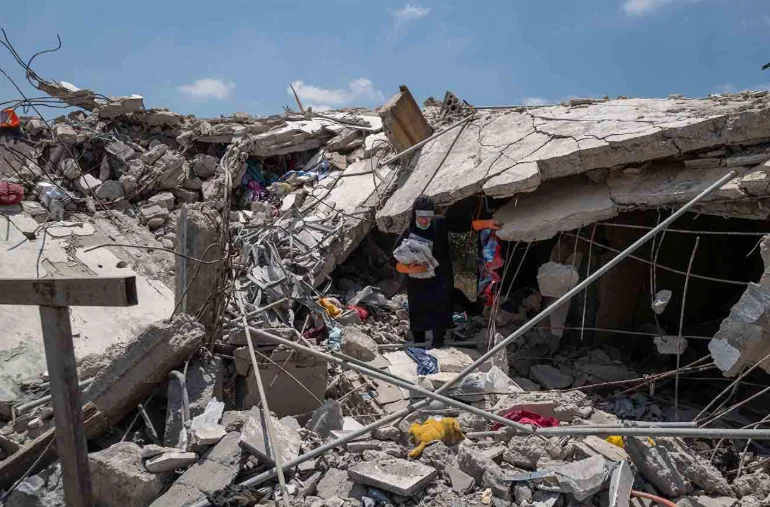
Southern Lebanon awoke to another deadly escalation on Saturday, 15 August 2026, after an airstrike struck a residential building in the town of Ansar, leaving seven people dead.
Lebanon's state-run National News Agency reported that the attack occurred around dawn. Emergency crews rushed to the scene as rescuers searched through the remains of the building for victims.
The strike immediately drew attention because of both its death toll and its timing. Lebanon has been navigating a fragile security environment following efforts to reduce fighting and establish a framework capable of preventing another major escalation.
Seven killed in a single strike
According to Lebanese authorities, seven people were killed when the building was hit.
Reports from the scene also indicated that people were injured, with rescue teams working through rubble before transporting casualties toward hospitals in the Nabatieh area.
The identities and circumstances of everyone killed were not immediately clear in the early reports.
That distinction is important. In the first hours after a military strike, casualty information can change rapidly, and claims about who was inside a targeted building require independent verification.
One of the deadliest recent attacks
Reuters described Saturday's strike as among the deadliest since Lebanon accepted a U.S.-mediated peace framework intended to stabilize the conflict.
That makes the incident particularly significant.
A single deadly strike does not automatically mean that wider conflict will intensify, but attacks producing substantial casualties can increase pressure on political leaders and armed groups and make existing diplomatic arrangements harder to sustain.
The danger is that retaliation could create another cycle of attacks.
Southern Lebanon remains vulnerable
Communities across southern Lebanon have endured repeated military operations and displacement during the wider regional conflict.
For residents, the consequences extend beyond the immediate danger from individual strikes.
Repeated attacks can damage homes, roads and other infrastructure while making it difficult for displaced families to decide whether returning home is safe.
Even when fighting decreases, uncertainty can continue for months as residents attempt to rebuild their lives while fearing another escalation.
The wider regional situation adds to the danger
Saturday's attack comes during an exceptionally volatile period across the Middle East.
On the same day, new security incidents were being reported elsewhere in the region, including an attack on a vessel in the Strait of Hormuz and a missile strike against Yemen's Mokha port.
These incidents are not necessarily directly connected, but together they illustrate the number of simultaneous flashpoints capable of producing wider instability.
That makes diplomatic efforts to prevent escalation increasingly important.
What happens next
The immediate focus in Ansar is on recovering victims, treating the injured and establishing precisely what happened.
Beyond the rescue operation, attention will turn toward whether Saturday's strike triggers a military or political response.
The greatest concern is escalation.
Lebanon's fragile security arrangements depend on preventing individual attacks from developing into a renewed cycle of strikes and retaliation.
Why this is major breaking news
Unlike older incidents receiving new casualty updates, this strike happened today, 15 August 2026. Reuters reported the attack within hours of it occurring.
Seven people have been killed in one early-morning strike, and the incident has arrived at a moment when regional tensions are already exceptionally high.
The critical question now is whether the attack remains an isolated escalation or becomes the event that puts an already fragile peace arrangement under even greater pressure.