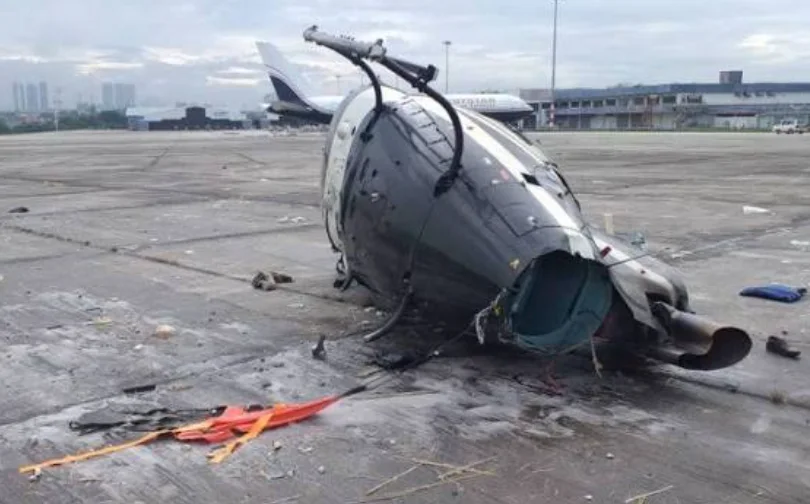
A helicopter emergency brought operations at one of Malaysia’s important airports to an abrupt halt on Saturday, 15 August 2026, after an aircraft caught fire on the ground.
The incident occurred at Sultan Abdul Aziz Shah Airport in Subang, near Kuala Lumpur, prompting firefighters and airport emergency teams to respond as flames engulfed the helicopter.
Initial information indicates that a minor explosion occurred before the fire, dramatically escalating what could otherwise have been a routine aviation incident.
Four people escape
Four people were associated with the helicopter at the time of the incident, and remarkably, all escaped without the disaster producing fatalities.
That outcome is particularly significant given the speed with which aviation fuel and other combustible materials can intensify a helicopter fire.
Emergency responders worked to contain the situation and prevent the flames from creating a larger danger within the airport environment.
Airport operations halted
The consequences quickly extended beyond the burning aircraft.
Authorities placed flights arriving at and departing from Sultan Abdul Aziz Shah Airport on hold while emergency operations continued.
Temporarily suspending airport movements is an important safety measure during an incident of this nature.
Fire, smoke, emergency vehicles and potentially hazardous debris can make parts of an airfield unsuitable for aircraft operations until authorities establish that the area is secure.
For passengers, however, that can mean delays, cancellations and disruptions extending beyond the airport where the emergency occurred.
What caused the explosion?
The critical unanswered question is what triggered the incident.
Early reports describe a minor explosion followed by the helicopter catching fire, but the precise technical cause had not been established in the immediate aftermath.
Investigators will need to examine the aircraft and available operational information before drawing conclusions.
Possible causes should not be assumed before that investigation is completed.
Aviation investigations can examine fuel systems, engines, electrical components, maintenance records and the sequence of events immediately preceding a fire.
A potentially catastrophic incident ends without deaths
Helicopter fires at airports carry obvious dangers.
Beyond the occupants themselves, an uncontrolled blaze can threaten ground crews, nearby aircraft and airport infrastructure. Fuel can also allow flames to spread rapidly if they are not contained.
The fact that all four people escaped therefore prevented today's incident from becoming a potentially much greater tragedy.
It also demonstrates the importance of rapid airport emergency response.
Why this is breaking news
Unlike several earlier stories that involved old events receiving new developments, the helicopter fire itself occurred today, 15 August 2026.
A helicopter experienced an explosion and caught fire at an operating airport, four people had to escape, and flight operations were suspended while emergency teams secured the scene.
The immediate danger appears to have been contained without loss of life.
Attention now turns to investigators, who must establish why the helicopter caught fire and whether the incident reveals any technical or operational safety problem requiring further action.