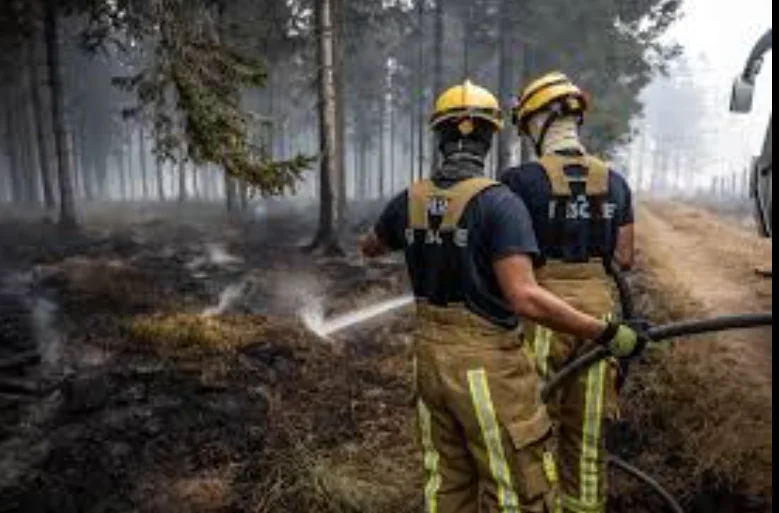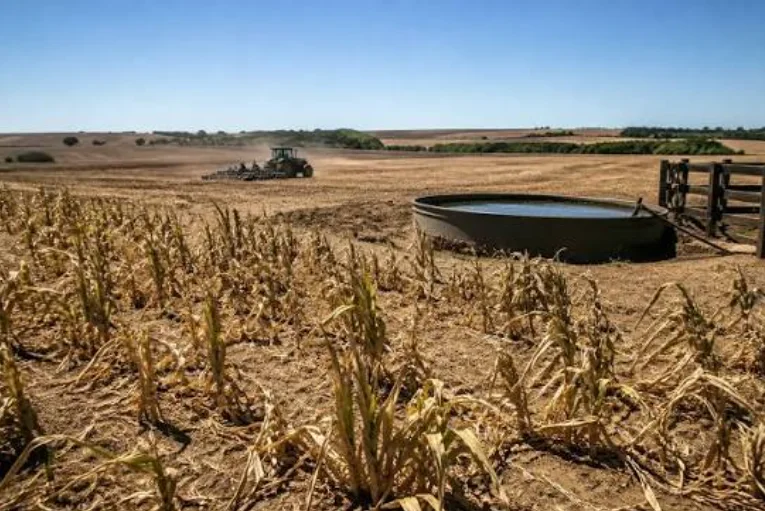
The British government has announced a major new financial intervention to support farmers struggling with severe drought conditions, as prolonged dry weather puts increasing pressure on agriculture and rural communities.
Prime Minister Andy Burnham announced on Saturday, 15 August 2026, that his government was authorising an additional £65 million—approximately $88 million—in support for farmers affected by the drought.
The decision represents a significant political response to a crisis that is moving beyond agriculture and becoming a broader test of how governments prepare for increasingly disruptive weather conditions.
£65 million in additional assistance
The newly announced funding is designed to provide additional support as farmers face difficult growing conditions and mounting financial pressure.
Drought can affect almost every part of agricultural production.
Crops may produce smaller harvests, grazing land can deteriorate and livestock farmers may be forced to purchase additional feed when grass growth becomes insufficient.
Water availability can become another serious problem.
When those pressures occur simultaneously, farms can experience significant increases in operating costs at the same time that production declines.
The British government is now attempting to provide additional financial protection against those pressures through the new £65 million package.
Food production becomes a political issue
Agricultural drought is not only a problem for farmers.
Lower production can eventually influence food supplies and prices.
If domestic harvests decline significantly, businesses may need to source more agricultural products from overseas. That can increase exposure to international commodity prices, transportation costs and currency movements.
Food security therefore becomes an increasingly important political issue when extreme weather persists.
The government must balance immediate assistance for producers with longer-term questions about how British agriculture can become more resilient.
Farmers face decisions that cannot wait
For agricultural businesses, weather emergencies operate on a different timetable from many other economic problems.
A farmer cannot simply postpone an entire growing season until conditions improve.
Decisions about planting, irrigation, livestock and harvesting must often be made immediately.
Severe drought can therefore create financial consequences lasting well beyond the period of dry weather itself.
A damaged harvest this year can reduce the money available to purchase seed, machinery or fertilizer for the following season.
Emergency support is intended partly to prevent temporary weather shocks from turning into longer-term farm failures.
Climate resilience moves higher on the agenda
The announcement also raises a larger policy question for Britain: how should agriculture prepare for future periods of extreme weather?
Emergency funding can provide immediate relief, but governments increasingly need longer-term strategies involving water storage, irrigation efficiency, soil management and drought-resistant farming methods.
Investment in agricultural technology could also become increasingly important.
Precision irrigation, improved weather forecasting and better monitoring of soil moisture can help farmers use limited water more efficiently.
The challenge is ensuring those technologies are affordable enough for farms of different sizes.
Government intervention could extend beyond farms
Severe drought can place pressure on water systems far beyond agricultural land.
Households, businesses, energy producers and ecosystems can all compete for limited water resources during prolonged dry periods.
Governments may eventually face difficult decisions about how available supplies should be distributed.
That makes drought management a political issue involving infrastructure, environmental protection, agriculture and household consumption simultaneously.
Why this matters
The importance of the 15 August announcement is that the British government is committing additional public money as drought conditions threaten one of the country's essential industries.
The £65 million package provides immediate assistance, but it also reflects a much larger challenge facing governments around the world: protecting food production as extreme weather increasingly disrupts traditional farming patterns.
For Britain's farmers, the immediate question is whether the new assistance arrives quickly enough to protect businesses already facing losses.
For the government, the challenge extends further.
If droughts become more frequent or severe, emergency funding alone will not be enough. Britain will need to decide how much it is prepared to invest in water infrastructure, climate-resilient agriculture and long-term food security before the next crisis arrives.