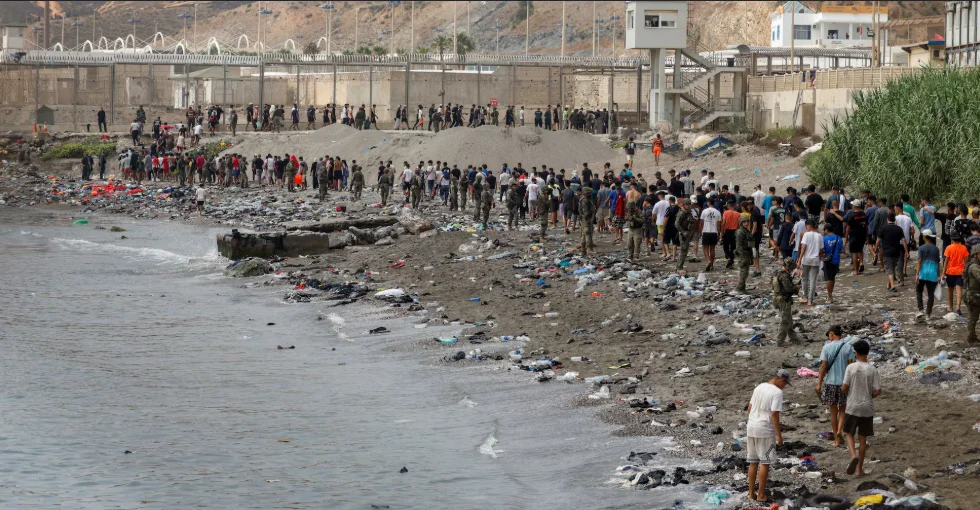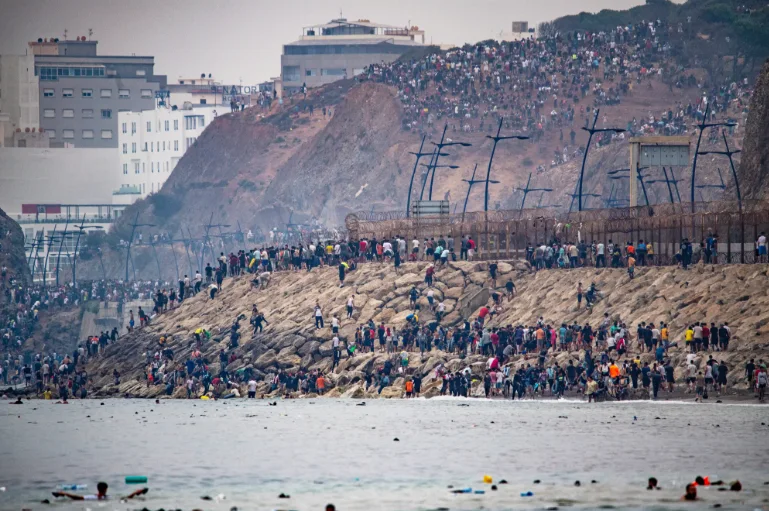
Spain's government is facing a new political challenge after border personnel accused central authorities of failing to respond adequately to warnings that preceded the enormous migration crisis in Ceuta, the Spanish territory on the North African coast.
In an investigation published on 15 August 2026, border workers and union representatives told Reuters that officials had received warnings in the weeks before more than 70,000 migrants surged toward Ceuta.
The allegations have shifted attention from the immediate border emergency toward a politically explosive question: could the crisis have been better prepared for or partly prevented?
Border workers say warning signs were visible
According to the workers interviewed, the number of people attempting to reach Ceuta by sea had been increasing before the mass movement.
They said authorities were warned that the situation could escalate, particularly as social-media activity encouraged more people to attempt the journey.
Those warnings are important because governments depend heavily on intelligence from personnel working directly at sensitive borders.
An unusual increase in arrivals does not necessarily guarantee that a mass crossing will follow. But when several warning signals appear simultaneously, authorities may have opportunities to reinforce personnel, strengthen infrastructure and coordinate emergency preparations.
The workers' allegations suggest they believe Madrid did not respond strongly enough before the situation deteriorated.
More than 70,000 people rushed toward Ceuta
The scale of the subsequent crisis was extraordinary.
More than 70,000 migrants moved toward the Spanish enclave during the mass rush, overwhelming border infrastructure and creating one of Europe's most serious recent migration emergencies.
The enormous numbers placed pressure on police, emergency workers, humanitarian services and accommodation facilities.
For Spain, the incident quickly became a national political problem.
For the European Union, it became another reminder of how rapidly migration pressure on one external frontier can develop into a wider European crisis.
Madrid's handling comes under scrutiny
The fresh political issue today is therefore not simply that the migration surge occurred.
It is whether Spain's central government had enough information beforehand to take stronger preventive measures.
Border workers told Reuters that the government took relatively little action despite their warnings.
The Spanish Interior Ministry has defended its handling of the situation, saying authorities assessed available measures and subsequently reinforced border infrastructure.
Determining whether the government's response was reasonable given the information available at the time will now become an important part of the political debate.
Migration could become an even bigger political issue
Immigration is already among Europe's most divisive political questions.
Governments are attempting to balance humanitarian obligations with public pressure for stronger control of external borders.
The Ceuta crisis could intensify that debate in Spain.
Opposition politicians may use questions surrounding the government's preparedness to demand investigations, explanations or changes in border policy.
The government, meanwhile, must demonstrate that it has learned from the crisis and can prevent another mass movement from overwhelming the enclave.
Morocco remains crucial
Spain cannot manage the Ceuta frontier entirely on its own.
Because the territory shares its land border with Morocco, cooperation between Madrid and Rabat is essential for controlling irregular migration.
That relationship can be politically complicated.
Morocco is simultaneously a major economic and security partner for Europe and an important transit country for migrants attempting to reach EU territory.
Spain therefore needs strong cooperation with Moroccan authorities while also ensuring its own border services have sufficient personnel and infrastructure.
A European problem, not only a Spanish one
Ceuta may be geographically located in North Africa, but politically it forms part of Spain and the European Union.
That gives developments there consequences for Brussels.
A major failure at Ceuta can influence European debates surrounding border protection, asylum rules, deportation arrangements and cooperation with neighbouring countries.
The incident could therefore strengthen demands for additional resources and coordination at the EU's external borders.
Why this matters
The fresh development on 15 August 2026 is the emergence of detailed allegations from border workers that Spain's central government received warnings before the enormous Ceuta migration rush but failed to take sufficient preventive action.
That turns a migration emergency into a question of political accountability.
Madrid must now explain what information it received, what measures were considered and whether authorities could realistically have prepared better.
The answer could influence not only Spain's domestic politics but Europe's wider migration debate, because the central question is one facing governments across the continent: how early must authorities act when warning signs suggest that pressure at Europe's borders is about to become a crisis?