India has declared that one of its longest-running internal security conflicts may be approaching a historic turning point.
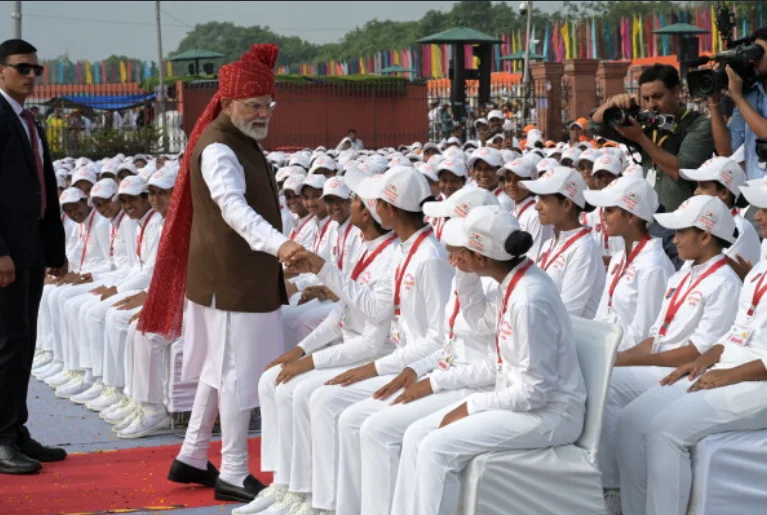
Speaking from the Red Fort in New Delhi on 15 August 2026, Prime Minister Narendra Modi said the country's armed Maoist insurgency is nearing its end after decades of violence between security forces and insurgents.
The declaration was delivered during Modi's Independence Day address, giving the announcement considerable political significance.
From a widespread rebellion to a shrinking battlefield
Maoist insurgents, commonly known as Naxalites, have operated for decades across parts of central and eastern India.
The movement has claimed to represent marginalized rural and tribal communities while seeking revolutionary political change through armed struggle.
At different points, insurgent activity extended across a broad geographical corridor spanning multiple Indian states.
The conflict has killed security personnel, insurgents and civilians while leaving some rural communities trapped between armed groups and government forces.
Modi's latest declaration suggests New Delhi now believes that military and security operations have substantially weakened the armed movement.
Modi says the armed threat is fading
The prime minister pointed to the shrinking geographical presence of Maoist insurgents as evidence that the government is close to defeating the rebellion.
However, his message did not suggest that India's security challenge is completely over.
Instead, Modi warned about people who continue providing ideological support to extremist movements even as their armed capabilities decline.
That distinction could become politically important.
A campaign against armed insurgents is primarily a security operation. Expanding the focus toward ideological supporters raises broader questions involving political speech, activism and how authorities distinguish legitimate dissent from support for violence.
Development will be critical after the fighting
Defeating an insurgency militarily does not automatically resolve the conditions that allowed it to survive.
Many areas historically affected by Maoist activity include communities struggling with poverty, limited infrastructure and restricted access to government services.
If security improves, New Delhi faces the challenge of ensuring that roads, schools, healthcare, communications and economic opportunities follow.
Without those improvements, communities that have endured decades of conflict could remain vulnerable to future unrest.
The next stage may therefore depend as much on development as security operations.
A major political message from the Red Fort
The setting of Modi's announcement matters.
India's Independence Day speech is traditionally used by the prime minister to outline major national priorities and present the government's assessment of the country's direction.
Declaring the Maoist insurgency close to defeat from the Red Fort allows Modi's government to portray the security campaign as a major national achievement.
It also signals confidence that a conflict once considered one of India's most serious internal security threats has been dramatically weakened.
But a new debate could emerge
Modi's warning about ideological supporters may prove more controversial than his declaration about armed insurgents.
India must now determine how far its security strategy extends beyond individuals directly participating in violence.
Human-rights advocates and opposition figures could scrutinize whether a broader campaign risks targeting academics, activists, journalists or political critics whose views may be unpopular but who are not involved in armed activity.
That makes legal safeguards increasingly important as the battlefield component of the conflict diminishes.
Why this matters
This is a fresh political declaration made by Modi today, 15 August 2026, rather than an older announcement receiving renewed coverage.
If India's assessment proves correct, the approaching defeat of the armed Maoist insurgency would represent a major historical development after decades of conflict.
But it would also create a new challenge.
India would have to transform former conflict zones through development while ensuring that the next stage of its security campaign does not blur the boundary between combating violent extremism and protecting legitimate political disagreement.
The insurgency may be approaching its military end, but the political task of securing a lasting peace could be only beginning.