What happened
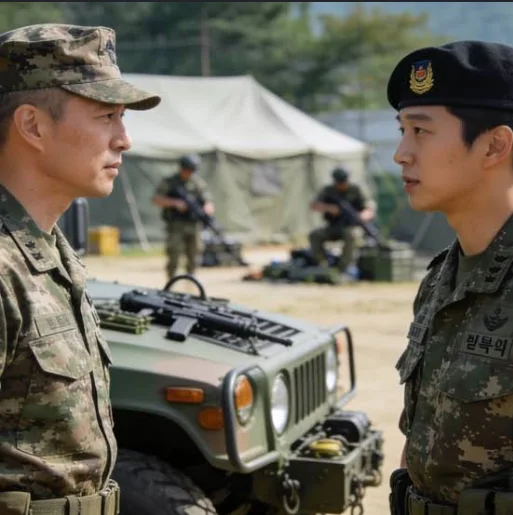
President Donald Trump announced on Monday, 17 August 2026, that the United States will significantly reduce its joint military exercises with South Korea.
The decision affects the Ulchi Freedom Shield exercises, an important component of military cooperation between Washington and Seoul.
Trump linked the decision partly to his relationship with North Korean leader Kim Jong Un and portrayed reducing the exercises as a measure that could improve security and lower tensions on the Korean Peninsula. He also said Kim had responded to his recent overtures.
The announcement immediately produced political resistance in Washington.
Lawmakers from both parties questioned whether the United States was giving North Korea a significant concession without receiving sufficient commitments in return.
Senate Armed Services Committee ranking Democrat Jack Reed described the decision as damaging to American security, while Republican Senator Thom Tillis warned that reducing pressure on Pyongyang could indirectly benefit other U.S. adversaries.
The dispute is particularly significant because the U.S.–South Korea alliance has existed for more than seven decades and remains a central pillar of American security strategy in East Asia.
Why this matters
Military exercises are more than symbolic demonstrations.
They allow American and South Korean forces to practice how they would communicate, coordinate troops, respond to attacks and operate together during a potential crisis.
Reducing those exercises could therefore have consequences for military readiness.
Supporters of Trump's approach may argue that decreasing large-scale exercises can lower tensions and create diplomatic space for negotiations with North Korea.
The administration's calculation appears to be that traditional pressure has not resolved the nuclear confrontation and that reducing military activity could encourage a different relationship with Pyongyang.
Critics see a different risk.
North Korea continues to possess nuclear weapons and ballistic missiles, while China and Russia are expanding their military influence across the region.
For those critics, weakening exercises without receiving substantial concessions from Pyongyang could reduce deterrence precisely when America's Asian alliances are becoming increasingly important.
Who is affected
South Korea faces the most immediate consequences.
Its defence strategy depends heavily on military cooperation with the United States, which maintains troops on the Korean Peninsula.
The U.S. military is also affected because joint exercises provide opportunities to test interoperability with South Korean forces.
North Korea could emerge as a major beneficiary if reduced exercises lower military pressure without requiring Pyongyang to make comparable concessions.
Japan will be watching closely as well. Tokyo relies on the broader American security architecture in East Asia and faces its own concerns regarding North Korean missiles and China's expanding military capabilities.
China and Russia also have reasons to follow the dispute closely because any weakening of coordination among U.S. allies could alter the strategic balance across Northeast Asia.
But the political consequences extend directly into Washington.
Republicans and Democrats rarely agree on major questions involving Trump. Bipartisan criticism of this decision therefore shows how deeply established support for the South Korean alliance remains inside Congress.
BoonVerse Analysis
The central question isn't whether reducing military exercises is automatically good or bad.
It is:
What does the United States receive in return?
Diplomacy often involves concessions.
Reducing exercises could be strategically valuable if it leads North Korea toward meaningful negotiations, reduced military provocations or limitations on its nuclear programme.
But unilateral concessions become much harder to defend when the opposing side does not make comparable moves.
That is why today's announcement could become an important test of Trump's personal approach to foreign policy.
Trump has repeatedly placed considerable emphasis on direct relationships between leaders. His comments today again highlighted his relationship with Kim Jong Un.
Traditional American security policy, however, relies heavily on institutional alliances.
That creates two competing approaches:
Personal diplomacy: reduce tensions through leader-to-leader relationships and unconventional negotiations.
Alliance deterrence: maintain military readiness so adversaries understand that attacking an ally would carry overwhelming consequences.
The most successful strategy could potentially combine both.
But reducing one before achieving progress with the other carries risk.
There is another factor making today's decision especially significant: America's military resources are under pressure in multiple regions simultaneously.
Washington is managing security commitments in Asia while also confronting an increasingly complicated Middle Eastern military environment.
The United States therefore faces a strategic problem larger than Korea.
How many major security commitments can America sustain simultaneously—and which regions receive priority when military resources become stretched?
Today's decision suggests that question is moving rapidly from theoretical debate into actual policy.
What happens next
The Pentagon must now translate Trump's directive into operational changes to the U.S.–South Korea exercise programme.
The scale of those reductions will matter.
A limited adjustment could preserve much of the alliance's training capability while lowering the political profile of the exercises.
A deeper reduction could generate stronger resistance from military officials, Seoul and members of Congress concerned about readiness.
The next move from North Korea may be even more important.
If Pyongyang responds with negotiations or reciprocal military restraint, Trump could argue that his unconventional strategy has opened a diplomatic opportunity.
If North Korea continues weapons development or military provocations while benefiting from reduced allied exercises, critics will argue Washington surrendered leverage without receiving anything meaningful in exchange.
Congressional reaction should also be watched closely.
Today's bipartisan criticism suggests lawmakers may push the administration for explanations about the strategic justification for the change and its implications for American forces in Asia.
The political battle therefore extends beyond one military exercise.
It raises a much larger question about America's future role in Asia:
Will Washington continue relying primarily on the alliances that shaped regional security for decades—or is Trump beginning to replace parts of that system with direct diplomacy and dramatically different relationships with America's adversaries?
The answer could reshape U.S. foreign policy long after today's announcement.
Sources
The Associated Press reported the decision today, 17 August 2026, including Trump's order to significantly reduce the exercises and the political reaction in Washington.
Additional reporting documents the bipartisan congressional criticism, the importance of the 73-year U.S.–South Korea alliance and concerns about potential benefits for North Korea, China and Russia. The latest reporting also records Trump's statement that Kim Jong Un had responded to his overtures.