What happened
French Prime Minister Sébastien Lecornu announced a package of emergency measures on Monday, 17 August 2026, aimed at helping communities recover from the enormous wildfires that devastated southwestern France.
At the centre of the government's response is €12 million in immediate financial assistance for local authorities in the hardest-hit areas.
Of that amount, approximately €10 million will go to Gironde and €2 million to Landes, providing local governments with funding to begin recovery projects without waiting for a much longer reconstruction process.
The government is also moving to accelerate the rebuilding of homes.
Lecornu said building permits for the equivalent reconstruction of properties destroyed by the fires should be issued within one month — and potentially even faster.
Businesses are receiving help as well.
The prime minister announced tax relief for companies affected by the fires, with the tourism industry among the sectors facing serious economic disruption. Businesses of different sizes have suffered as evacuations, destroyed infrastructure and reduced visitor activity damaged local economies.
The government also plans to assist displaced residents with rehousing and intervene where insurance companies unnecessarily delay compensation payments.
The scale of the disaster explains the urgency.
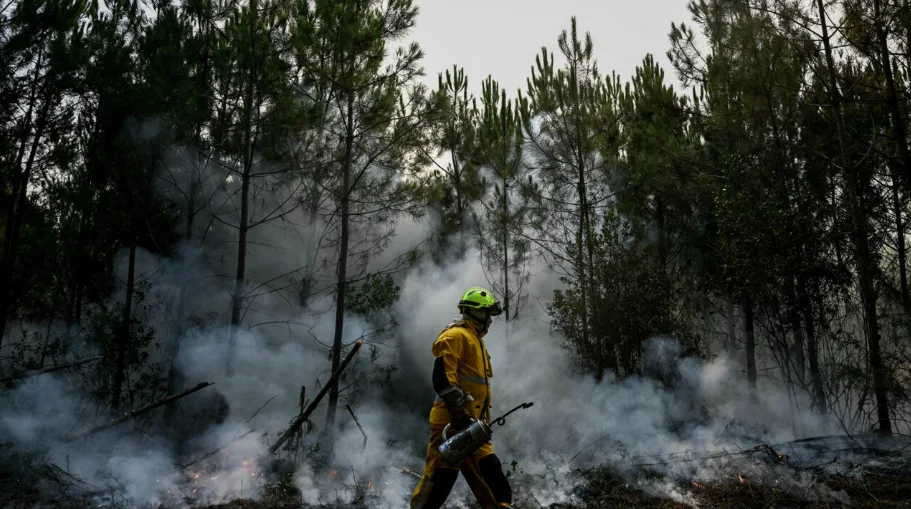
The enormous wildfire in southwestern France burned tens of thousands of hectares, destroyed hundreds of homes and forced more than 220,000 residents and tourists to evacuate.
But Lecornu's visit also exposed deep public anger.
Around 200 people gathered in Le Porge, one of the badly affected communities, where 183 homes were destroyed. Residents jeered and whistled as the prime minister arrived, with some accusing authorities of failing to give affected communities sufficient attention.
The government's reconstruction announcement therefore arrived amid two simultaneous crises:
the physical challenge of rebuilding communities and the political challenge of rebuilding public trust.
Why this matters
France is no longer dealing only with a wildfire emergency.
It is confronting the enormous bill that arrives after the flames disappear.
Homes need rebuilding.
Families need temporary accommodation.
Businesses need customers.
Local governments need money.
Infrastructure must be repaired.
Insurance claims need processing.
And damaged communities must determine whether rebuilding in exactly the same locations remains safe as extreme weather risks intensify.
This transforms a natural disaster into a major government-policy challenge.
The €12 million announced today is designed primarily to allow local authorities to begin acting immediately.
But reconstruction could ultimately require much more investment.
The disaster has also revived questions about France's preparedness for increasingly severe wildfires.
The fires have already increased political pressure surrounding civil-protection resources. Lecornu's government has revived plans to modernize France's civil-protection services, with legislation potentially heading to parliament in the autumn.
That could make today's reconstruction package only the first stage of a much broader political response.
Who is affected
Families who lost their homes are the most immediately affected.
For them, faster building permits could determine whether rebuilding takes months or becomes trapped in lengthy administrative procedures.
The government's promise to assist with insurance disputes could also become important for households waiting for compensation.
Local businesses face a different crisis.
Tourism-dependent companies can lose enormous amounts of revenue even when their buildings survive.
Visitors cancel trips.
Hotels lose bookings.
Restaurants lose customers.
Shops lose foot traffic.
Local workers can consequently lose income.
That explains why the government is combining reconstruction spending with tax and social-contribution relief for affected companies.
Local governments in Gironde and Landes will receive the €12 million emergency allocation and carry significant responsibility for translating national assistance into actual reconstruction projects.
The French government itself is politically exposed.
Residents who believe authorities failed them during the emergency are unlikely to judge the government only by what happened during the fires.
They will also judge how quickly normal life returns.
BoonVerse Analysis
The most important number in today's announcement may initially appear to be:
€12 million.
But another number could ultimately matter more:
one month.
That is the timeframe Lecornu has given for issuing building permits for equivalent reconstruction — potentially even sooner.
Why does that matter?
Because disaster recovery can fail even when governments provide money.
A family may receive insurance compensation but still wait months for permission to rebuild.
A business may have financing but remain unable to reopen.
A municipality may receive government funding while reconstruction projects remain trapped in administrative procedures.
France appears to be attacking that problem by combining money with administrative acceleration.
That could prove more important than the headline financial package.
But today's hostile reception for Lecornu reveals another problem that money cannot automatically solve.
Trust.
When approximately 200 residents gather to protest during a prime ministerial visit, reconstruction has already become political.
Residents will compare what government officials promise with what actually happens.
How quickly are families rehoused?
How quickly do insurance companies pay?
When does construction begin?
Which communities receive money first?
Do damaged businesses survive?
Those questions will determine whether today's announcement is remembered as the beginning of an effective recovery or simply another government promise made during a crisis.
There is also a much larger issue.
Europe's extreme-weather disasters are increasingly becoming fiscal and political events.
Every enormous wildfire creates costs extending far beyond firefighting.
Governments pay for emergency operations.
Then comes rehousing.
Then reconstruction.
Then business assistance.
Then infrastructure repair.
Then investments intended to prevent the next disaster.
The economic cost therefore continues long after television images of flames disappear.
France's experience offers a warning for governments across Europe:
Climate resilience is becoming part of national economic and political planning, not simply environmental policy.
What happens next
The first test will be whether France meets its reconstruction timetable.
Authorities are expected to accelerate permits for rebuilding homes destroyed in the fires, with Lecornu targeting decisions within approximately one month or faster for equivalent reconstruction.
Local authorities in Gironde and Landes will also begin deploying the €12 million in emergency government assistance.
Businesses will look for details about accessing tax and social-contribution relief.
Affected families will watch whether government intervention actually accelerates insurance payments and rehousing.
But Paris is already looking beyond reconstruction.
The wildfire crisis has revived government work on modernizing France's civil-protection system, and legislation could be presented to parliament in the autumn.
Lecornu has also warned about another potential danger.
After such extensive wildfire damage, authorities are preparing for increased flood risks during autumn and winter, because burned landscapes can behave differently when heavy rainfall arrives.
France could therefore move rapidly from fighting fires to preparing for another climate-related emergency.
That makes the political test much larger than €12 million.
The real question is whether France can build a disaster-response system capable not only of extinguishing the next fire
but of helping entire communities recover faster when extreme events become increasingly difficult to avoid.
Sources
French government announcements through Prime Minister Sébastien Lecornu — 17 August 2026: Today's measures include €12 million for affected local authorities, accelerated reconstruction, support for rehousing and relief for businesses.
Current reconstruction measures: The government says equivalent rebuilding permits should be processed within approximately one month or faster, while €10 million of the emergency funding is intended for Gironde and €2 million for Landes.
Civil-protection policy: France is also reviving plans to modernize its civil-protection system following criticism surrounding this summer's fires, with possible legislation in the autumn.