What happened
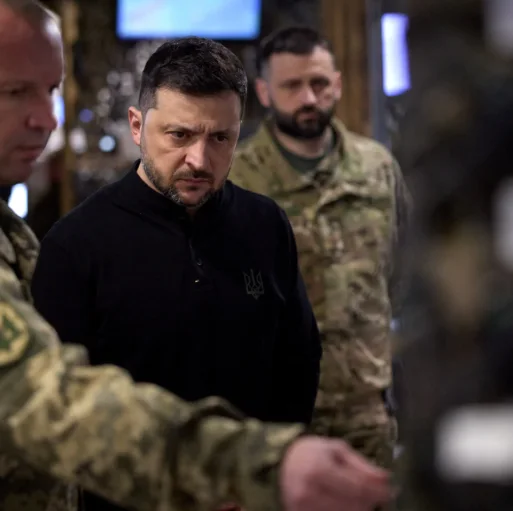
Ukrainian President Volodymyr Zelenskyy announced new organizational and resource decisions for the country's armed forces on Monday, 17 August 2026, following a meeting with military commanders and Ukraine's defence minister.
The central subject of the meeting was the situation on the front line.
Zelenskyy said Ukrainian officials had identified additional organizational decisions and resources required to strengthen forces operating in three strategically important areas:
Slovyansk, Kostiantynivka and Pokrovsk.
But the announcement went beyond deploying additional resources.
Zelenskyy said experienced commanders need greater ability to act and announced that decisions will be taken at the level of corps and groups of forces.
That indicates Kyiv is looking at how command authority itself operates on the battlefield, not simply how many soldiers or weapons are available.
The Ukrainian president did not publicly disclose every operational detail — unsurprising given the military sensitivity of the information — but the announcement clearly links organizational changes with strengthening units in some of the most important sections of the eastern front.
The decision also follows months of Ukrainian efforts to make its defence increasingly technology-driven.
On 14 August, Zelenskyy said decisions taken since the previous autumn had allowed Ukraine to move toward a significantly more technologically advanced defence during winter and spring. He also said Ukraine was expanding its mid-range strikes and implementing its long-range pressure strategy against Russia.
Why this matters
Military effectiveness is not determined only by the number of soldiers, drones, artillery pieces or missiles available.
Command structure matters enormously.
Modern warfare moves extremely quickly.
Drone reconnaissance can identify a target within minutes.
Electronic warfare can suddenly disrupt communications.
Enemy forces can exploit a weak section of the front before senior headquarters has time to react.
Commanders therefore need enough authority to make rapid battlefield decisions.
Zelenskyy's emphasis on giving experienced commanders greater room to act suggests Ukraine wants to reduce the gap between what soldiers observe on the battlefield and how quickly commanders can respond.
The locations mentioned are also important.
Pokrovsk and Kostiantynivka are central to the wider battle for eastern Ukraine, while Slovyansk remains one of the most strategically significant Ukrainian-held cities in the Donetsk region.
Strengthening forces across these areas therefore carries implications beyond individual towns.
The battle is about Ukraine's ability to maintain a defensive system across a much larger section of the eastern front.
Who is affected
Ukrainian front-line soldiers will be affected most directly.
Changes in command structures can influence everything from tactical decisions and reinforcement requests to drone deployment, logistics and coordination between different formations.
Senior and mid-level Ukrainian commanders could gain greater responsibility.
Zelenskyy's statement specifically emphasised experienced commanders having more opportunities to act, suggesting Kyiv wants battlefield experience to play a greater role in operational decision-making.
Residents of eastern Ukrainian communities also have an enormous stake in the changes.
Slovyansk, Kostiantynivka and Pokrovsk sit within an area that has endured intense military pressure, displacement and infrastructure destruction during the war.
Ukraine's ability to maintain its defensive positions directly affects communities further behind the current front.
Russia's military planners will also have to assess the consequences.
If Ukraine succeeds in making battlefield command faster and more flexible, Russian forces could encounter Ukrainian units capable of responding more quickly to breakthroughs, assaults and changing battlefield conditions.
Ukraine's international partners are another important group.
European governments have invested heavily in Ukraine's defence.
For example, Sweden reported that by 12 August 2026 it had provided approximately SEK 156 billion in military and civilian support to Ukraine since Russia's full-scale invasion, including roughly SEK 128 billion in military assistance.
How effectively Ukraine converts Western equipment and financing into battlefield capability therefore matters well beyond Kyiv.
BoonVerse Analysis
The most interesting part of Zelenskyy's announcement is not simply that Ukraine is sending more resources toward difficult sections of the front.
Ukraine has reinforced threatened positions many times during the war.
The more important phrase is:
experienced commanders need greater capabilities to act.
That points toward one of the least visible but most important parts of warfare — decision-making speed.
Imagine two armies possessing similar drones, artillery and manpower.
One requires battlefield information to move through several layers of command before action is approved.
The other allows experienced commanders closer to the battlefield to make important decisions immediately.
The second force can potentially identify a threat, reposition troops and attack a target before the first has finished communicating upward.
In a drone-dominated battlefield, minutes can matter.
Ukraine appears to recognise this.
There is also a broader transformation taking place.
Ukraine has increasingly attempted to compensate for Russia's advantages in manpower and resources through technology, drones, long-range strikes, battlefield intelligence and organizational adaptation.
Zelenskyy said on 14 August that Ukraine had shifted toward a significantly more technologically advanced defence during the previous winter and spring.
Today's command announcement can be viewed as another part of the same transformation.
Technology alone does not create battlefield advantage.
A drone can detect an advancing formation.
But someone still needs authority to respond.
A reconnaissance unit can identify a valuable target.
But artillery or strike drones must receive that information quickly enough to attack it.
A commander can identify a vulnerable position.
But reinforcements must arrive before the enemy exploits it.
That means the next stage of military modernization is not simply about better weapons.
It is about connecting intelligence, weapons and commanders into a system capable of making decisions faster than the opponent.
If today's changes achieve that, their battlefield impact could become considerably larger than the announcement initially suggests.
What happens next
The most immediate development will be implementation of the organizational decisions announced by Zelenskyy.
The president specifically indicated that further decisions will come at the corps and groups-of-forces level, meaning attention will turn toward how command responsibilities are adjusted in practice.
Additional resources are also expected to strengthen Ukrainian units operating around Slovyansk, Kostiantynivka and Pokrovsk.
The exact composition of those resources may remain undisclosed for operational-security reasons.
The battlefield will ultimately provide the most important measurement.
If Ukraine can improve coordination, shorten decision-making chains and strengthen units in threatened sectors, the changes could help stabilize parts of the front.
But command reforms cannot eliminate the wider pressures Ukraine faces.
Kyiv still requires ammunition, drones, air defence, personnel, financing and continued military assistance from European and other international partners.
The strategic question is therefore whether Ukraine can combine those resources with a more flexible command structure.
If it can, today's announcement could represent more than another military reshuffle.
It could mark another step in Ukraine's attempt to build a faster, more decentralized and increasingly technology-driven military while the war is still being fought.
Sources
Office of the President of Ukraine — 17 August 2026: The official presidential announcement confirms the military meeting, additional organizational decisions, resources for the Slovyansk, Kostiantynivka and Pokrovsk sectors, and planned decisions involving corps and groups of forces.
Office of the President of Ukraine — official website
Government of Sweden — Ukraine Support: Official Swedish government figures show approximately SEK 156 billion in Swedish military and civilian support for Ukraine as of 12 August 2026.