What happened
Slovak Prime Minister Robert Fico announced on Monday, 17 August 2026, that his government wants to move quickly to acquire Czech energy group ČEZ’s stake in the company responsible for preparing Slovakia’s proposed new nuclear power plant.
The company at the centre of the plan is Jadrová energetická spoločnosť Slovenska (JESS).
Slovakia currently owns the majority of JESS through the state-controlled company JAVYS, while Czech energy giant ČEZ holds the remaining stake.
Fico said the Slovak government wants to purchase ČEZ’s interest in September 2026, following previous delays in completing the transaction.
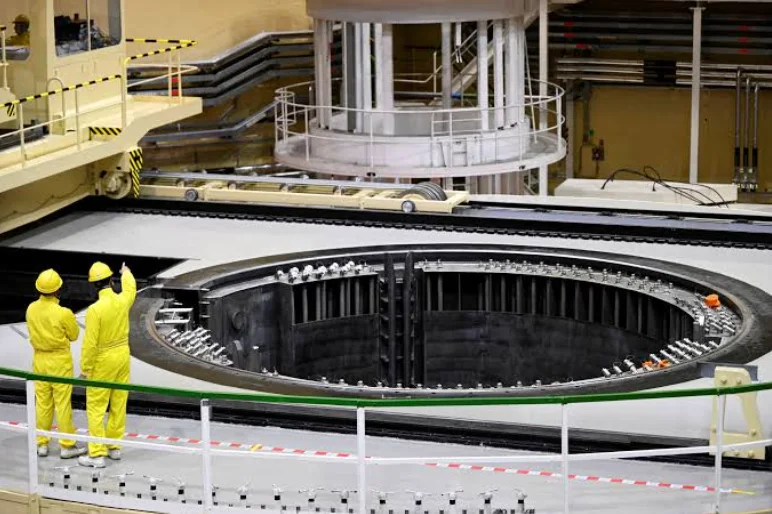
The announcement is significant because JESS is preparing one of Slovakia’s most important future energy projects: a new nuclear power facility planned at Jaslovské Bohunice.
Fico also criticised the Slovak Ministry of Economy over the pace at which the issue had been handled and indicated that the Government Office would become more directly involved in moving the process forward.
That transforms the issue from a corporate share transaction into a clear government priority.
The message from Bratislava is increasingly straightforward:
Slovakia wants greater national control over the company preparing its next generation of nuclear electricity.
Why this matters
Energy security has become one of Europe's biggest political questions.
Russia's war against Ukraine, changes in Russian energy supplies, volatile electricity markets and Europe's transition away from fossil fuels have forced governments to reconsider where their future electricity will come from.
Slovakia already depends heavily on nuclear power.
Building another major reactor could help the country maintain a stable source of electricity for decades while reducing dependence on imported fossil fuels.
But ownership matters.
If Slovakia acquires ČEZ’s stake in JESS, the state would gain greater control over decisions surrounding development of the proposed plant.
That could influence financing, construction planning, technology selection and future partnerships.
The project also arrives as nuclear energy experiences renewed political interest across Europe.
Countries are trying to solve a difficult energy equation:
Electricity demand is expected to grow, emissions must fall, and power systems still need to operate when the wind is weak or the sun is not shining.
Nuclear power offers large quantities of low-carbon electricity that can operate continuously.
But reactors are extremely expensive, require long construction periods and can expose governments to enormous financial risks when projects run over budget or behind schedule.
Slovakia is therefore not simply deciding whether it wants more nuclear electricity.
It is deciding how much responsibility the state itself should assume for delivering it.
Who is affected
Slovak electricity consumers have perhaps the largest long-term stake.
A successful new nuclear project could provide Slovakia with substantial domestic generating capacity for decades.
But large nuclear projects also require enormous investment, meaning financing decisions could ultimately affect taxpayers, electricity markets or both.
The Slovak government would assume greater strategic responsibility if it gains complete control of JESS.
Ownership gives governments greater authority.
It also gives them greater responsibility when costs rise or deadlines slip.
ČEZ and the Czech Republic are directly involved because the proposed September transaction would end ČEZ's ownership position in JESS if completed.
Slovakia's industrial sector could also benefit.
Large manufacturers need reliable electricity, and long-term energy availability increasingly influences where companies locate factories and other energy-intensive operations.
Construction of a major nuclear plant could additionally create opportunities for engineering companies, construction businesses and specialized suppliers.
The implications extend beyond Slovakia.
Central Europe's electricity market is highly interconnected, meaning a large new generating facility could eventually influence cross-border power flows and regional energy security.
BoonVerse Analysis
The most important part of today's announcement is not the nuclear reactor itself.
It is the word:
control.
Energy infrastructure is becoming strategic infrastructure again.
For years, European energy policy concentrated heavily on competition, interconnected markets and decarbonisation.
Then Europe's geopolitical environment changed.
Russia invaded Ukraine.
Gas supplies became a national-security concern.
Electricity prices surged.
Governments discovered that energy independence is not an abstract political slogan when factories, households and entire economies depend on reliable supplies.
Slovakia's push to acquire ČEZ’s stake should be viewed within that larger transformation.
If Bratislava gains full control of the company developing the project, the government will have greater freedom to determine how one of the country's most important future energy assets develops.
But greater control comes with a hidden cost:
greater risk.
Nuclear projects are among the most complicated infrastructure investments governments can undertake.
A reactor can require billions of euros.
Construction can last many years.
Regulatory requirements are enormous.
Supply chains are specialized.
Financing costs can rise dramatically when projects are delayed.
That creates a fascinating political trade-off.
Slovakia wants energy sovereignty.
But achieving that sovereignty may require the state to accept enormous financial responsibility.
There is another reason today's announcement deserves attention.
Europe's electricity demand could rise substantially as economies electrify transport and heating while simultaneously expanding data centres, advanced manufacturing and other electricity-intensive industries.
That means countries are increasingly competing not simply for energy today —
but for generating capacity that will still be operating in the 2040s, 2050s and beyond.
A nuclear reactor built at Bohunice would therefore represent a decision whose consequences could outlive several Slovak governments.
The politicians making the decisions today may be gone long before the plant reaches the end of its operating life.
That makes the project much bigger than Robert Fico or the current government.
It is effectively a bet on what Slovakia's economy and Europe's electricity system will look like several decades from now.
What happens next
September is now the first major date to watch.
Fico says Slovakia wants to acquire ČEZ’s interest in JESS during September 2026, following earlier delays.
Attention will therefore turn toward whether Bratislava and ČEZ can finalize the transaction on that timetable.
The Government Office's greater involvement will also be important.
Fico's criticism of the Economy Ministry suggests the prime minister wants the project moved forward more aggressively than before.
But acquiring the company stake is only one step.
The much larger challenge will be moving the proposed nuclear project from planning toward construction.
That will require decisions covering financing, reactor technology, regulatory approvals, suppliers, construction schedules and potentially international partners.
Every one of those decisions could involve billions of euros and years of preparation.
Slovakia will also need to demonstrate that the project makes economic sense compared with alternative combinations of renewable generation, storage, imports and other power sources.
The September acquisition could therefore mark an important political turning point.
If Slovakia successfully takes greater control of JESS, the government will move closer to controlling the vehicle responsible for delivering one of the country's biggest infrastructure ambitions.
But ownership is the easy part compared with what follows.
The real test will be whether Slovakia can transform political control of a nuclear project into an affordable power station that actually produces electricity.
Sources
Current announcement — 17 August 2026: Prime Minister Robert Fico said Slovakia intends to acquire ČEZ’s stake in JESS in September and announced stronger involvement by the Government Office after criticizing the Economy Ministry's handling of the process.
Council of the European Union: Official EU material provides wider context on the European Union's role in trade and strategic economic policy as European governments increasingly focus on energy security and major infrastructure.