What happened
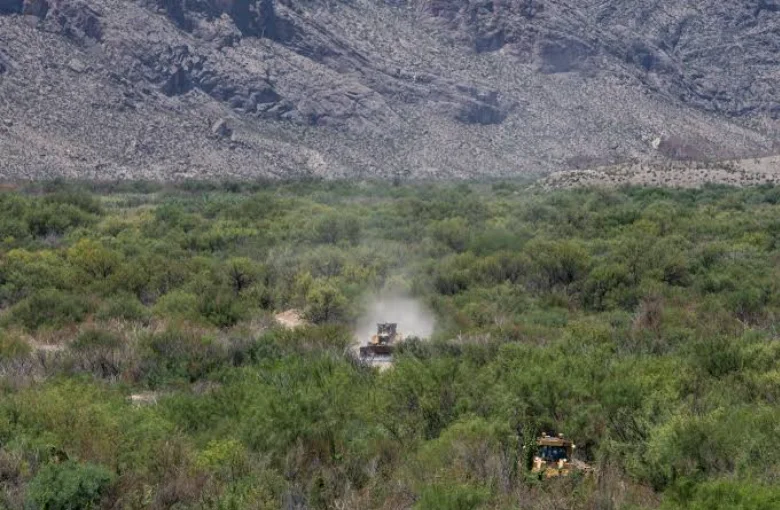
The Trump administration announced on Monday, 17 August 2026, that it is temporarily pausing construction connected to a controversial border-security project in Big Bend National Park, Texas.
The development is politically significant because Big Bend is not an ordinary stretch of the U.S.-Mexico border. It is a federally protected national park containing desert, mountain and river ecosystems along the Rio Grande.
The project had generated opposition over the potential consequences of installing new border infrastructure in the protected landscape.
The administration has made stronger immigration enforcement and tighter control of the southern border central parts of its political programme. A pause inside a national park therefore highlights the difficult trade-offs that can emerge when border-security objectives collide with environmental protection and management of federal lands.
Importantly, the announcement is a temporary pause, not necessarily a permanent cancellation.
Why this matters
Immigration and border security remain among the most politically divisive issues in the United States ahead of the November 2026 midterm elections.
Every major decision involving border infrastructure can consequently become part of a much larger national political battle.
Supporters of stronger border barriers argue that the federal government must have sufficient physical infrastructure, surveillance and personnel to control illegal crossings and smuggling.
Environmental advocates and other opponents counter that border construction can damage sensitive habitats and protected landscapes, particularly when projects pass through national parks and conservation areas.
Big Bend makes that conflict unusually visible.
The park stretches along the U.S.-Mexico border, meaning two legitimate government responsibilities—protecting an international boundary and protecting federal conservation land—meet in the same physical location.
The administration's decision suggests that even an aggressive border-security strategy can encounter practical, environmental and political constraints.
Who is affected
Communities around Big Bend and West Texas will be among those watching most closely. Border infrastructure can affect local access, tourism, construction activity and surrounding land.
National Park Service officials and conservation organizations have a direct interest because permanent construction could alter protected landscapes and wildlife habitats.
Border-security agencies are affected because a pause can force officials to reconsider how security objectives are achieved in the area.
The decision also matters politically to President Donald Trump and Republican candidates campaigning on tougher immigration enforcement ahead of the midterms.
Democrats and environmental groups, meanwhile, may use the controversy to challenge the administration's approach to federal lands and immigration enforcement.
BoonVerse Analysis
The deeper political story is not simply whether another section of border infrastructure gets built.
It is about what happens when two powerful political promises collide.
The Trump administration has strongly emphasized border security.
But the United States also has longstanding laws, institutions and public expectations designed to protect national parks.
Big Bend forces those priorities into the same debate.
That makes today's pause politically interesting.
Stopping construction temporarily could expose the administration to criticism from supporters who want border projects completed quickly.
Continuing without modification, however, could intensify opposition from conservationists, local stakeholders and Americans who believe national parks deserve exceptional protection.
The administration therefore faces a difficult balancing act.
There is also a wider lesson about presidential power.
National political promises can sound straightforward during campaigns:
Build infrastructure. Secure the border. Expand enforcement.
Implementation is more complicated.
Federal agencies must deal with geography, existing laws, budgets, environmental concerns, court challenges and competing government responsibilities.
Big Bend demonstrates how those constraints can become politically significant once a national policy reaches a specific community.
And with the midterm elections approaching on 3 November 2026, both parties have incentives to turn decisions like this into evidence supporting their broader narratives about immigration, government authority and environmental protection.
What happens next
The biggest question is whether the pause becomes a redesign—or eventually a cancellation.
Federal officials could modify the project to reduce its environmental impact while still pursuing security improvements.
Alternatively, the administration could resume construction after completing additional reviews or consultations.
Legal challenges are another possibility if opponents believe future construction violates environmental or federal-land protections.
Political pressure will also intensify as November approaches.
Republicans are likely to continue emphasizing immigration enforcement and border security, while opponents can point to Big Bend when arguing that enforcement policies require stronger environmental and legal safeguards.
For visitors and communities around the national park, the immediate development is simpler:
construction has stopped for now.
Whether machines eventually return will reveal how the administration resolves a much bigger political question—how far should America's border-security strategy go when the border runs directly through land the country has promised to protect?
Sources
Today's development was reported on 17 August 2026, confirming that the Trump administration temporarily paused the contentious border construction in Big Bend National Park.
For current official announcements and presidential actions, the White House Newsroom is also publishing the administration's 17 August updates.