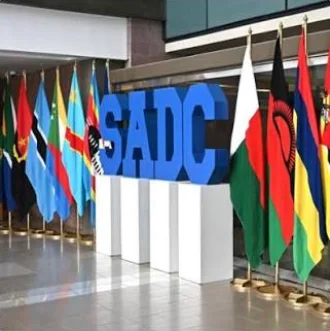
Southern Africa's political and economic leaders are turning their attention toward the region's long-term future as a major SADC gathering gets underway in Botswana.
On 14 August 2026, leaders and senior government representatives from across the Southern African Development Community converged on Gaborone for discussions expected to influence regional priorities for the coming years.
One of the central messages emerging from the gathering is that economic development alone will not be enough to achieve the region's ambitions.
South African President Cyril Ramaphosa called for greater investment in young people, women, health and social development, arguing that these areas must remain central as SADC advances toward its Vision 2050 objectives.
The message is particularly significant for a region with a large young population.
Millions of young Southern Africans are entering labour markets where formal employment opportunities remain limited. Governments are consequently under increasing pressure to expand skills development, encourage entrepreneurship and create economies capable of producing sustainable employment.
The summit provides regional leaders with an opportunity to address those challenges collectively rather than exclusively through individual national policies.
Economic integration takes centre stage
SADC was established to promote cooperation and deeper economic integration among Southern African countries.
Its membership stretches across a vast region containing major agricultural economies, mineral resources, energy projects and important international trade corridors.
Yet considerable barriers to regional commerce remain.
Border delays, inadequate transport infrastructure, energy shortages and differences in national regulations can increase the cost of moving products between neighbouring countries.
Greater regional integration could therefore allow businesses to treat Southern Africa increasingly as one interconnected market rather than a collection of separate economies.
That could be particularly important for small and medium-sized businesses seeking markets beyond their home countries.
Young people become a strategic priority
Ramaphosa's emphasis on youth investment reflects a larger demographic reality confronting African governments.
Southern Africa's young population could become one of the region's greatest economic advantages if education systems, businesses and governments can create enough opportunities.
Without sufficient employment and skills development, however, the same demographic trend could intensify unemployment, inequality and migration pressures.
Investments in education, technology, vocational training and entrepreneurship are therefore becoming increasingly connected to the region's wider economic strategy.
Women and social development also in focus
The call for stronger investment in women adds another dimension to the regional development debate.
Increasing women's participation in business, agriculture, technology and formal employment could expand household incomes while contributing to wider economic growth.
Health and social development are also important because economic expansion becomes harder to sustain when large populations lack access to essential services.
SADC's Vision 2050 therefore attempts to connect infrastructure and industrial growth with improvements in people's everyday lives.
Why this matters
Decisions made through SADC can eventually influence policies affecting hundreds of millions of people across Southern Africa.
Regional cooperation touches everything from electricity and transportation to trade, food security, migration, education and political stability.
The significance of the 14 August 2026 summit will consequently depend less on speeches delivered in Gaborone and more on whether governments translate their commitments into measurable action.
For Southern Africa, the central question is becoming increasingly clear: Can the region turn its youthful population, natural resources and expanding markets into shared prosperity?
The discussions taking place in Botswana could help determine how regional governments intend to answer that question as SADC moves closer to the halfway point between today's challenges and its ambitious Vision 2050.