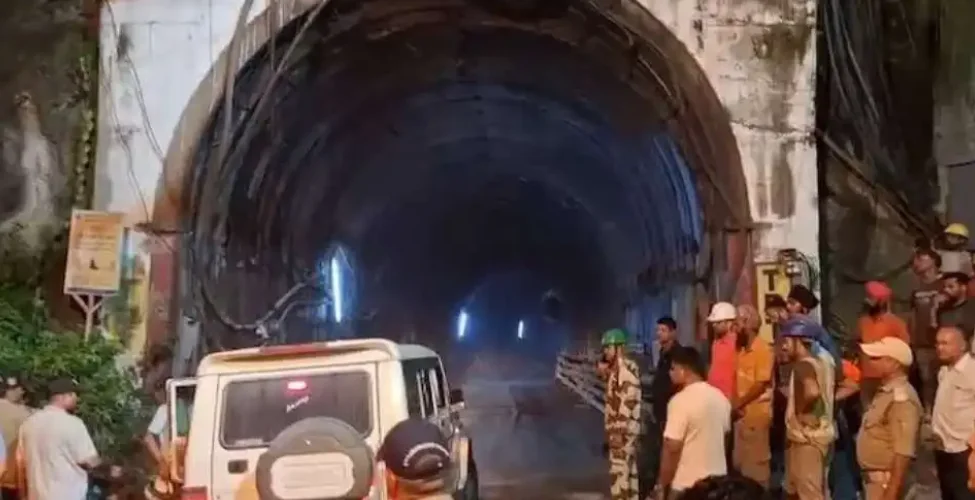
A construction project deep in India's Himalayan region turned into a deadly emergency after a landslide sent a violent surge of water and debris into a tunnel where workers were carrying out construction.
Authorities confirmed on 14 August 2026 that at least seven workers had died and another 13 were injured in the accident in the northern state of Uttarakhand.
The workers were involved in construction of a tunnel connected to a state-run hydropower project when the disaster struck late Thursday.
Water and debris suddenly enter the tunnel
Tunnel construction is already one of the more challenging forms of infrastructure work, particularly in mountainous terrain.
In this case, the danger came from outside.
A landslide triggered a sudden movement of water, mud and debris into the construction area, leaving workers with limited time and space to escape.
Emergency teams were deployed as authorities worked to account for personnel and assist those who had survived.
Thirteen injured workers were reported following the disaster, alongside the seven confirmed deaths.
Himalayan terrain creates enormous construction risks
Uttarakhand's mountains provide India with substantial potential for hydroelectric power, but building major infrastructure there presents difficult engineering challenges.
Steep slopes, unstable geological formations and intense rainfall can create conditions for landslides and flash flooding.
When such events occur around tunnels, the consequences can be particularly severe because workers have fewer escape routes than people operating at an open construction site.
The latest disaster once again puts attention on how major infrastructure projects manage geological and weather-related risks.
Hydropower remains important to India's energy plans
Hydroelectric projects form part of India's wider effort to expand electricity generation while increasing the contribution of lower-carbon energy sources.
Mountainous northern states contain rivers and steep elevation changes that can make them attractive locations for hydropower development.
But those same geographical characteristics can make construction dangerous.
Building dams, tunnels, roads and power infrastructure through Himalayan terrain requires careful monitoring of slopes, rainfall, groundwater and geological stability.
A failure in any of those areas can place construction workers directly in danger.
Safety questions will follow
The immediate priority following the accident is caring for survivors and recovering victims.
But attention is also likely to turn toward whether the disaster could have been anticipated.
Investigators will need to establish the sequence of events surrounding the landslide and determine whether warning signs existed before water and debris entered the tunnel.
Questions may also focus on evacuation procedures, monitoring systems and whether workers had sufficient warning to escape.
It would be premature to assign responsibility before those investigations are completed.
Why this is significant
Seven workers going to work on a major energy project never returned home.
Beyond that human tragedy, the accident illustrates the risks faced by thousands of workers building infrastructure through some of the world's most difficult terrain.
India is investing heavily in roads, tunnels, railways and energy infrastructure across its Himalayan regions. Each project must balance the economic benefits of new infrastructure against the geological realities of constructing it in vulnerable mountain environments.
The 14 August 2026 confirmation of seven deaths and 13 injuries therefore raises a larger question beyond this individual accident: how can ambitious infrastructure development continue without exposing workers to unacceptable risks from landslides, flooding and unstable terrain?
For now, however, the focus remains on the people caught underground when an ordinary construction shift became a deadly disaster.