What happened
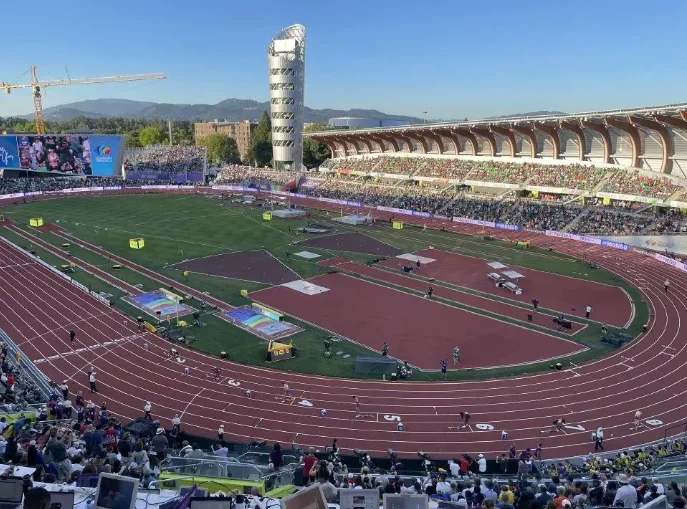
USA Track & Field announced on Monday, 17 August 2026, that Eugene, Oregon, will host the 2028 U.S. Olympic Team Trials – Track & Field, placing one of America's most important Olympic competitions back at historic Hayward Field.
The announcement means America's leading sprinters, distance runners, jumpers, throwers and combined-event athletes will converge on the University of Oregon venue to fight for places on Team USA for the Los Angeles 2028 Olympic Games.
For many athletes, reaching Los Angeles will first require surviving Eugene.
The U.S. Olympic Trials are not simply another track meet. They are the primary selection competition through which American athletes attempt to secure Olympic team positions, subject to applicable qualification requirements.
And American track and field is exceptionally deep.
That means reigning champions, global stars and emerging talents can enter the Trials with legitimate Olympic ambitions — yet still leave without a place on Team USA.
Eugene is deeply connected to that history.
The city has hosted the U.S. Olympic Track and Field Trials repeatedly, and Hayward Field has developed an international reputation as one of America's great athletics venues.
Today's decision brings the competition back to familiar territory at an especially important moment:
the next Olympics will be held in the United States.
Why this matters
Los Angeles 2028 will be much more than another Olympic Games for American athletes.
It will be a home Olympics.
That changes the emotional and commercial significance of qualification.
Athletes who make Team USA will have an opportunity to compete for Olympic medals without leaving their own country, potentially in front of family members, domestic supporters and enormous American television audiences.
But first they must qualify.
That makes the 2028 Trials one of the biggest events on the American sporting calendar before the Olympics themselves.
Track and field is also one of the foundations of the Olympic program.
The sport produces some of the Games' most recognizable events:
100 metres.
200 metres.
400 metres.
Hurdles.
Relays.
Marathon.
Long jump.
High jump.
Pole vault.
Shot put.
Decathlon and heptathlon.
For the United States, these events traditionally represent major medal opportunities.
Selecting the strongest possible team will therefore be central to America's ambitions at Los Angeles 2028.
There is also enormous symbolic value in holding the Trials at Hayward Field.
The venue has hosted major American and international competitions and has become closely associated with the country's track-and-field culture.
The road to Los Angeles will therefore begin in a place that already feels like home to American athletics.
Who is affected
America's elite track and field athletes are the most directly affected.
Every athlete targeting Los Angeles 2028 now knows where one of the defining competitions of their career will take place.
For established stars, Eugene will represent another opportunity to defend their position at the top of American athletics.
For younger athletes, it could become the place where they announce themselves to the world.
Coaches and training groups can also begin building their long-term plans around the Trials.
Olympic preparation is measured over years rather than weeks.
Training cycles, competition schedules, injury management and qualification strategies can all be designed with the ultimate selection event in mind.
Eugene and Oregon also stand to benefit.
An Olympic Trials event attracts athletes, coaches, officials, media and spectators, creating demand for hotels, restaurants, transportation and other local services.
The announcement further strengthens Eugene's identity as “TrackTown USA.”
American sports fans will be affected as well.
Because the Olympics are coming to Los Angeles, interest in the athletes selected in Eugene could extend considerably beyond the traditional track-and-field audience.
The Trials will effectively introduce many of the athletes Americans will later watch competing for medals on home soil.
BoonVerse Analysis
The most interesting thing about today's announcement is the journey it creates:
Eugene → Los Angeles.
That could become one of the defining pathways in American sport over the next two years.
Olympic qualification is unlike most professional sports.
There is no seven-game playoff series.
There is no entire season to recover from one terrible performance.
An athlete can spend four years preparing for the Olympics and see that dream disappear during one race, one jump or one throw.
That pressure is what makes the U.S. Trials extraordinary.
America can have several athletes capable of reaching an Olympic final in the same event.
But Olympic roster limits mean not everyone can go.
The Trials therefore produce a strange sporting reality:
some of the world's best athletes can fail to make Team USA.
Now add another ingredient.
Los Angeles 2028 is a home Olympics.
That could make qualification even more valuable.
Athletes will not simply be competing for the opportunity to attend another Games somewhere across the world.
They will be fighting for the chance to represent the United States inside the United States.
For younger American athletes, that could be a once-in-a-career opportunity.
There is also a powerful strategic reason for returning to Eugene.
Major sporting events benefit from identity.
Wimbledon has Centre Court.
American football has iconic stadiums.
Baseball has legendary ballparks.
For American track and field, Hayward Field increasingly plays that role.
Putting the Olympic Trials there gives the competition an atmosphere that would be difficult to reproduce in an ordinary multipurpose stadium.
And that matters because the Trials themselves could become an important promotional engine for Los Angeles 2028.
Every athlete who qualifies creates a story.
Every surprise elimination creates another.
Every breakthrough teenager, defending champion and veteran attempting one final Olympics gives audiences a reason to follow Team USA into Los Angeles.
The Olympics may begin in California.
But for American track and field athletes, the drama begins in Oregon.
What happens next
Today's announcement settles the host location, but the road to 2028 is only beginning.
USA Track & Field will now continue preparations with local organizers, Hayward Field and other stakeholders responsible for staging the Trials.
More operational details — including the complete competition schedule, ticketing arrangements and event-specific information — will become important as the Games approach.
For athletes, attention turns toward qualification.
The next two seasons will determine which American stars remain dominant, which younger competitors emerge and which athletes arrive in Eugene healthy enough to challenge for Olympic places.
That final point is crucial.
Olympic cycles are unpredictable.
A world champion in 2026 may face an emerging superstar by 2028.
A college athlete who is relatively unknown today could become an Olympic medal contender.
Veteran champions may attempt one final Games.
And injuries can completely reshape an event.
That uncertainty is exactly why the Trials matter.
The announcement made on 17 August 2026 gives American athletics a destination.
Now thousands of athletes know where they want to be in 2028.
Only a small number will leave Eugene as Olympians.
And when they do, they will not be travelling across an ocean for the biggest competition of their lives.
They will be heading south to Los Angeles to compete for Olympic medals at home.
Sources
USA Track & Field — 17 August 2026: The national governing body officially announced that Eugene and historic Hayward Field at the University of Oregon will host the 2028 U.S. Olympic Team Trials – Track & Field.
USA Track & Field — Eugene to Host the 2028 U.S. Olympic Team Trials
U.S. Olympic & Paralympic Committee: Official USOPC material provides background on the U.S. Olympic Trials and their role in the process through which America's leading athletes compete to make Team USA.