What happened
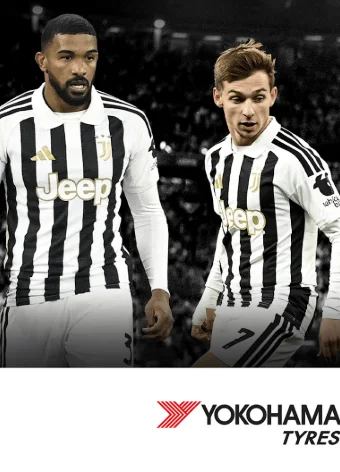
Italian football powerhouse Juventus announced on Monday, 17 August 2026, that Yokohama Tyres has joined the club as a new Official Partner after the two organizations signed a multi-year sponsorship agreement.
The partnership brings together two brands with substantial international reach.
Juventus is one of Italy's most successful and internationally recognizable football clubs, while Yokohama Rubber has developed into a major global tyre manufacturer with operations extending across numerous international markets.
Under the partnership, the Yokohama Tyres brand will receive visibility across Juventus' physical and digital platforms, connecting the company with the club's worldwide audience.
The agreement will also extend beyond traditional advertising.
Juventus said the partnership will include digital content, promotional initiatives and fan-focused activities, creating opportunities for supporters to interact with the Yokohama brand through the club.
Yokohama is also expected to use Juventus players in selected marketing activities.
That makes the agreement more than a conventional stadium sponsorship.
It creates a platform through which the company can use Juventus' global sporting identity to strengthen its own international consumer presence.
Why this matters
Modern European football is increasingly a competition fought on two fields.
The first is obvious:
the football pitch.
The second is commercial.
Elite clubs require enormous revenue to finance player salaries, transfer fees, academies, training facilities, stadium operations and increasingly sophisticated sporting departments.
Sponsorship agreements have consequently become an important part of the financial machinery supporting major European clubs.
For Juventus, adding Yokohama Tyres strengthens the club's network of international commercial partners.
But the geography of the partnership is particularly interesting.
Yokohama is Japanese.
Juventus is Italian.
Their commercial ambitions are global.
That reflects how European football clubs have evolved beyond their domestic markets.
Juventus may play its home matches in Turin, but its commercial audience extends across Europe, Asia, Africa, the Americas and the Middle East.
A company entering a partnership with Juventus is therefore not simply purchasing access to Italian supporters.
It is buying access to an international football brand.
Who is affected
Juventus receives another multi-year commercial partnership that can strengthen the club's revenue base and international business operations.
That matters because European clubs must constantly balance sporting ambition with financial sustainability.
Yokohama Tyres gains access to Juventus' global supporter network.
The company says it operates in more than 120 countries, making an internationally followed football club a potentially valuable marketing platform.
Juventus supporters will encounter the partnership through digital content, promotions and other fan initiatives planned under the agreement.
Some campaigns could potentially give supporters direct opportunities to interact with both brands.
Juventus players may also become part of Yokohama's promotional activities, extending the partnership beyond logos and advertising boards.
The wider European football sponsorship market is indirectly affected too.
Every major international sponsorship demonstrates how valuable elite football remains to multinational companies seeking enormous cross-border audiences.
BoonVerse Analysis
The most interesting part of today's announcement is not that a tyre company is sponsoring a football club.
That has happened before.
The more important story is what companies believe they are actually buying when they sign agreements with clubs such as Juventus.
They are buying:
attention.
Football produces something extraordinarily difficult for conventional advertising to manufacture — millions of emotionally invested consumers repeatedly returning to the same product.
Supporters watch matches.
They follow players.
They consume transfer news.
They watch interviews.
They buy merchandise.
They interact with clubs on social media.
And they often maintain that relationship for decades.
That makes a major football club much more than a sporting organization.
It is a global media platform built around emotional loyalty.
For an international company, that can be extremely valuable.
Consider the commercial equation.
Yokohama wants consumers across numerous markets.
Juventus already possesses supporters across numerous markets.
Instead of building an entirely new audience from zero, Yokohama can place its brand inside an existing global community.
Juventus benefits from the opposite side of that equation.
The club converts supporter attention into commercial revenue.
That revenue can then help support the organization competing on the pitch.
This creates a cycle:
Football success attracts supporters.
Supporters attract sponsors.
Sponsors generate revenue.
Revenue can help finance football operations.
But there is another strategic element.
Asian markets remain enormously important for European football.
Countries such as Japan contain sophisticated consumer markets and established football cultures, while the broader Asian region offers European clubs enormous opportunities for audience and commercial growth.
Partnering with a Japanese multinational therefore gives Juventus another connection to that part of the world.
The deal announced today may carry no transfer fee and score no goals.
But modern football clubs increasingly understand that commercial victories can eventually help finance sporting ones.
What happens next
The partnership begins with the 2026/27 season and will run across multiple years under the agreement announced today.
Supporters should therefore begin seeing Yokohama Tyres integrated into Juventus' commercial ecosystem.
The brand is expected to appear through club communications, digital content and promotional initiatives.
More detailed fan activations could follow as the partnership develops.
The larger development to watch will be Juventus' overall commercial performance.
Individual sponsorship agreements become most valuable when they form part of a diversified international revenue strategy rather than operating as isolated deals.
Juventus will therefore continue competing with Europe's other elite clubs not only for trophies and players but also for multinational sponsors.
For Yokohama, the test will be whether Juventus' enormous audience translates into stronger brand recognition and ultimately commercial results.
That will determine whether the partnership becomes simply another logo associated with a football club —
or a model for how an Italian sporting institution and Japanese multinational can use football to reach consumers around the world.
Sources
Juventus — 17 August 2026: The club's official announcement confirms that Yokohama Tyres has become an Official Partner of Juventus through a multi-year sponsorship agreement. It also outlines planned digital content, promotional initiatives, fan engagement and the international reach of the partnership.