What happened
Just one day after the 2026 European Athletics Championships concluded in Birmingham, attention has shifted from medals and records toward what the event leaves behind.
On Monday, 17 August 2026, Birmingham 2026 organizers highlighted further opportunities that will be made available to young people aged 14 to 17, extending the championship's engagement with the next generation beyond the competition itself.
The development comes immediately after Birmingham hosted Europe's leading athletes from 10–16 August, transforming the city into the centre of European track and field.
For Britain, the championships produced extraordinary sporting moments.
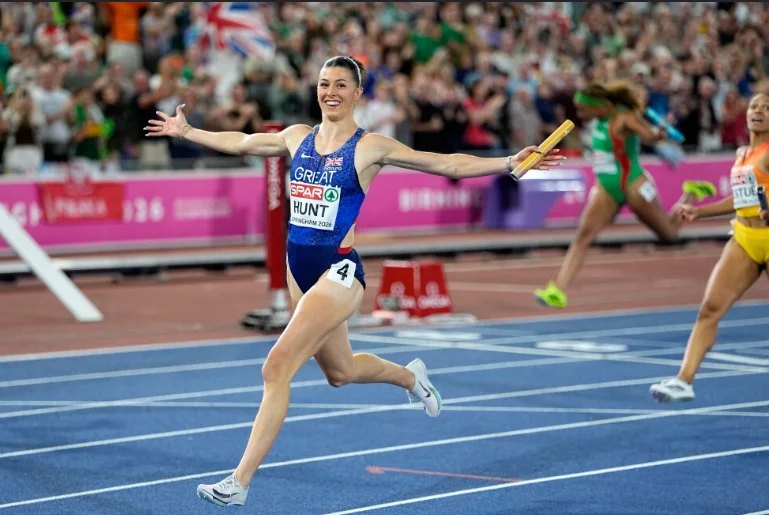
One of the biggest came from Amy Hunt, who became the first athlete to win four gold medals at a single European Athletics Championships. Britain's sprint performances formed part of an exceptionally successful week for the host nation.
But staging a major championship creates a question that begins only after the final medal has been awarded:
What happens to all that excitement when the stadium becomes quiet?
The post-championship youth initiative is designed to help answer that question.
Rather than allowing Birmingham 2026 to exist only as a week of elite competition, organizers are attempting to create opportunities that connect younger people with athletics and the wider sporting environment.
Why this matters
Major sporting championships are expensive and complicated to organize.
Cities provide venues.
Thousands of workers and volunteers contribute.
Public bodies, sponsors and sporting organizations invest resources.
Athletes arrive from across the continent.
Television networks broadcast the competition around the world.
But the sporting value of hosting such an event cannot be measured only by attendance figures and medals.
The biggest long-term opportunity is inspiration.
A 15-year-old watching a European champion race in Birmingham may decide to join an athletics club.
Another young person may become interested in coaching.
Someone else may discover sports broadcasting, event management, physiotherapy or officiating.
That is why youth engagement matters.
Britain already possesses a strong athletics system, but maintaining that strength requires continuously bringing new people into sport.
Champions eventually retire.
The next generation has to come from somewhere.
Birmingham 2026 has given organizers something extremely valuable:
attention.
The challenge now is converting that attention into participation.
Who is affected
Young people aged 14–17 are at the centre of the initiative.
That age group is particularly important because teenagers are beginning to make independent decisions about which sports, careers and activities they want to pursue.
Providing opportunities immediately after a major championship gives organizers a chance to reach them while memories of Birmingham 2026 remain fresh.
Athletics clubs and coaches could also benefit.
If championship excitement generates greater participation, local clubs become the places where that interest must be transformed into structured training and development.
Schools and communities have a stake because athletics is one of the most accessible sporting categories.
Running, jumping and throwing provide multiple entry points for young people with different physical strengths.
British athletics itself could become the biggest long-term beneficiary.
Great Britain's future European, world and Olympic teams depend on identifying and developing young athletes years before they reach senior competition.
The same principle applies beyond athletes.
Major sporting competitions require officials, volunteers, administrators, coaches, medical specialists and event professionals.
Creating pathways for young people to experience those roles can strengthen the entire sporting ecosystem.
Birmingham also benefits if the city can demonstrate that hosting a European championship produced opportunities extending beyond the competition week.
BoonVerse Analysis
There is an uncomfortable truth about major sporting events:
Inspiration expires quickly.
A championship ends.
Highlights dominate television and social media for several days.
Champions return home.
The stadium empties.
Then football, tennis, cycling or another major event takes over the headlines.
If organizers wait too long to engage young people, the emotional energy created by the championship can disappear.
That makes the timing of today's development particularly interesting.
Birmingham 2026 finished on 16 August.
The youth-focused message arrived immediately afterward on 17 August.
That is exactly when legacy programs should become visible.
Consider what young British viewers have just witnessed.
Amy Hunt delivered a historic four-gold performance at the European Championships.
Other British athletes competed against Europe's best inside a major championship hosted at home.
For a teenager watching from the stands or television, elite athletics suddenly becomes something tangible rather than distant.
The athlete is standing in Birmingham.
The crowd is British.
The championship is happening nearby.
The journey from spectator to participant therefore feels shorter.
But inspiration alone produces nothing.
A young person who becomes excited about athletics needs somewhere to go next.
A club.
A coach.
A facility.
A development opportunity.
A competition.
Or perhaps a pathway into another role within sport.
That is where legacy becomes measurable.
The success of Birmingham 2026 should therefore not only be evaluated using the medal table from August 2026.
A more interesting measurement might come several years from now.
How many young people entered athletics?
How many remained involved?
Did volunteering increase?
Did new coaches emerge?
Did participation expand in Birmingham and surrounding communities?
And perhaps most fascinatingly:
Will an athlete inspired by Birmingham 2026 eventually represent Great Britain at an Olympic Games?
Nobody can answer that today.
But creating the pathway is how that possibility begins.
What happens next
Organizers have indicated that further opportunities for people aged 14–17 will be announced, making the next phase of the championship legacy worth watching closely.
The details will determine the initiative's real impact.
Participation opportunities need to be accessible.
Young people need clear information about how to become involved.
Clubs and sporting organizations need enough capacity to accommodate additional interest.
And engagement needs to continue long after memories of the championship begin fading.
Britain's wider athletics system will also turn its attention toward the next international challenges.
Birmingham's medal-winning athletes will continue toward future global competitions, while younger athletes begin their own development journeys.
That creates two parallel stories.
One concerns the champions Britain already has.
The other concerns the champions it has not discovered yet.
The European Athletics Championships gave Birmingham six days to celebrate the first group.
The legacy programs beginning after the championships could help find the second.
Sources
European Athletics — Birmingham 2026: Official championship information confirms the European Athletics Championships ran from 10–16 August 2026, with post-event information published on 17 August referring to further opportunities for young people aged 14–17.
European Athletics — Birmingham 2026
Olympics.com — 17 August 2026: Official Olympic coverage documents Amy Hunt's historic achievement in becoming the first athlete to claim four gold medals at a single European Athletics Championships and Britain's outstanding sprint performances in Birmingham.