What happened
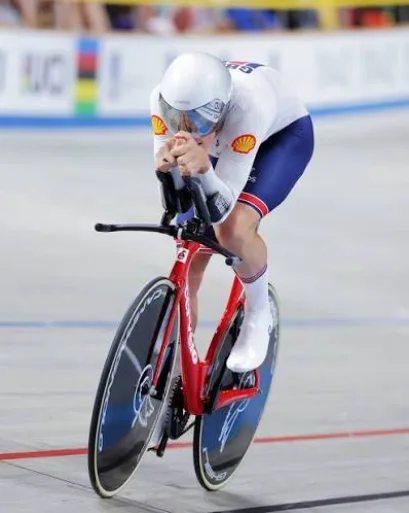
British Cycling announced on Monday, 17 August 2026, the 16 young riders selected to represent Great Britain at the UCI Junior Track World Championships in Limburg, Belgium.
The championship begins on 19 August and runs until 23 August, giving Britain's emerging track cyclists an opportunity to compete against the strongest junior riders from around the world.
The selection is significant because Britain's junior pathway has repeatedly produced athletes who later became some of the biggest names in international cycling.
British Cycling specifically highlighted former junior world champions including Sir Jason Kenny, Dame Laura Kenny, Katie Archibald and Geraint Thomas MBE, all of whom went on to build outstanding senior careers.
That history means the Junior Track World Championships are more than a youth competition for British cycling.
They are also an early test of the talent that could eventually feed into Britain's senior world championship and Olympic programs.
For the selected riders, Belgium now offers an opportunity to move from promising national talent to internationally recognized prospect.
Why this matters
Great Britain's extraordinary success in track cycling did not begin at the Olympic Games.
It began much earlier.
Behind every Olympic champion sits a development system identifying athletes, giving them international competition and gradually preparing them for the enormous pressure of senior elite sport.
The Junior Track World Championships form an important part of that process.
A rider competing in Limburg this week may still be years away from reaching their physical peak.
But racing against the world's strongest athletes in the same age group gives coaches valuable information.
Can the rider handle international pressure?
Can they perform when a world title is available?
How do they respond tactically against unfamiliar opponents?
Can their performances eventually translate into senior competition?
Those questions become particularly important as Britain begins looking beyond its current generation toward future Olympic cycles.
The Los Angeles 2028 Games are approaching, while Brisbane 2032 sits further down the development pathway.
Some riders selected today could eventually find themselves competing for Olympic places during those cycles.
Who is affected
The 16 selected British riders receive the biggest opportunity.
A world championship can dramatically change the trajectory of a young athlete's career.
Winning a medal brings recognition, but even competing successfully against world-class opposition can strengthen a rider's case for further development opportunities.
British Cycling coaches will also be watching closely.
Junior competition helps identify which athletes could eventually progress into Britain's senior endurance and sprint programs.
Cycling clubs and coaches across Britain have a stake as well.
Elite athletes rarely emerge from nowhere. Their development frequently begins with local clubs, regional competitions, families and volunteer coaches long before national selectors become involved.
Great Britain's senior cycling program is ultimately affected because today's juniors represent part of tomorrow's talent pipeline.
And Belgium becomes the centre of junior track cycling this week as Limburg hosts riders from across the world between 19 and 23 August.
BoonVerse Analysis
The most interesting part of today's announcement is not necessarily who wins in Belgium.
It is:
Who will we still be talking about ten years from now?
Junior championships provide fascinating snapshots of sporting potential.
Some champions dominate at 17 or 18 but struggle to make the transition into senior competition.
Others leave without gold medals and eventually become Olympic champions.
Development is rarely linear.
That is what makes Britain's history at this competition particularly interesting.
Consider the names British Cycling itself highlighted:
Jason Kenny.
Laura Kenny.
Katie Archibald.
Geraint Thomas.
Before Olympic medals, Tour de France victories and international fame, these athletes were young riders attempting to prove themselves at junior level.
Today's 16 riders now receive the same type of opportunity.
There is also a larger lesson behind Britain's cycling success.
Olympic dominance cannot be built only by investing in athletes who are already champions.
By then, development has started too late.
Successful sporting nations create pipelines.
They identify talent.
They provide coaching.
They expose athletes to international competition.
They learn from failures.
And they gradually move the strongest performers toward senior competition.
That is why a junior world championship can matter far more than its television audience or commercial value might suggest.
It is effectively a laboratory for the future of elite sport.
The championship in Belgium could therefore produce a fascinating outcome.
The most important British cyclist competing this week may not necessarily be the rider who wins the most medals.
It could be someone who learns from defeat, develops rapidly over the next several years and eventually arrives at an Olympic Games as one of Britain's leading medal contenders.
Great Britain's next cycling superstar may currently be almost unknown outside the sport.
That is precisely what makes this week's championship worth watching.
What happens next
There is very little waiting time between today's announcement and the competition.
The UCI Junior Track World Championships begin in Limburg on Wednesday, 19 August, only two days after British Cycling confirmed its squad.
Competition will continue through Sunday, 23 August.
The immediate focus will be medals and world titles.
But British Cycling will also be looking beyond the results table.
Performances in Belgium can help determine how riders progress through Britain's development pathway and which athletes are ready for increasingly demanding international competition.
The championship could also reveal emerging rivals from other major cycling nations who may eventually meet Britain's riders again at senior world championships and Olympic Games.
After Limburg, the challenge becomes progression.
Junior success is valuable.
Senior success is much harder.
Athletes must become stronger while avoiding serious injuries, managing increased training loads and learning how to perform against experienced professionals.
Some will make that transition.
Others will not.
That uncertainty means the true importance of Britain's 17 August 2026 squad announcement may not become clear for several years.
For now, 16 young cyclists are heading to Belgium wearing Great Britain's colours.
By the time the next decade arrives, one or more of those names could be familiar to cycling fans around the world.
Sources
British Cycling — 17 August 2026: The official announcement confirms the 16-rider Great Britain squad, the championship dates of 19–23 August in Limburg, Belgium, and the competition's history of producing future British cycling stars.
British Cycling — Great Britain Junior Track World Championships squad announcement