What happened
The Malawi Women’s National Football Team — the Scorchers — faced Cameroon in the 2026 Women’s Africa Cup of Nations final on Sunday, 16 August, at the Moulay El Hassan Stadium in Rabat, Morocco.
For both countries, history was waiting.
Cameroon had reached three previous WAFCON finals without winning the championship.
Malawi were experiencing something completely different: their first appearance at the tournament had taken them all the way to the final.
But Cameroon seized control of the championship match early.
Marie Ngah Manga opened the scoring in the 20th minute, putting the Indomitable Lionesses ahead.
Nine minutes later, Naomi Eto doubled Cameroon's advantage, leaving Malawi with an increasingly difficult mountain to climb.
Then came the decisive blow.
Deep into first-half stoppage time, Ngah struck again, completing her brace and sending Cameroon into the interval with a commanding 3–0 advantage.
Malawi were unable to produce the extraordinary comeback required after the break.
The final whistle confirmed the result:
Cameroon 3–0 Malawi.
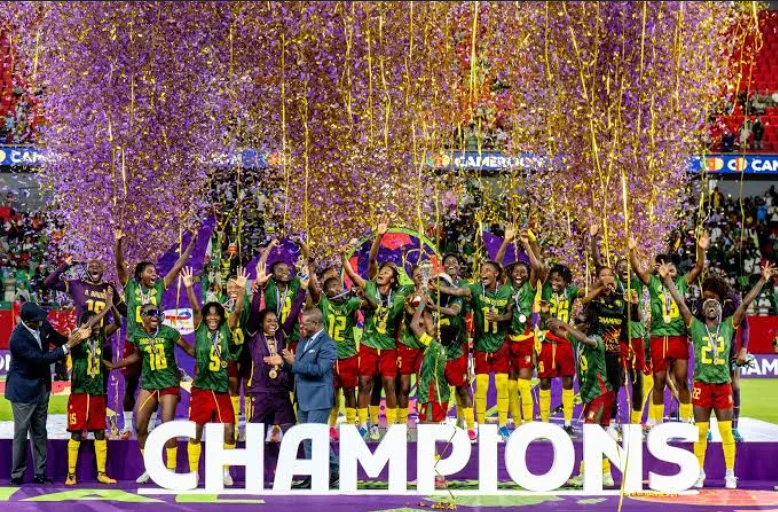
For Cameroon, years of disappointment were finally over.
After finishing runners-up three times, the Indomitable Lionesses had become African champions for the first time.
For Malawi, there were tears — but also history.
Why this matters
Malawi did not win the trophy.
But reducing this tournament to Sunday's final score would completely miss what the Scorchers accomplished.
Before WAFCON 2026, Malawi had never appeared at the continental finals.
They arrived in Morocco without the tournament pedigree associated with countries such as Nigeria, South Africa, Ghana or Cameroon.
They leave as African runners-up.
That represents a dramatic breakthrough for Malawian women's football.
Even more importantly, Malawi's run secured qualification for the 2027 FIFA Women’s World Cup in Brazil — another historic first for the country.
The significance therefore extends far beyond one tournament.
Young girls playing football in Lilongwe, Blantyre, Mzuzu, Zomba and communities across Malawi now have something previous generations did not:
proof that a Malawian women's team can reach the biggest stages of international football.
Cameroon's victory carries enormous significance too.
The Indomitable Lionesses had repeatedly come close to becoming African champions.
Three previous finals had ended in disappointment.
Their fourth attempt finally produced the trophy.
Who is affected
Malawi's players leave Morocco with their international reputations transformed.
The Scorchers entered the competition as debutants and reached the final against one of Africa's established women's football powers.
The tournament also gives Malawi's leading players greater international visibility.
That includes the country's globally recognized Chawinga sisters, Tabitha and Temwa Chawinga, but Malawi's run demonstrated that the national team's rise extends beyond individual stars.
Young female footballers in Malawi could become the tournament's most important long-term beneficiaries.
Success creates visibility.
Visibility can attract players.
More players can strengthen academies and domestic clubs.
And stronger development systems can eventually create stronger national teams.
The Football Association of Malawi now faces an equally important challenge.
Reaching a WAFCON final and qualifying for a World Cup creates expectations that require investment in preparation, coaching, facilities, youth development and competitive matches.
Cameroon, meanwhile, finally possesses the continental title that had repeatedly escaped it.
The victory transforms a generation of players from finalists into champions.
BoonVerse Analysis
The scoreboard says:
Cameroon 3–0 Malawi.
History may eventually say something much bigger about Malawi.
Football breakthroughs often begin before trophies arrive.
A national team first learns how to qualify.
Then it learns how to compete.
Then it discovers that the traditional giants can be beaten.
Eventually, expectations change.
Malawi may have crossed several of those stages in a single tournament.
Consider where this journey began.
The Scorchers entered WAFCON 2026 as tournament debutants.
Three weeks later, they were standing in an African championship final.
That transformation matters because one of the biggest barriers facing emerging football nations is psychological.
Players need to believe they belong.
Supporters need to believe victories are possible.
Administrators need evidence that investment can produce results.
Sponsors need a reason to pay attention.
Malawi's performance in Morocco provided all four.
Cameroon exposed the distance that still exists between reaching a major final and winning one.
The opening half demonstrated what experienced championship teams can do when an opponent gives them opportunities.
Malawi will need to learn from that.
Because something even bigger is coming.
The World Cup.
Brazil 2027 will expose Malawi to opponents from outside Africa, including nations possessing vastly greater financial resources, deeper professional leagues and sophisticated player-development systems.
Preparation therefore cannot begin several weeks before the tournament.
It needs to begin now.
Malawi's football authorities have been handed something incredibly valuable:
momentum.
The worst possible response would be to celebrate this achievement and then allow that momentum to disappear.
The better response would be to treat Rabat not as the end of a remarkable journey, but as the beginning of a national women's football project.
Better youth structures.
More competitive domestic football.
International friendlies.
Improved sports science.
Professional coaching.
Commercial partnerships.
And greater opportunities for talented girls to remain in football.
Cameroon lifted the trophy on Sunday.
But Malawi may have discovered something potentially just as valuable:
a generation that now believes the Scorchers belong among Africa's best.
What happens next
For Cameroon, the immediate future begins with celebration.
The Indomitable Lionesses return home as African champions for the first time, finally erasing the disappointment of three previous losing finals.
For Malawi, attention must quickly move toward Brazil 2027.
The Scorchers have already achieved the difficult part: earning a place at their first FIFA Women's World Cup.
Now they must prepare to compete there.
That means the months ahead will be critical.
Malawi will need high-quality international matches against different styles of opposition.
Players need consistent competitive football at club level.
The technical staff will need to identify additional talent capable of strengthening squad depth.
And the Football Association of Malawi will need to find the resources necessary to give the team serious World Cup preparation.
Expectations have changed.
Before Morocco, simply reaching WAFCON represented progress.
After Morocco, Malawi know they can reach an African final.
The next challenge is discovering how far they can travel on the world stage.
The Scorchers left Rabat without the trophy they desperately wanted.
But they leave with something Malawian women's football has never possessed before:
a WAFCON silver medal, a place at the FIFA Women’s World Cup and a new belief that competing with Africa’s strongest nations is no longer a dream.
Sources
The primary source is the Confederation of African Football (CAF), which confirmed Cameroon's 3–0 victory, first WAFCON championship and Marie Ngah Manga's two goals in the final.
CAF — Cameroon’s historic WAFCON final victory
CAF's official pre-final statistics also confirm that the match took place at Moulay El Hassan Stadium in Rabat on 16 August 2026, with Malawi making their first WAFCON appearance and Cameroon seeking their first title after three previous final defeats.