Military cooperation between Russia and North Korea may be entering a new and more dangerous phase after Ukrainian intelligence reported that a North Korean missile unit had begun deploying to Russia.
Andrii Cherniak, a representative of Ukraine’s Main Directorate of Intelligence, said Russia planned to station approximately 90 North Korean personnel in the western Voronezh region. The unit would reportedly operate within Russia’s 112th Missile Brigade.
According to Cherniak, North Korea has already transferred a new shipment of 40 KN-23 and KN-24 ballistic missiles to Russia, together with military personnel. Russia reportedly expects the operation to expand to approximately 120 missiles and six launchers, although its final size could be decided during high-level negotiations expected in September.
It remains unclear whether the North Korean personnel would directly launch missiles, provide technical assistance, train Russian forces or maintain the equipment. Their deployment would nevertheless represent a significant expansion of cooperation between Moscow and Pyongyang.
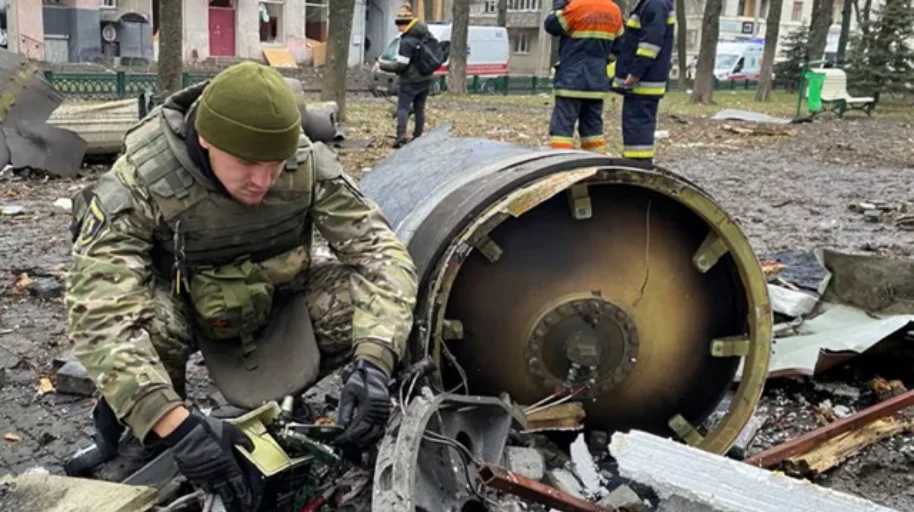
Russia has reportedly used North Korean ballistic missiles against Ukraine since late 2023. However, sending a specialized North Korean missile unit to Russian territory would demonstrate a deeper level of operational involvement than simply supplying weapons.
Ukraine faces a serious shortage of advanced air-defence interceptors. Ballistic missiles are particularly difficult to destroy and can generally be intercepted only by sophisticated systems such as the American-made Patriot.
Security analysts warn that additional missiles could leave Ukrainian cities and infrastructure more vulnerable, particularly during winter. Russia has repeatedly targeted Ukraine’s electricity network during cold weather in an effort to disrupt heating, power supplies and essential public services.
North Korea’s KN-23 and KN-24 missiles reportedly have larger payloads and longer ranges than some comparable Russian weapons, but Ukrainian military sources say they are less accurate. Their limited precision increases the danger to civilians when the weapons are used near populated areas.
Ukrainian officials recently said a North Korean missile destroyed a residential house in the village of Radushne, killing five members of one family. They identified the attack as the first recorded Russian use of a North Korean ballistic missile since August 2025.
Military relations between Russia and North Korea have grown considerably since Moscow launched its full-scale invasion of Ukraine in 2022. The two countries signed a mutual-defence agreement in 2024, while Pyongyang has reportedly supplied Russia with millions of artillery shells.
Ukrainian officials have also claimed that North Korea previously sent around 14,000 troops to Russia’s Kursk region to help repel a Ukrainian ground operation. Approximately 9,500 North Korean personnel reportedly remain in the region but are not currently participating directly in operations against Ukraine.
Reuters stated that it could not independently confirm the latest intelligence because the evidence supporting it was classified. Russia’s Defence Ministry and North Korea’s United Nations mission did not immediately respond to requests for comment.
If confirmed, the deployment would have consequences far beyond the battlefield. It could increase tensions on the Korean Peninsula, strengthen military ties between two heavily sanctioned governments and complicate diplomatic efforts involving China, South Korea, Japan, Europe and the United States.