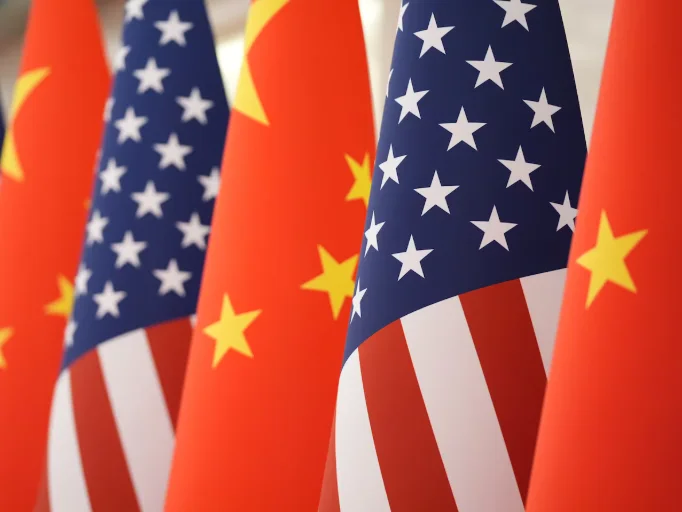
The United States Federal Bureau of Investigation has developed unprecedented law-enforcement partnerships with China and Russia, representing a major change in how Washington cooperates with its principal geopolitical rivals.
FBI Director Kash Patel told Reuters that the relationships were created to address specific forms of transnational crime. These include cybercrime, fentanyl trafficking, violent crimes against children and efforts to arrest fugitives operating across international borders.
The cooperation with China has involved exchanges of personnel. Chinese law-enforcement officials have visited FBI facilities in the United States, while American agents have travelled to China to work on investigations and share selected intelligence.
Patel said officers from China’s Ministry of Public Security were communicating with the FBI daily. Working-level Chinese officials reportedly travel to the United States during one month, followed by American agents travelling to China the next month.
The FBI has established four principal working groups with Chinese authorities, focusing on cyber fraud, crimes against children, illegal drugs and fugitives. Patel emphasized that the information being exchanged is limited to these areas.
One of the most significant examples was Operation Sand Dollar, conducted jointly by the FBI, China’s Ministry of Public Security and Dubai police in May. The FBI said the operation targeted a large cyber-scam centre in Dubai.
According to the bureau, the raid resulted in approximately 300 arrests, the seizure of $300 million and the release of thousands of trafficked workers. Chinese state media also reported that a person accused of serious violent crimes was returned from China to the United States.
An internal FBI memorandum reviewed by Reuters said cooperation with China had contributed to the arrests of nine people, the closure of two chemical-production facilities and three websites, and the seizure of fentanyl precursor chemicals believed to have been destined for the US.
Chinese authorities also reportedly helped the FBI’s Omaha field office dismantle a multinational network distributing child sexual-abuse material. The June operation led to the arrests of 16 suspects, according to the FBI document.
Patel said cooperation with Russia had been taking place behind the scenes for approximately 15 months, concentrating on violent international criminal organizations. He recently visited Beijing and is tentatively planning a similar trip to Russia in October.
The partnerships are politically controversial because American security agencies have repeatedly accused China and Russia of espionage, cyberattacks, election interference and attempts to undermine US economic and military interests.
Some former FBI personnel warned that allowing Chinese or Russian representatives to enter American government facilities could create opportunities for intelligence collection. They argued that foreign officials might attempt to identify personnel, study security systems or obtain sensitive information beyond the permitted investigations.
Patel said the risks were understood and that every foreign visitor was thoroughly checked and monitored. He argued that cooperation could continue in carefully selected criminal cases without ignoring the countries’ adversarial activities elsewhere.
The director also stressed that the new partnerships would not replace America’s traditional intelligence relationships. He said the Five Eyes alliance with the United Kingdom, Canada, Australia and New Zealand would remain the country’s most important intelligence-sharing arrangement.
Supporters believe the partnerships could help dismantle criminal organizations that operate across jurisdictions and exploit the absence of cooperation between governments. Critics fear that limited law-enforcement engagement could gradually expose sensitive information or provide political legitimacy to authoritarian security agencies.
The approach reflects President Donald Trump’s preference for direct engagement with Chinese President Xi Jinping and Russian President Vladimir Putin, even while Washington continues confronting both countries over security, trade and foreign policy.