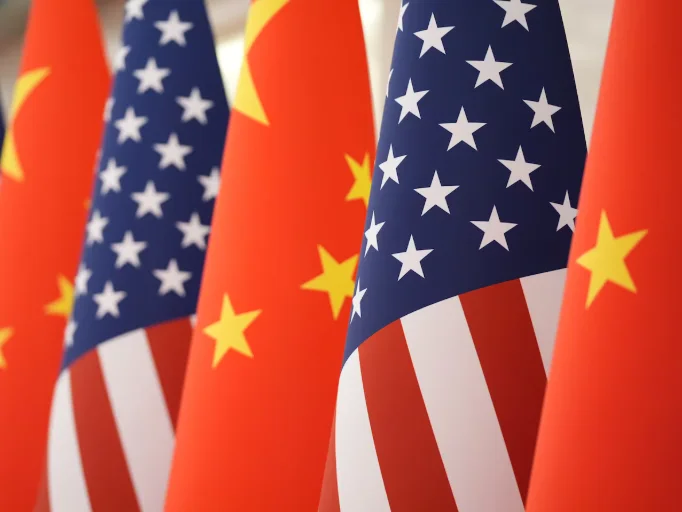
China announced a series of political and economic countermeasures against the United States on Wednesday, 5 August 2026, increasing tensions between Beijing and Washington despite recent attempts to improve diplomatic relations.
China’s Ministry of Commerce said exports of unmanned aerial vehicles, important components and related technologies to the United States would now require individual government reviews. The restrictions apply to items classified as dual-use products, meaning they can serve both civilian and military purposes.
The new rules do not constitute a complete ban on Chinese drone exports to the United States. Instead, Chinese authorities will evaluate proposed shipments individually before deciding whether they can proceed.
Beijing also prohibited six American organizations, including Applied DNA Sciences and the non-governmental organization Human Rights in China, from trading or conducting other activities with entities inside China.
A separate measure banned Compliance Testing LLC from operating in the Chinese market. China’s Commerce Ministry accused the company of assisting the US Federal Communications Commission in actions that Beijing said damaged Chinese sovereignty and national security.
China said the countermeasures were introduced in response to several recent American restrictions. These included an FCC prohibition on imports of some Chinese-manufactured drones and the Department of Homeland Security’s decision to place 43 Chinese companies on a list connected to the Uyghur Forced Labor Prevention Act.
The United States uses that law to prevent the importation of products suspected of being manufactured through forced labour involving members of China’s Uyghur minority. Beijing rejects allegations of widespread forced labour in Xinjiang and frequently describes US measures connected to the issue as interference in China’s internal affairs.
China’s Commerce Ministry said Washington’s restrictions had violated agreements reached between the countries’ leaders and damaged China’s legitimate interests. The ministry described its response as restrained but warned that additional countermeasures could follow if the United States imposed further limitations.
Another Chinese investigation will examine whether imported printing software and office equipment pose national-security risks. Authorities did not identify which foreign companies or products could be affected.
China also announced changes involving its compulsory product-certification system. US companies that perform follow-up factory inspections for Chinese organizations will no longer be permitted to issue certain certifications. American electronics manufacturers may therefore need to employ auditors located outside the United States.
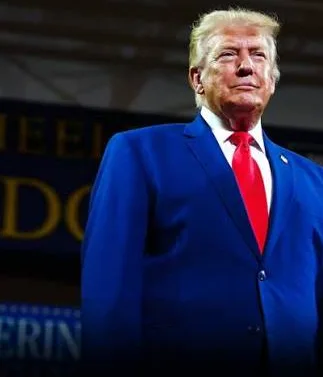
The measures arrive at a politically sensitive moment. Relations appeared to improve following meetings between US President Donald Trump and Chinese President Xi Jinping in Beijing in May. Xi is expected to visit the United States in September, making the latest restrictions a potential challenge for diplomatic preparations.
Drones have become strategically important in agriculture, infrastructure inspection, emergency services, filmmaking, policing and modern warfare. Restrictions affecting drone technology could therefore create consequences for American businesses, government agencies and national-security planners.
The dispute also reflects a broader struggle over technology, human rights, industrial competition and military security. Both governments increasingly use export controls, sanctions and market restrictions to place political pressure on the other.
Any further escalation could affect supply chains and international markets because China and the United States remain deeply connected through trade. Other countries may also face pressure to align their technology and security policies more closely with either Washington or Beijing.