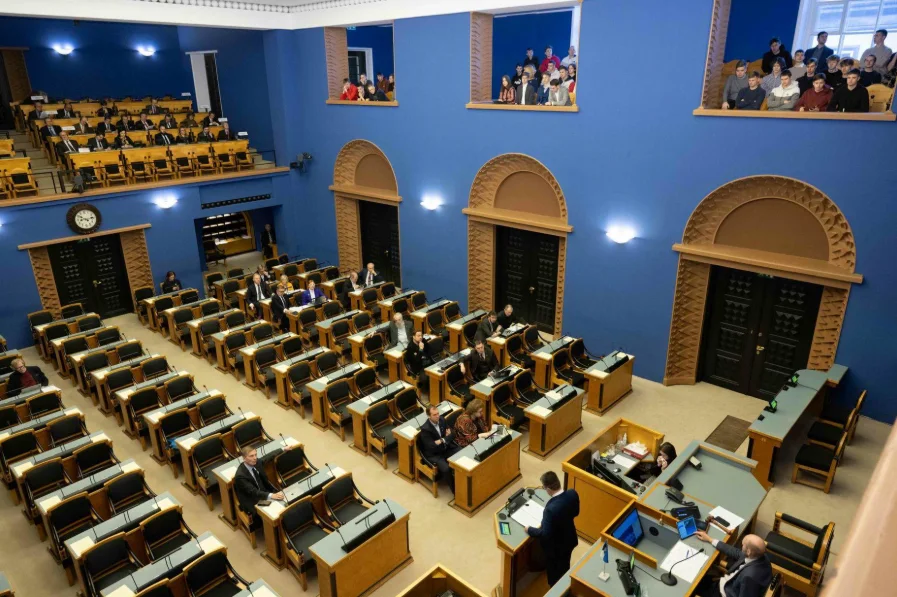
Political stability in Estonia changed with the decisions of just two people.
Kalev Stoicescu left the Estonia 200 party on Sunday, while Meelis Kiili announced his departure from Prime Minister Kristen Michal’s Reform Party on Monday. Their exits reduced the two-party coalition from a narrow 52-seat majority to 50 seats—one fewer than the number needed to control the 101-member parliament. The development was reported on 10 August 2026.
The government has not collapsed, and neither lawmaker’s departure automatically triggers an election. However, the political arithmetic has become far more difficult. Every significant bill may now require negotiations with independent lawmakers or opposition parties, giving former coalition outsiders greater influence over government policy.
Kiili reportedly linked his decision to growing disagreements over national defence and security. Stoicescu did not publicly provide a detailed explanation for leaving Estonia 200. Both lawmakers remain in parliament, but their future voting choices could determine whether the government’s proposals advance or stall.
Prime Minister Michal has sought to calm fears of immediate paralysis. He indicated that his administration had previously relied on broader parliamentary cooperation and would continue looking for support beyond the coalition. That approach may work on national-security measures, where Estonian parties often share common ground, but economic and social policies could prove harder to negotiate.
The timing makes the setback especially sensitive. Estonia, a European Union and NATO member bordering Russia, is balancing major defence commitments with economic pressures and public concern over government spending. Losing guaranteed control of parliament could complicate decisions involving taxation, military investment and the national budget.
The opposition may also test the government through no-confidence motions. Under Estonia’s parliamentary rules, at least 51 votes are required to remove a minister or bring down the prime minister’s government. With the coalition holding only 50 seats, a united opposition could create serious danger—but only if it persuades at least one additional lawmaker to support it. Official parliamentary records confirm the 51-vote requirement.
The two departures arrive as political parties begin positioning themselves for Estonia’s next parliamentary election, which must be held by March 2027. Every government defeat, delayed bill or compromise could now become part of that approaching campaign.
For Estonian voters, the dramatic change is not that a new government has taken power. It is that the existing government must now earn its majority again—one vote, one negotiation and one political bargain at a time.