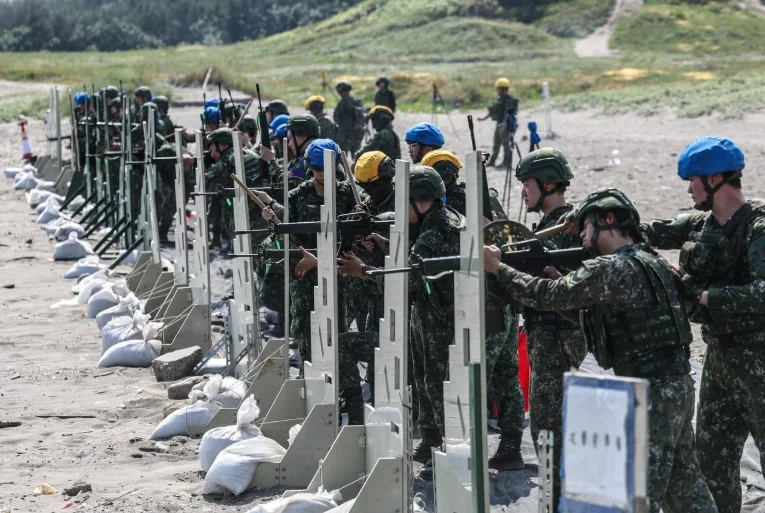
Taiwan began its annual Han Kuang military exercises on Wednesday, 5 August 2026, amid continuing political and military pressure from China. The live-fire exercises are designed to simulate how Taiwan’s armed forces and civilian population would respond to a major attack.
The drills will be conducted at several locations across the island over 10 days. Taiwan’s military will test its ability to maintain defensive operations continuously for 24 hours while responding to conventional attacks and China’s so-called “grey-zone tactics.”
Grey-zone tactics involve military and political pressure that stops short of open warfare. These activities may include cyberattacks, disinformation, surveillance operations and the frequent deployment of military aircraft and naval vessels near Taiwan.
This year’s exercises will mobilize more than 5,000 reservists from two military brigades—the largest reserve force ever involved in the Han Kuang operation. The previous exercises involved more than 3,000 reservists from one brigade.
Military commanders will assess how quickly reserve forces can move from their normal civilian lives into active military service. Taiwan considers rapid mobilization essential because its armed forces would need immediate reinforcements during an unexpected attack or blockade.
Urban-resilience exercises will also be held in Taipei, Kaohsiung and Taichung. Mobile internet speeds will be deliberately reduced for approximately 30 minutes to simulate telecommunications interference. Authorities want to determine whether government agencies, emergency services and civilians can continue functioning if internet connections are disrupted during a conflict.
Taiwanese forces will test recently acquired M1A2T Abrams tanks manufactured in the United States. Taiwan ordered 108 of the tanks in 2019, with the final group arriving in April 2026. The exercises will also introduce communication methods inspired by the U.S. military, encouraging frontline personnel to explain how they intend to complete assigned missions.
Taiwan governs itself as a democracy, but Beijing considers it part of Chinese territory. China has repeatedly stated that it seeks reunification and has not ruled out using military force. Chinese aircraft and warships have operated close to Taiwan with increasing frequency in recent years.
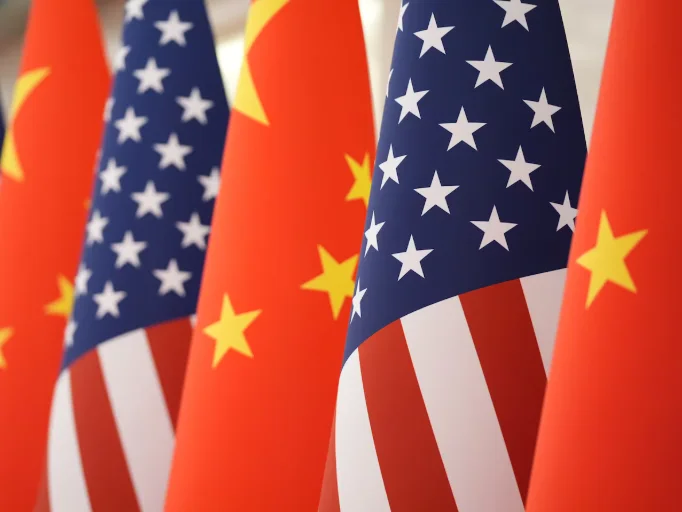
The United States does not maintain formal diplomatic relations with Taiwan but remains the island’s most important informal supporter and principal weapons supplier. Taiwan’s parliament recently approved a supplementary defence budget of approximately $24.8 billion for American weapons, below President Lai Ching-te’s proposed $40 billion.
Taiwan is also awaiting U.S. approval for another arms package valued at approximately $14 billion. The future of that package has become politically sensitive because Washington is simultaneously managing its economic and diplomatic relationship with Beijing.
The exercises carry consequences beyond Taiwan. Any military confrontation in the Taiwan Strait could draw in major powers, threaten international shipping and disrupt semiconductor supplies that support industries around the world.