What happened
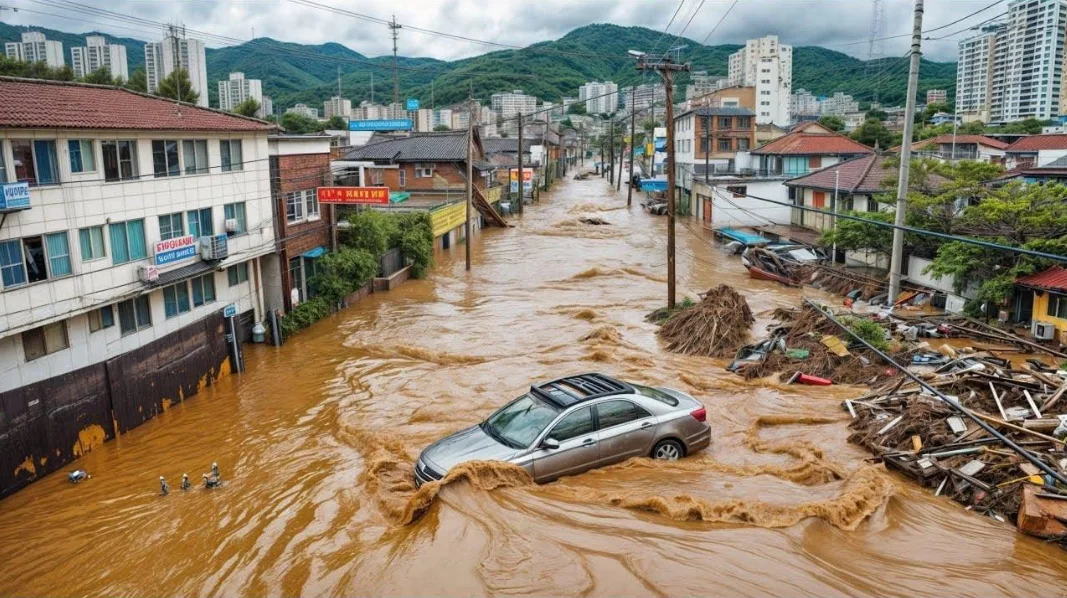
A dangerous combination of torrential rain, flash flooding and landslides struck southern South Korea on Monday, 17 August 2026, turning roads into waterways and forcing emergency evacuations.
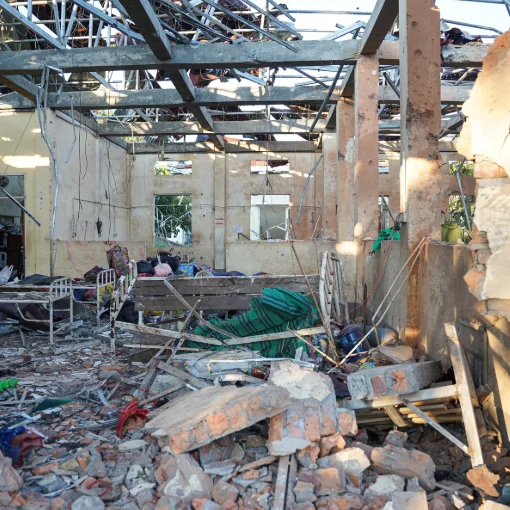
One of the most serious incidents occurred in Geoje, South Gyeongsang Province, where a landslide slammed into a residential apartment building.
Mud and debris buried part of the building's first floor.
Four people were rescued from the affected area, but one later died in hospital while three others were injured, according to reports citing local authorities.
The rainfall itself has been extraordinary.
Some locations in South Korea's southern region have accumulated up to approximately 800 millimetres of rain since Saturday, accompanied by thunderstorms and lightning.
In Geoje, conditions became particularly intense.
SBS reported rainfall reaching approximately 124.5 millimetres in a single hour, demonstrating how quickly conditions deteriorated.
Rivers overflowed.
Roads flooded.
Traffic was disrupted.
And the threat did not disappear after the first landslide.
Around 100 residents were evacuated because authorities feared additional slope failures, while South Korea's safety ministry reported efforts to rescue 20 people who had become stranded.
Why this matters
The shocking element is the speed at which extreme rainfall can transform an ordinary neighbourhood into a disaster zone.
When more than 100 millimetres of rain falls within an hour, drainage systems can become overwhelmed almost immediately.
But flooding is only one danger.
Water saturates hillsides and increases the weight of soil.
Eventually, gravity can win.
A slope that appeared stable hours earlier can suddenly collapse onto homes, roads or vehicles.
That appears to be one of the greatest concerns facing southern South Korea today.
Authorities are therefore dealing with two interconnected emergencies:
floodwater below and unstable hillsides above.
South Korea's Meteorological Administration has issued heavy-rain warnings across southern areas as dangerous conditions continue.
Who is affected
Residents of Geoje and other communities across South Gyeongsang Province face the most immediate danger.
Some have been evacuated because authorities cannot guarantee that nearby slopes will remain stable.
Others have been stranded by floodwater.
Families living on the lower floors of buildings close to hillsides may be particularly vulnerable because landslides can arrive with little warning.
Drivers and commuters are also affected as flooded roads and debris disrupt transportation.
Emergency responders face dangerous working conditions of their own.
Rescuers must operate around unstable slopes, flowing water, fallen trees and debris while additional rainfall could trigger another collapse.
Local businesses face disruption as well.
Even after floodwater recedes, buildings, vehicles, electrical equipment and inventories can remain damaged.
And for the families directly caught in today's landslide, the disaster has already become irreversible.
BoonVerse Analysis
There is one figure from today's disaster that deserves attention:
124.5 millimetres in one hour.
That is not simply "heavy rain."
It represents an enormous amount of water arriving faster than many urban systems can safely move it away.
And that distinction matters.
Cities traditionally design roads, drains, bridges and retaining structures using assumptions about how much rainfall they are likely to experience.
But extreme precipitation challenges those assumptions.
When extraordinary rainfall becomes concentrated into shorter periods, infrastructure can fail even if the total rainfall across an entire month does not initially sound exceptional.
The Geoje disaster also illustrates why flood protection cannot focus exclusively on rivers.
The mountain can become part of the flood.
Rain enters soil.
Soil becomes saturated.
The slope weakens.
Then thousands of tonnes of earth, rocks and vegetation can suddenly move downhill.
That turns a meteorological event into a structural emergency.
For countries with mountainous terrain such as South Korea, this creates a difficult adaptation challenge.
Flood defences matter.
But so do slope monitoring, retaining structures, drainage on hillsides, building restrictions and rapid evacuation systems.
Today's tragedy therefore carries a wider warning.
Modern cities do not only need to ask:
“Can our drains handle the rain?”
They increasingly need to ask:
“What happens to everything surrounding the city when that much water arrives at once?”
What happens next
The immediate concern is additional rainfall and further landslides.
South Korean authorities are monitoring vulnerable areas while emergency teams continue responding to flooding and helping residents trapped or isolated by the severe weather.
Evacuated residents may not be allowed to return immediately.
Even after rainfall weakens, saturated slopes can remain unstable, meaning landslide risk may continue after skies begin clearing.
Authorities will also need to inspect damaged buildings, roads, retaining walls and other infrastructure before declaring affected areas safe.
The rainfall totals themselves will receive close scrutiny.
Some southern locations have already experienced extraordinarily large accumulations since Saturday, making additional rainfall increasingly dangerous.
South Korea has sophisticated weather forecasting and disaster-response systems.
But today's events demonstrate the brutal limitation confronting even highly developed countries:
warning people about extreme weather does not always mean infrastructure can withstand what arrives.
On 17 August 2026, residents in southern South Korea watched rivers overflow, roads disappear beneath water and a hillside crash into a residential building.
One person is already dead.
Others are injured.
Residents have been evacuated.
And with the ground heavily saturated, authorities must now confront the most frightening question:
Will another hillside move before the rain finally stops?
Sources
Reuters — 17 August 2026: Today's report confirms the fatal landslide in Geoje, one death and three injuries, approximately 100 evacuations, efforts to reach 20 stranded people and rainfall totals approaching 800 millimetres in parts of southern South Korea.
Reuters — South Korea landslide and heavy-rain emergency
SBS News — 17 August 2026: South Korean reporting documents the extreme rainfall in South Gyeongsang Province, including approximately 124.5 mm of rainfall within one hour and the resulting landslide and flood damage.