What happened
A 29-year-old American tourist from Kansas has died after being struck by lightning while hiking on Mount Etna in Sicily, Italy, during a turbulent period for Europe's most active volcano.
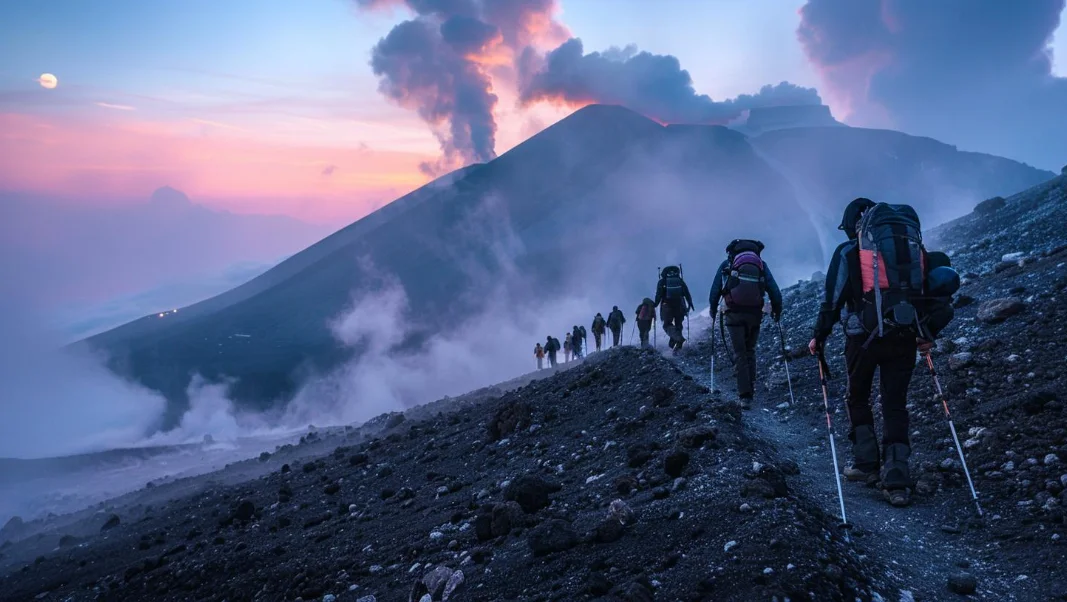
Italian firefighters said the man was struck on Sunday evening, 16 August, in the Rocca Capra area, approximately 1,400 metres above sea level. He was in barren, exposed terrain above the tree line when the lightning strike occurred.
Emergency crews launched an aerial rescue.
A firefighter helicopter reached the hiker and transported him from the mountainside, but medical personnel later pronounced him dead. His identity had not been publicly released in the initial official reporting.
The tragedy comes during an extraordinary period on Etna.
The volcano has recently experienced sustained eruptive activity and heavy ash emissions. The disruption became serious enough to shut Catania Airport, Sicily's busiest airport, for several days before flights resumed following a downgrade of the volcanic aviation alert.
Authorities have consequently restricted access to parts of Etna.
There is some uncertainty in early reports about whether the exact location where the American was found was formally inside a closed zone. AP reported that areas of the volcano had been closed but that it was initially unclear whether his precise hiking location was among them.
That distinction matters because early breaking-news reports should not turn an unresolved detail into a confirmed fact.
What is confirmed is stark enough:
A young tourist was hiking on an exposed section of an active volcano when lightning struck. A helicopter reached him, but he did not survive.
Why this matters
Mount Etna attracts visitors because of precisely what makes it dangerous.
It is enormous.
Beautiful.
Active.
And unpredictable.
Visitors naturally associate the greatest threat with lava or volcanic explosions.
Yet Italian officials highlighted a surprising reality following the latest death: lightning has killed more people on Etna in recent decades than volcanic activity itself. The last fatalities directly associated with an eruption occurred in 1987.
That changes how the risk should be understood.
A volcano does not need to erupt directly beneath someone to become dangerous.
High altitude means rapid weather changes can expose hikers to thunderstorms.
Above the tree line, there may be little shelter.
Open volcanic terrain can leave a person isolated when lightning develops.
Meanwhile, ash, unstable terrain and active volcanic conditions create additional hazards.
Etna therefore represents several natural risks occupying the same landscape.
Who is affected
The greatest loss belongs to the family and friends of the 29-year-old American, whose name had not been released when authorities first confirmed the death.
Tourists currently visiting Sicily are also affected by the wider conditions surrounding Etna.
The volcano's latest eruptive phase has already caused serious travel disruption.
Persistent ash forced Catania Airport to remain closed for several days during Italy's busy summer holiday period. Hundreds of flights were cancelled or rerouted before operations restarted after the volcanic alert was reduced from red to orange.
Hikers and tour operators must also respond to changing access restrictions.
When authorities close sections of the mountain, those restrictions can change which excursions are possible and how closely visitors can approach active areas.
And emergency responders face substantial risks themselves.
Rescuing someone from exposed volcanic terrain during dangerous weather is fundamentally different from responding to an emergency on an ordinary road.
Aircraft crews must consider visibility, wind, terrain and volcanic conditions while attempting to reach the casualty quickly.
BoonVerse Analysis
There is something deeply counterintuitive about this tragedy.
A man died on an erupting volcano.
But the volcano itself did not kill him.
Lightning did.
That is precisely why the story carries a broader lesson about extreme environments.
People naturally focus on the most spectacular danger.
On Etna, that means lava.
When spectacular fountains of molten rock rise from the mountain, cameras point toward them.
Tourists travel to see them.
Videos spread around the world.
But risk does not always arrive in the form people expect.
A thunderstorm can become more immediately lethal than the lava kilometres away.
This matters especially because Mount Etna's current activity makes the mountain unusually attractive to visitors.
Recent eruptions have produced spectacular images.
That creates a paradox:
The more dramatic the volcano becomes, the more people may want to see it precisely when conditions require greater caution.
Social media can intensify that temptation.
Extraordinary photographs reward proximity.
A distant photograph looks ordinary.
A photograph near glowing lava looks unforgettable.
But mountains do not care whether someone is searching for an unforgettable experience.
Weather changes.
Ash moves.
Trails become dangerous.
Restrictions change.
Lightning develops.
The environment controls the encounter.
There is another remarkable detail.
Officials say lightning has killed more people on Etna in recent decades than volcanic activity.
That statistic illustrates a broader principle in risk management:
The danger that looks most frightening is not necessarily the danger most likely to kill you.
The lesson applies far beyond Etna.
At beaches, people fear sharks while currents can be more dangerous.
On mountains, people fear falling while weather can become lethal.
Near volcanoes, people watch lava while thunderstorms form overhead.
Understanding risk therefore requires something more valuable than fear.
It requires respecting the environment as a complete system.
What happens next
Italian authorities will continue managing access to Mount Etna according to both volcanic and weather conditions.
The mountain remains under close observation following its recent prolonged eruptive activity.
Catania Airport resumed arrivals and departures on 15 August after authorities downgraded Etna's volcanic aviation alert from red to orange, but continued volcanic activity means aviation authorities must remain prepared for further ash-related disruption.
Tourists planning to hike Etna will need to follow official access restrictions and local weather warnings rather than assuming that the absence of visible lava nearby means conditions are safe.
The latest death may also reinforce warnings surrounding excursions into exposed areas when thunderstorms are possible.
Mount Etna will continue attracting visitors.
That is unlikely to change.
It is one of Europe's most extraordinary landscapes, where people can witness geological forces normally hidden beneath the planet.
But Sunday's tragedy provides a brutal reminder of what visiting such an environment means.
A 29-year-old traveller climbed onto the volcano during one of Etna's most dramatic periods of recent activity.
Lava was not what ended his journey.
Neither was volcanic ash.
A bolt of lightning did.
And on a mountain where weather, altitude and volcanic activity can combine within the same landscape, respecting every warning can become a matter of life and death.
Sources
The Associated Press reported the death based on information from Italian firefighters, confirming that the victim was a 29-year-old American from Kansas, that he was struck in exposed terrain on Sunday evening and that rescuers reached him by helicopter before he was pronounced dead.
Associated Press — Mount Etna lightning death report
Reuters' reporting on Etna's continuing activity confirms that Catania Airport resumed flights on 15 August after the volcanic aviation alert was downgraded from red to orange, following major ash-related disruption.