The race to build practical quantum computers is widening, with two emerging companies drawing fresh attention on 10 August: Singapore-based Horizon Quantum and Canada’s Xanadu Quantum Technologies.
Unlike conventional computers, which process information as bits representing either zero or one, quantum systems use qubits capable of representing more complex states. Researchers believe mature quantum machines could eventually accelerate drug discovery, materials research, financial modelling, logistics and cryptography. The difficulty is turning delicate laboratory equipment into reliable technology that customers can use profitably.
Horizon Quantum is approaching this challenge primarily through software. Its Triple Alpha development platform is intended to help programmers create sophisticated quantum applications without designing every operation for a particular machine. The company compares its long-term ambition to the foundational role played by operating systems and software platforms in earlier computing eras. Horizon Quantum’s platform overview
However, its financial position illustrates how early the industry remains. Horizon reported no quarterly revenue and an operating loss of approximately $7.18 million as it expanded research and development. An additional $27.5 million in financing has strengthened its cash position, giving it more time to improve its platform and build relationships with hardware providers.
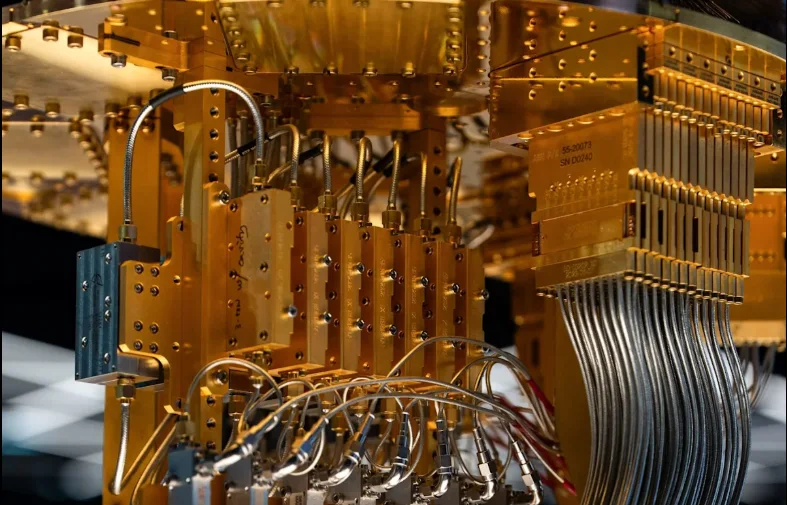
Xanadu is following a different technical path. The Toronto-based company is developing photonic quantum computers that manipulate particles of light. Photonic systems could potentially operate with less extreme cooling than some competing architectures, while also benefiting from manufacturing techniques developed for optical and semiconductor components.
Xanadu reported quarterly revenue of around $1.5 million, supported partly by government research work, including a contract connected to the US Defense Advanced Research Projects Agency. Its losses nevertheless increased as spending on engineering, manufacturing and recruitment accelerated. The company ended the period with approximately $312.8 million in cash after raising additional capital. Xanadu’s investor information
The contrast between attractive technological possibilities and weak near-term finances is now shaping the quantum-computing debate. Investors are attempting to determine which companies possess genuinely scalable technology and which may exhaust their funding before commercial demand develops.
Horizon’s software-focused strategy could allow it to serve several quantum-hardware architectures rather than betting everything on one design. Xanadu, meanwhile, controls both its PennyLane software ecosystem and the development of its photonic machines. These approaches make the companies fundamentally different, even though both are trying to remove barriers preventing wider quantum adoption.
Their growing visibility comes as publicly traded quantum companies experience sharp price movements following earnings announcements. A market assessment published on 10 August highlighted Horizon and Xanadu as smaller contenders deserving attention alongside better-known quantum businesses. Quantum-sector market assessment
Why This Matters
The emerging quantum industry resembles the early years of classical computing: multiple architectures are competing, standards remain unsettled and immediate revenues are small compared with research costs. The eventual winners may not necessarily be the companies possessing the largest machines today. They could instead be those that make quantum systems easier to program, manufacture and connect to real commercial problems.