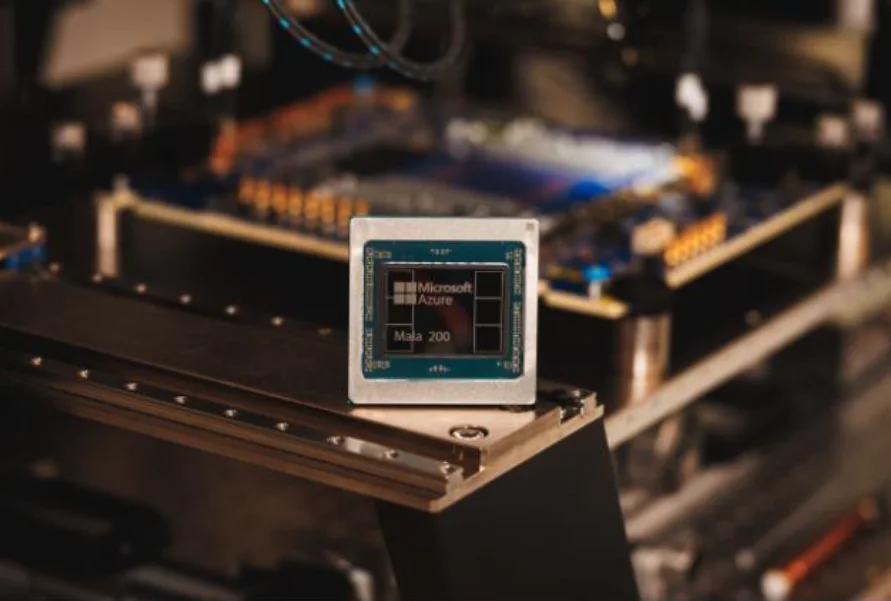
Microsoft’s next major weapon in the global AI infrastructure contest may be only weeks away, with information emerging on 10 August that the company is preparing a new custom processor called Maia 300.
The chip has not yet been formally unveiled by Microsoft, so its launch schedule and technical specifications remain subject to change. Current reports indicate that the company could present it in September as the successor to Maia 200, which began operating within Microsoft’s infrastructure earlier in 2026.
Maia processors are designed for artificial-intelligence workloads inside Microsoft’s data centres. Creating custom silicon allows the company to adjust memory, networking and computing architecture around the requirements of its own models and cloud customers rather than relying entirely on general-purpose commercial chips.
Microsoft reportedly wants Taiwan Semiconductor Manufacturing Company to produce more than 300,000 Maia 300 units by 2027. Longer-term ambitions could exceed one million processors, although those targets will depend on component availability and whether Microsoft can secure sufficient manufacturing capacity.
The scale of the plan shows why custom chips have become strategically important. Microsoft, Amazon, Google and Meta are spending enormous amounts constructing AI data centres, while demand for Nvidia’s most advanced processors continues to exceed supply. Even a partial replacement with internally designed hardware could produce substantial savings.
Microsoft is also expected to encourage major Azure customers to use Maia 300. Anthropic has been identified as one potential user, but neither company has publicly confirmed a deployment agreement involving the unreleased processor.
The challenge will be software. Nvidia’s advantage comes not only from its hardware but also from CUDA, a mature programming ecosystem used widely by AI developers. Microsoft must ensure that workloads can move onto Maia without requiring customers to rebuild their applications or accept weaker performance.
Manufacturing presents another obstacle. The same advanced production lines needed for Maia are being pursued by numerous technology companies. Microsoft could design an excellent processor and still struggle to obtain enough units if factory capacity, memory or advanced packaging remains constrained.
Maia 300 is therefore unlikely to remove Nvidia from Microsoft’s infrastructure. Instead, it could become part of a mixed system in which Nvidia hardware handles certain demanding jobs while Microsoft’s processors run workloads for which they offer better efficiency or lower costs.
If the September unveiling proceeds, Maia 300 could mark Microsoft’s transition from being one of the world’s largest chip buyers to becoming a more serious designer of the computing engines powering modern AI. Details of the reported September unveiling emerged on 10 August 2026