What happened
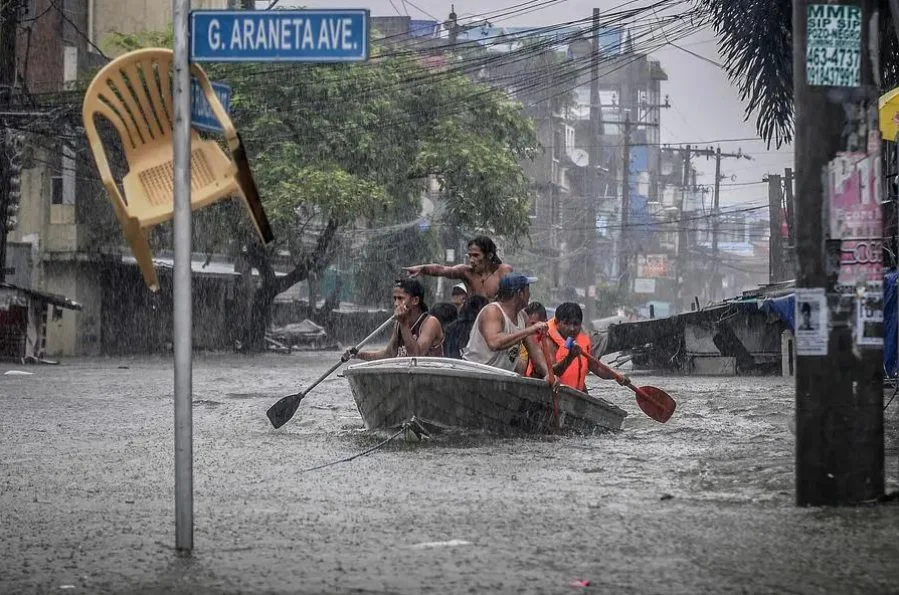
The Philippines faced another dangerous day of extreme weather on Monday, 17 August 2026, as heavy southwest monsoon rains flooded major roads in Metro Manila and surrounding regions, disrupting transportation and forcing authorities to suspend government work and in-person classes.
The latest disaster assessment puts the death toll at at least 23 following a prolonged period of severe weather involving the southwest monsoon and tropical cyclones Luis and Maymay.
Flooding and landslides have struck several regions, particularly across Luzon and parts of the Visayas.
Rivers have overflowed, roads have become impassable and families have been forced into evacuation centres while authorities continue rescue and relief operations.
The scale is enormous.
Around five million people have been affected during the wider spell of monsoon and storm-related weather, according to current assessments cited by AP.
Nearly 25,000 people remained in emergency shelters across northern provinces as of Monday.
Some of the deaths have been particularly devastating.
Ten people, including children, were killed when a landslide struck Baguio City on 9 August, illustrating how saturated ground can transform prolonged rainfall into sudden catastrophe.
Infrastructure is also taking damage.
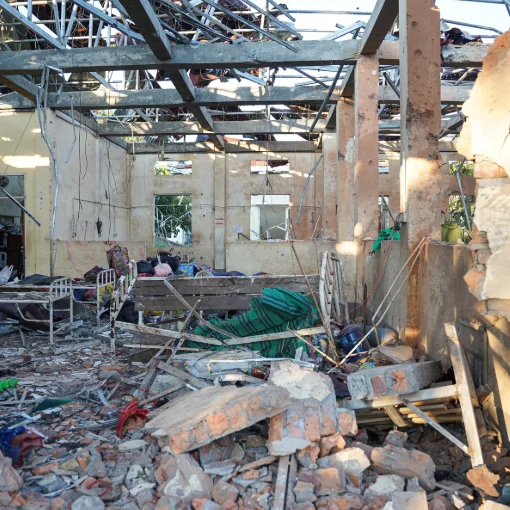
Authorities have reported affected roads, bridges and agricultural areas, alongside electricity interruptions and problems with water supplies in some flood-hit communities.
Why this matters
The danger is no longer simply about rain.
It is about what happens when days and weeks of rainfall accumulate across already saturated communities.
Once soil absorbs enormous quantities of water, slopes can become unstable.
A hillside that survived yesterday's rainfall may collapse tomorrow.
Rivers that initially remained inside their banks can overflow.
Drainage systems can become overwhelmed.
Roads disappear beneath water.
And communities can become isolated.
That creates multiple emergencies simultaneously.
Authorities must rescue people from flooded homes while also responding to landslides, restoring electricity, maintaining clean-water supplies and keeping evacuation centres functioning.
The crisis has also reached the country's most important metropolitan area.
Flooding across Metro Manila on Monday caused major traffic disruption, while government work was suspended and schools shifted away from normal classroom operations.
When extreme weather significantly disrupts a megacity, the economic consequences can spread far beyond the flooded streets.
Who is affected
Families living in flood- and landslide-prone communities face the most immediate danger.
Some have lost relatives.
Others have watched water enter their homes or have been ordered to evacuate because remaining there is no longer safe.
Children are particularly vulnerable.
School disruption affects education, while displacement into evacuation centres can create additional challenges involving food, sanitation, healthcare and security.
Farmers face another serious problem.
Flooding has damaged agricultural areas, threatening crops and livelihoods even after the water eventually recedes.
Workers and businesses in Metro Manila are also affected by flooded streets, transportation disruption and government suspensions.
Meanwhile, emergency responders and local authorities are being stretched across numerous communities simultaneously.
They must evacuate residents, deliver supplies, clear roads and monitor locations where further landslides or flooding could occur.
BoonVerse Analysis
The most alarming number in this disaster may not be 23 deaths.
It may be five million people affected.
That number demonstrates how a weather emergency can expand from individual tragedies into a national economic and humanitarian problem.
A flooded house can eventually dry.
But what happens afterward?
Furniture is destroyed.
Electrical systems need repairing.
Food becomes contaminated.
Children miss school.
Businesses remain closed.
Farmers lose crops.
Workers cannot reach their jobs.
Roads require repairs.
Families may spend savings replacing possessions instead of investing in education or businesses.
The financial damage continues long after television cameras leave.
There is another important issue.
The Philippines experiences tropical cyclones regularly because of its geographic position in the western Pacific.
But familiarity does not make extreme weather harmless.
In fact, repeated disasters can create cumulative vulnerability.
Imagine repairing your house after one flood and then facing another.
Imagine rebuilding a farm only for another storm to destroy the next harvest.
Eventually, families can run out of savings.
Local governments can struggle to finance repeated reconstruction.
Infrastructure deteriorates faster than it can be replaced.
That is why disaster resilience increasingly matters as much as disaster response.
The Philippines needs evacuation systems.
But it also needs drainage.
Flood-control infrastructure.
Reliable weather forecasting.
Stronger buildings.
Safer hillside development.
Protected watersheds.
And infrastructure designed around the reality that severe rainfall will happen again.
The challenge is therefore bigger than surviving this week's floods.
It is building communities capable of surviving the next storm without restarting from zero.
What happens next
Rescue and relief operations remain the immediate priority.
National agencies and local governments are continuing evacuations, emergency assistance and relief distribution across affected communities.
Authorities will also be watching rainfall closely because additional precipitation could trigger new flooding or landslides in already saturated areas.
For displaced families, the question is when conditions will become safe enough to return home.
That cannot always happen immediately after floodwaters disappear.
Buildings need inspection.
Roads must reopen.
Electricity needs to be restored safely.
Clean drinking water must be available.
And communities near unstable slopes may remain dangerous even after the rain stops.
Agricultural losses and infrastructure damage will also need to be assessed more completely.
Those figures will reveal the disaster's longer-term economic cost.
But the immediate picture on 17 August 2026 is already severe:
at least 23 people dead, millions affected, thousands still displaced and major urban areas struggling with another round of flooding.
The Philippines is accustomed to powerful tropical weather.
What makes the current situation frightening is the relentless accumulation of damage.
For millions of people, the question is no longer simply when the rain will stop.
It is what will still be standing when it finally does.
Sources
The latest Associated Press report published 17 August 2026 confirms severe flooding in metropolitan Manila, government and school disruptions, roughly five million people affected during the wider weather emergency, at least 23 deaths and nearly 25,000 people remaining in emergency shelters.
Associated Press — Philippines and South Korea severe-weather update
A separate 17 August update citing the Philippines' National Disaster Risk Reduction and Management Council (NDRRMC) confirms at least 23 deaths and reports flooding, landslides, infrastructure damage and continuing rescue and evacuation operations associated with the southwest monsoon and tropical cyclones Luis and Maymay.