Myanmar’s devastating civil war may be approaching a rare diplomatic opening after more than five years of fighting, although major political and military obstacles continue to stand in the way of formal peace negotiations.
The Steering Council for the Emergence of a Federal Democratic Union, or SCEF, represents several influential ethnic armed organizations and the shadow administration formed by politicians connected to Myanmar’s last elected government. The alliance announced that it was willing to pursue a negotiated political solution following recent meetings with the foreign ministers of Thailand and the Philippines.
SCEF spokesperson Saw Nimrod said the resistance movement remained committed to establishing civilian supremacy and removing the military from political leadership. Nevertheless, he confirmed that the alliance was open to political dialogue as a possible route toward resolving the conflict.
Before meaningful negotiations can begin, the alliance is demanding that Myanmar’s military stop attacking civilians and release political prisoners. These conditions could become major sources of disagreement because the military continues conducting operations against resistance-controlled areas.
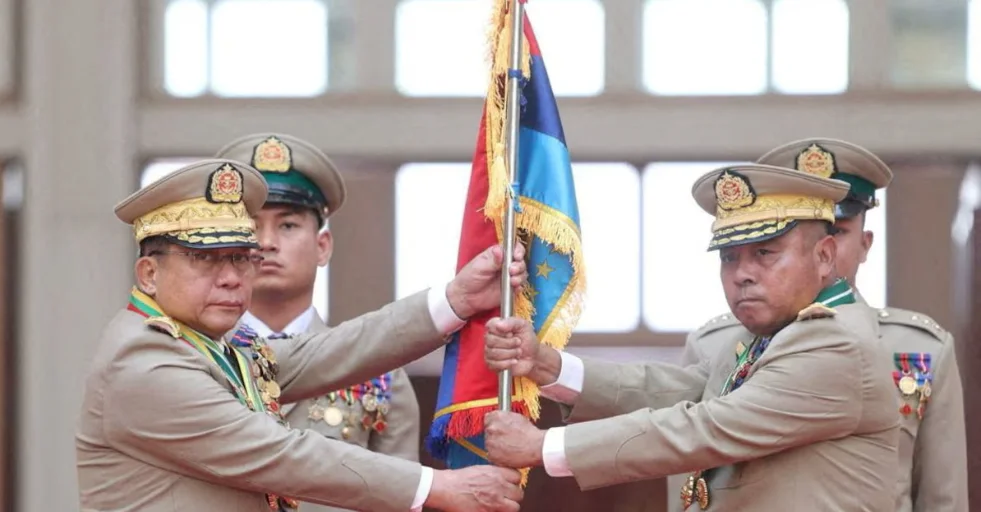
Myanmar’s military leader, Min Aung Hlaing, who became president following an election organized under military rule, has not recognized the SCEF as an official negotiating partner. His government has instead preferred separate discussions with individual armed groups, which could weaken the resistance alliance’s collective negotiating position.
Min Aung Hlaing was expected to visit Thailand on 6 and 7 August as Bangkok intensified efforts to encourage Myanmar’s gradual re-engagement with the Association of Southeast Asian Nations. ASEAN largely isolated Myanmar’s military leadership after the 2021 coup because of its failure to implement the regional organization’s peace plan.
Thailand’s political priorities include reducing violence near its border, expanding humanitarian access and preventing the conflict from spreading into neighbouring countries. The Philippines has also participated in diplomatic contacts as regional governments look for a possible foundation for negotiations.
The conflict began after Myanmar’s military overthrew the elected government of Aung San Suu Kyi in February 2021. The coup triggered nationwide protests, armed resistance and fighting between government troops and a collection of opposition forces. More than 100,000 people have reportedly been killed, while millions have been displaced and the country’s economy has suffered severe damage.
Myanmar’s military has recently regained territory after introducing conscription, changing its battlefield tactics and receiving support from important international allies, including China. Analysts believe these military gains may have influenced some resistance organizations to consider negotiations.
Despite the diplomatic movement, experts have warned that comprehensive peace talks may still be far away. The opposing sides disagree over the military’s future political role, the release of prisoners, control of territory and the establishment of a federal democratic system.