What happened
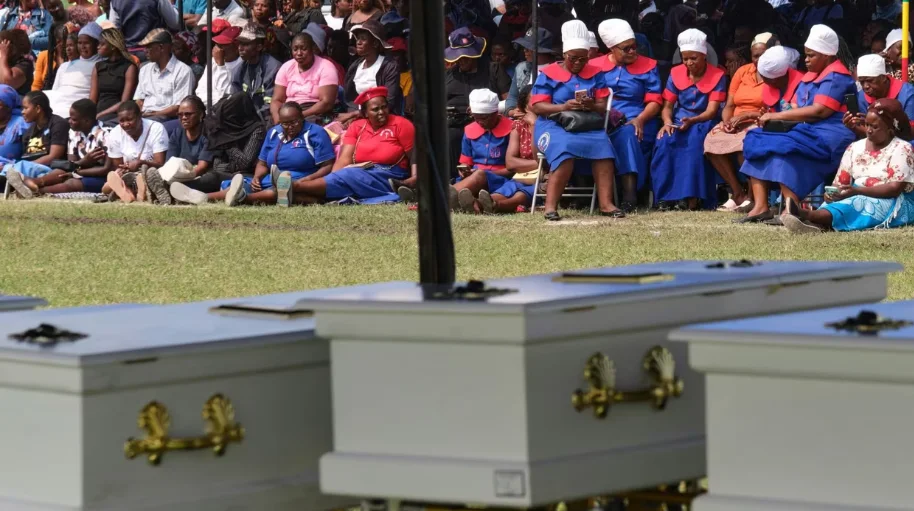
Zimbabwean authorities announced a grim new development on Monday, 17 August 2026: eight additional bodies have been recovered from Lake Kariba, pushing the confirmed death toll from last week's catastrophic ferry accident to 92.
The disaster began on 11 August, when the Mbuya Nehanda passenger ferry operated by Zimbabwe's Rural Infrastructure Development Agency capsized while travelling across Lake Kariba.
The vessel was heading from Kariba town toward Chalala Fishing Camp near Long Island when it overturned amid rough conditions.
What investigators and survivors have described since then is deeply disturbing.
The ferry had an authorized capacity of about 90 passengers, yet evidence indicates it was carrying far more people. Earlier accounts put the number aboard as high as 153, while the latest confirmed figures — 92 bodies recovered plus 77 survivors — indicate at least 169 people were aboard if all those figures refer to the same manifest and recovery count.
That means the final number of passengers may have been dramatically above the vessel's intended capacity.
Zimbabwe Republic Police spokesperson Commissioner Paul Nyathi said Monday afternoon that the death toll had reached 92 after the latest eight bodies were recovered.
Police have deployed substantial resources to the operation, including more than 40 police Sub-Aqua personnel, two large boats and two smaller vessels as teams continue searching the lake.
The tragedy has already claimed children.
Police said over the weekend that 18 children were among those confirmed dead, including very young victims.
Why this matters
This is no longer simply a boating accident.
It is becoming a major national disaster and a serious test of Zimbabwe's passenger-transport safety systems.
Lake Kariba is enormous, stretching for more than 200 kilometres along the Zimbabwe-Zambia border.
For communities around the lake, boats are not merely recreational vessels.
They can be essential transport infrastructure.
Road connections in some remote areas are poor, making ferries an important way for residents to reach towns, markets, healthcare and other services.
That makes the apparent overloading especially concerning.
If people living in isolated communities have few realistic alternatives, unsafe transportation can become something they tolerate because they still need to travel.
The catastrophe therefore raises a much bigger question:
How safe is essential transport when communities cannot simply choose another route?
The rapidly changing death toll also demonstrates the enormous difficulty of responding to disasters on large bodies of water.
Six days after the ferry sank, families are still receiving devastating news as recovery teams locate additional victims.
Who is affected
The victims' families carry the greatest burden.
For many, the disaster has meant days of uncertainty followed by confirmation that relatives will not return.
Children have been particularly affected. Eighteen children had already been counted among the dead before Monday's latest recoveries.
The 77 people rescued alive now face another journey: recovering physically and psychologically from an accident in which dozens of fellow passengers died.
Survivors previously described terrifying moments before the ferry capsized.
Some said passengers became concerned about rough conditions and pleaded for the vessel to turn back as water entered the boat and conditions deteriorated.
Remote communities around Lake Kariba are affected as well.
The ferry provided an important connection between Kariba and communities that have limited transportation alternatives.
And Zimbabwe's government now faces pressure to explain how a public passenger vessel could apparently operate so far beyond its authorized capacity.
BoonVerse Analysis
There is one number that should haunt the investigation:
90.
That was approximately how many passengers the ferry was designed to carry.
Now compare it with another two numbers:
92 dead.
77 rescued.
Even without knowing the final number aboard, those confirmed outcomes illustrate the extraordinary scale of the disaster.
This is where the story becomes bigger than the weather conditions on Lake Kariba.
Strong waves may help explain how the ferry capsized.
They cannot alone answer why so many people were exposed to the danger.
That question leads toward capacity limits, enforcement, vessel condition, operating decisions and the transportation realities facing rural communities.
When people depend on a transport service, safety rules are not administrative paperwork.
They are the difference between an accident involving dozens of people and a catastrophe involving potentially far more.
There is also a difficult economic reality underneath the tragedy.
Poor transportation infrastructure can force people into dangerous choices.
If roads are unreliable or nonexistent, a ferry becomes essential.
If only one practical transport option exists, passengers have very little market power to reject unsafe conditions.
That makes government oversight even more important.
The passengers cannot be expected to inspect the vessel.
They cannot independently verify its maintenance history.
They cannot enforce its capacity limit.
Those responsibilities belong to institutions.
Zimbabwe now has an opportunity — and an obligation — to investigate every link in that chain.
Who knew how many passengers were aboard?
How was boarding controlled?
Was the vessel mechanically sound?
Were enough life jackets available?
Why did the journey continue under dangerous conditions?
And were previous safety concerns ignored?
Those questions matter because investigations should accomplish more than determine what happened on 11 August 2026.
They should prevent another ferry from becoming the next national tragedy.
What happens next
The immediate operation remains focused on finding any remaining victims.
Police say specialized teams and boats remain deployed on Lake Kariba, meaning Monday's death toll may not necessarily be the final figure.
Authorities will also need to establish the definitive number of people who were aboard.
That has proved complicated because earlier reports indicated that some children may not have been included in passenger records.
The investigation into overloading will become increasingly important.
Authorities must determine how a vessel authorized for roughly 90 passengers ended up carrying a number apparently far beyond that limit.
Questions surrounding the ferry's condition and operational decisions before the capsize are also likely to receive greater scrutiny.
For Zimbabwe, however, the immediate reality is painfully simple.
Six days after a passenger ferry disappeared beneath Lake Kariba, recovery teams are still bringing people home.
On Sunday, the reported toll stood at 84.
By Monday afternoon, it had reached 92.
And until search teams finish their work and every passenger is accounted for, one frightening possibility remains:
the final number may still rise.
Sources
Zimbabwe Republic Police provided the central 17 August 2026 update, confirming that eight additional bodies had been recovered and that the death toll had reached 92 by Monday afternoon. The police also detailed the personnel and vessels deployed in the continuing recovery operation.
Latest Lake Kariba disaster update
Associated Press reporting from earlier in the disaster established that the ferry had an authorized capacity of approximately 90 passengers, was overloaded, and that 77 people had been rescued. It also documented the deaths of at least 18 children and the importance of the ferry to poorly connected rural communities.
Reuters reported on 16 August that Zimbabwean police had placed the toll at 80 before subsequent recoveries pushed it higher.