What happened
A private helicopter crashed on the Greek island of Sifnos on Monday, 17 August 2026, killing all three people aboard in a sudden aviation disaster during the height of Europe's summer travel season.
Greek fire brigade officials confirmed that the victims were the pilot and two passengers.
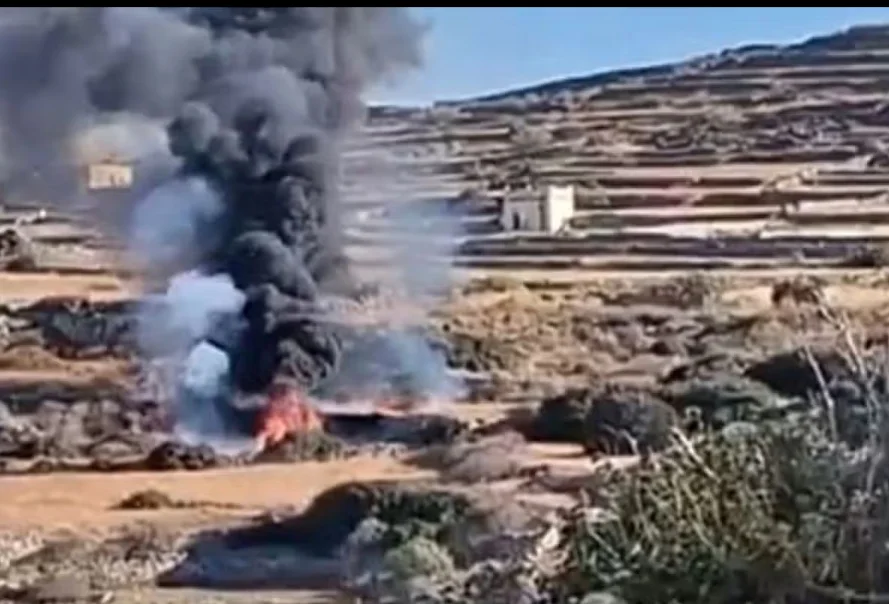
The aircraft came down in the Tholos area of Sifnos, with emergency authorities responding after the crash triggered a fire. The Associated Press reported that responders recovered the bodies of all three occupants.
Images from the scene showed an enormous plume of dark smoke rising above the dry island landscape after flames engulfed the wreckage. Reuters reported that the helicopter crashed shortly after takeoff.
The most important question remains unanswered:
Why did the helicopter crash?
As of Monday evening, authorities had not announced an official cause.
That means claims circulating about possible mechanical problems or other explanations should be treated cautiously until investigators establish what actually happened.
Why this matters
Three deaths would make this a tragedy anywhere.
But the location gives the accident wider significance.
Sifnos is part of Greece's Cyclades island group, an internationally known tourism region that attracts visitors during the European summer.
Private helicopters form part of the premium transport network serving Greek islands, allowing travellers to move between Athens and destinations that can otherwise require ferry journeys.
An accident involving such transportation naturally raises questions about aviation safety, aircraft condition, pilot operations and the circumstances immediately preceding the crash.
However, none of those factors should be blamed prematurely.
The investigation must first determine whether the accident involved a technical failure, environmental conditions, human factors or some combination of circumstances.
What is already established is devastating enough:
three people boarded the helicopter, and none survived.
Who is affected
The families and friends of the three victims face the most profound consequences.
Authorities had not initially publicly established the identities of the victims in the earliest confirmed reports, meaning caution is necessary around names and nationalities circulating online.
Residents of Sifnos were also confronted with the frightening sight of an aircraft crashing and burning on their island.
The accident occurred during Greece's busy summer tourism period, when islands across the Aegean receive large numbers of domestic and international visitors.
Emergency responders and firefighters faced the immediate challenge of controlling the blaze and reaching the wreckage.
The wider Greek aviation and tourism industries will also watch the investigation closely.
Private aviation plays a small but visible role in transporting wealthy travellers, businesspeople and tourists between mainland Greece and its islands.
Any fatal accident inevitably brings renewed scrutiny to how those flights are operated and regulated.
BoonVerse Analysis
Aviation disasters are frightening partly because of their speed.
A passenger boards.
The aircraft takes off.
Something changes.
Seconds or minutes later, an ordinary journey becomes a catastrophe.
Today's Sifnos accident appears to have unfolded with exactly that terrifying suddenness.
Reuters reports that the helicopter crashed shortly after taking off.
That timing will likely become one of the investigation's most important starting points.
Investigators will want to reconstruct the aircraft's final moments.
They may examine the helicopter itself, maintenance records, flight information, weather conditions, pilot history and any available communications or witness accounts.
But there is an important distinction between asking questions and answering them.
Immediately after a dramatic accident, speculation spreads quickly.
Someone hears an unusual sound.
Another person believes they saw the aircraft behaving strangely.
Social media produces theories.
Headlines begin repeating them.
Eventually, speculation can become mistaken for fact.
That is exactly what responsible reporting should avoid.
At this stage, the verified story is simpler:
A helicopter crashed.
Three people died.
A fire followed.
The cause remains unknown.
The technical explanation should come from investigators, not internet speculation.
There is also a broader tourism dimension.
Greece sells something incredibly valuable to the world:
access to hundreds of spectacular islands.
Most visitors travel safely by aircraft, ferry, boat or road every year.
But geographically fragmented destinations depend heavily on transportation systems connecting travellers with places separated by sea.
That makes transportation safety an essential part of the tourism economy itself.
People do not simply need beautiful destinations.
They need confidence that they can reach them safely.
Today's tragedy therefore deserves close attention—not because it proves Greek island aviation is broadly unsafe, which current evidence does not establish, but because every fatal accident provides an opportunity to identify whether something went wrong that could prevent another tragedy.
What happens next
The investigation now becomes the central story.
Greek authorities will need to establish why the helicopter came down shortly after takeoff.
The wreckage could provide crucial evidence.
Investigators will likely attempt to reconstruct the aircraft's final movements and examine relevant operational and technical information.
Authorities will also formally establish and communicate additional information about the victims when appropriate.
Until then, the cause should remain described exactly as authorities currently describe it:
unknown.
If investigators eventually identify a technical or operational problem, their conclusions could lead to recommendations or regulatory action.
If another factor caused the crash, that evidence will reshape the investigation accordingly.
For now, however, Sifnos is dealing with the immediate aftermath.
Monday began as another summer day on one of Greece's famous islands.
By evening, emergency crews were standing around the burned remains of a helicopter while three families faced news no family expects to receive.
Three people took off aboard the aircraft. None came home.
And until investigators explain what happened in those final moments, one question will hang over the island:
What caused a routine helicopter journey to end in flames?
Sources
Reuters — 17 August 2026: Fire brigade officials confirmed three deaths—the pilot and two passengers—and said the helicopter crashed shortly after takeoff. The cause had not been determined when the report was published.
Reuters — Three killed in helicopter crash on Greek island of Sifnos
Associated Press — 17 August 2026: AP confirmed the private helicopter crashed in the Tholos area of Sifnos, caused a fire and killed all three people aboard.