Ghana is preparing to breathe new life into one of its long-troubled agricultural-processing facilities as the government seeks to turn locally grown crops into more valuable products before they reach consumers.
President John Dramani Mahama has announced plans to rehabilitate the Pwalugu Tomato Factory in Ghana's Upper East Region, putting the facility back at the centre of efforts to strengthen the country's tomato industry.
The move could be particularly important for farmers in northern Ghana.
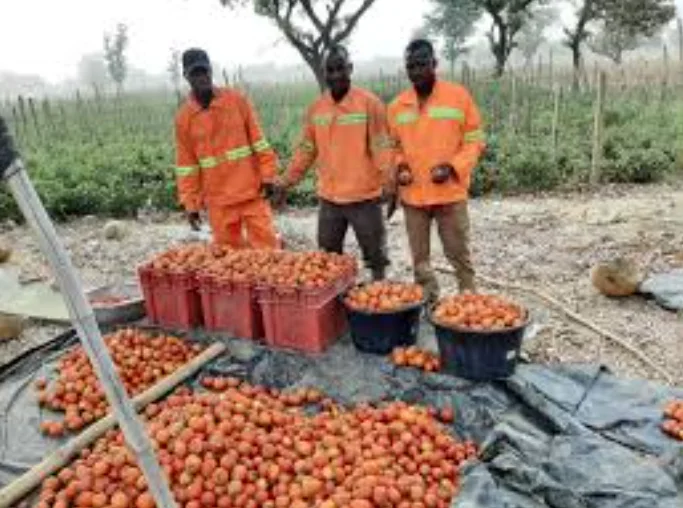
Tomatoes are highly perishable. When farmers produce more than traders and markets can immediately absorb, prices can collapse and large quantities of the crop can spoil before reaching consumers.
A functioning processing plant offers another destination for that harvest.
Instead of selling tomatoes exclusively into fresh-produce markets, farmers could supply processors capable of transforming the crop into products with a longer shelf life.
That creates an important connection between agriculture and manufacturing.
For Ghana, increasing domestic processing could also help retain more value from agricultural production inside the country. Rather than exporting raw commodities or depending heavily on imported processed foods, locally produced crops can support factories, transportation companies, packaging businesses and other parts of the supply chain.
A potential lifeline for tomato farmers
The significance of reviving the Pwalugu facility extends beyond the factory itself.
A reliable industrial buyer could give surrounding farmers greater confidence to expand production because they would have another potential market for their harvest.
However, reopening a processing facility will not automatically solve the challenges facing tomato growers.
Successful operation will require a consistent supply of suitable tomatoes, dependable electricity and water, efficient transportation, professional management and agreements that provide farmers with commercially sustainable prices.
Without those supporting systems, factories can struggle even when agricultural production is strong.
From farming to agro-industry
The announcement also reflects a broader development strategy increasingly being pursued across Africa: produce more food locally, but also process more of that food locally.
Agricultural economies can lose considerable potential income when crops leave farms with little or no processing.
Turning tomatoes into paste, puree, sauces and other products can create additional economic value while generating jobs that extend beyond farming.
Young people, for example, could find opportunities in processing, logistics, machinery maintenance, packaging, marketing and distribution.
Reducing post-harvest losses
One of the biggest problems facing African agriculture is not simply how much food farmers produce, but how much survives between the farm and the consumer.
Processing facilities can become part of the solution.
When farmers have access to reliable industrial buyers, crops that might otherwise spoil during periods of abundant production can instead enter processing chains.
For tomato-producing communities, that could mean the difference between watching unsold harvests deteriorate and turning those harvests into commercially valuable products.
Why this matters
The proposed rehabilitation of the Pwalugu Tomato Factory illustrates an important shift in thinking about food security.
Increasing agricultural production is only one part of the equation.
Countries also need storage, processing, transportation and markets capable of handling what farmers produce.
If Ghana successfully restores the factory and establishes a sustainable supply network around it, the project could provide farmers with a more dependable market while helping the country increase domestic production of processed tomato products.
The real measure of success will therefore not be the announcement itself.
It will be whether the factory returns to sustained commercial production, whether farmers receive reliable opportunities to sell their crops and whether Ghana can translate greater agricultural output into jobs, processed food and stronger rural economies.
For farmers in the Upper East Region, the revival of Pwalugu could represent something particularly valuable: a market much closer to the farm.