German security authorities have identified an increase in suspected Russian disinformation campaigns ahead of three important state elections scheduled for September 2026.
Four German security sources told Reuters that authorities were confident the operations were being centrally coordinated from Russia through several companies. The sources were not publicly identified because they were not authorized to discuss the investigations.
According to the officials, the campaigns are intended to polarize German society and damage public confidence in the country’s established political parties. The alleged targets include the governing conservative Christian Democratic Union, its Social Democratic coalition partner, the Greens and the Free Democratic Party.
The disinformation is reportedly being distributed through social-media platforms in the form of fabricated videos. Some of the material carries the logos of respected news organizations, including the BBC and German public broadcaster ARD, creating the false impression that the accusations were produced by legitimate journalists.
The videos contain unverified or false allegations against local politicians, including claims involving corruption, financial misconduct, sexual harassment and abuse. Such accusations can spread quickly online and may influence voters before investigators or media organizations have an opportunity to correct them.
The warning comes ahead of elections in Berlin, Saxony-Anhalt and Mecklenburg-Western Pomerania. The contests are expected to provide an important test of public support for Germany’s national government and its policies on the economy, immigration, defence and the war in Ukraine.
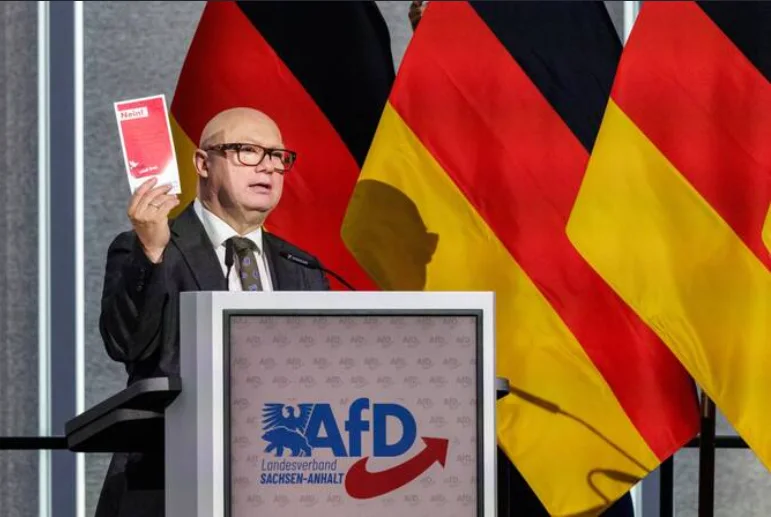
Polls cited in the report suggest that the far-right Alternative for Germany party, commonly known as the AfD, could make substantial gains. The party may even secure a majority in the eastern state of Saxony-Anhalt, which would represent a major political breakthrough.
The AfD has challenged Germany’s political consensus on several issues. Its leadership has also called for rebuilding relations with Russia, which deteriorated sharply after Moscow’s invasion of Ukraine and Germany’s participation in European sanctions.
German authorities have not accused the AfD of organizing the alleged disinformation campaign. However, officials fear that intensified political division and declining trust in established parties could indirectly benefit movements seeking major changes in Germany’s domestic and foreign policies.
Russia’s embassy in Berlin did not immediately respond to the reported allegations. Moscow has repeatedly denied interfering in Western elections or conducting state-directed disinformation campaigns.
Germany previously warned about alleged Russian influence operations before its 2025 federal parliamentary election. Russia has also faced accusations of attempting to influence political processes in countries including Moldova and Armenia.
The latest allegations highlight how election security now extends beyond protecting polling stations and counting ballots. Governments must also confront coordinated online campaigns, manipulated content and false information presented under the identities of trusted institutions.