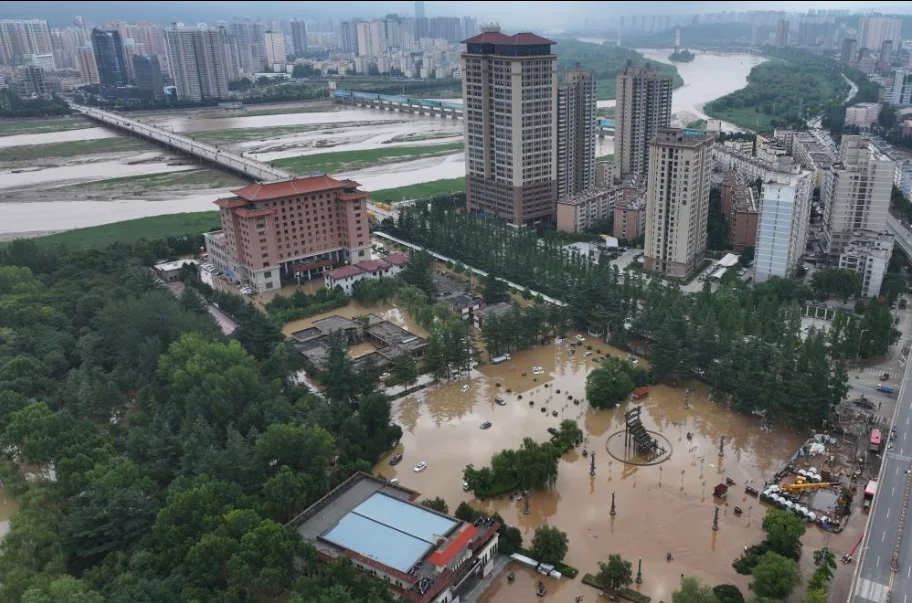
Entire communities in northwestern China are confronting a rapidly developing emergency after days of heavy rainfall transformed rivers and mountain streams into destructive torrents.
More than 25,000 residents were moved from threatened areas of Shaanxi province during a single 24-hour period. The latest evacuations have pushed the number of people relocated across the province since 30 July to more than 140,000.
Floodwater has eaten through sections of road, damaged bridges and disrupted electricity and communication networks. The destruction has made it difficult for emergency teams to reach some settlements using ordinary vehicles.
In Zhen’an County, rescuers were seen carrying essential supplies on foot after damaged roads interrupted normal transportation. Bags of rice, drinking water and other necessities had to be moved through areas where vehicles could no longer travel safely.
For affected families, evacuation means leaving homes, livestock, businesses and personal belongings without knowing what will remain when the water recedes. Temporary shelters must now accommodate thousands of people while authorities examine whether their communities are safe enough for them to return.
The mountainous landscape increases the danger. Water rushing down steep slopes can produce flash floods with little warning, while saturated soil can suddenly collapse and bury roads, buildings or people beneath landslides.
The emergency may not end soon. Forecasters expect further heavy rainfall across Shaanxi and several other Chinese provinces, raising fears that already weakened roads, hillsides and bridges could suffer additional damage.
China is also preparing for Typhoon Dolphin, which is expected to approach the eastern coastline between Shanghai and Fujian around 9–10 August. After landfall, the storm could interact with colder air and carry intense rainfall farther north.
This creates the possibility of two weather emergencies unfolding across different parts of the country: continuing floods in the northwest and a powerful tropical system approaching the east.
While emergency teams concentrate on evacuations and relief deliveries, officials are urging residents to avoid swollen rivers, damaged bridges and unstable hillsides. People living in high-risk areas may receive further instructions to leave with little notice.
The full scale of the damage has not yet been calculated. No deaths were announced in the initial report, but the continuing rain, disrupted infrastructure and threat of landslides make the situation extremely dangerous.