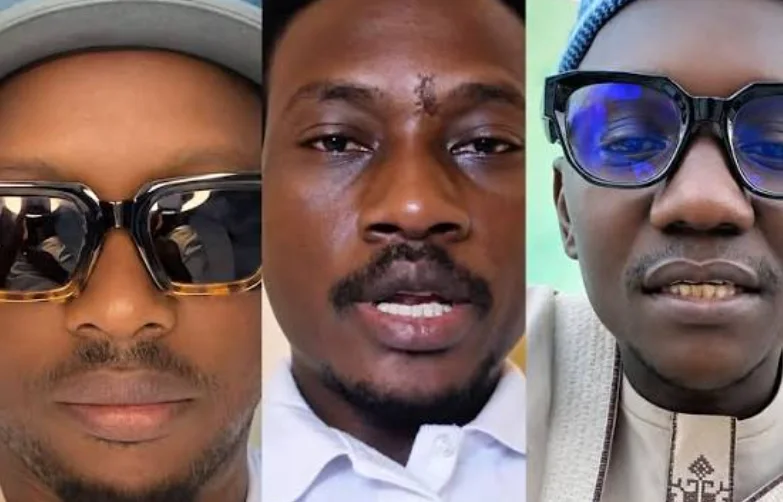
Three social-media creators in Senegal are heading to prison after online videos about the country’s president crossed the line between comedy and criminal offence in the eyes of the court.
Mandoumbe Diop, popularly known as Lamignou Darou, received the longest sentence: three months in prison without suspension. He has built a substantial TikTok audience of more than half a million followers.
The two other creators, Magueye Diaw—known online as Oustaz Thiep—and Moustapha Ndiaye, known as Ndiaye Touba, were each sentenced to two months in prison.
Diaw and Ndiaye were also ordered to pay fines of 500,000 CFA francs each, equivalent to approximately US$800.
All three worked with Feenal Digital, an online communication platform producing political, government and private-sector content. Some observers consider the channel sympathetic to former prime minister Ousmane Sonko.
The creators’ lawyer argued that the disputed TikTok posts were intended as comedy. He maintained that the videos did not justify criminal proceedings or imprisonment.
The exact words or images that formed the basis of the convictions were not fully detailed in the initial announcement. That limits the public’s ability to independently assess the seriousness of the content.
Critics have described the sentences as a threat to freedom of expression, warning that criminal punishment for mocking or criticising political leaders could encourage online self-censorship.
The case arrives during a period of political tension in Senegal. President Faye and Sonko, once close allies, recently separated politically, with Faye launching his own party in July.
That split has changed the political meaning of online content associated with either leader. Humorous videos can quickly become part of a wider struggle involving loyalty, influence and control of public opinion.
Social media has given young Africans powerful platforms for political commentary, comedy and criticism. However, it has also placed creators in direct conflict with laws governing defamation, public order and insults against state officials.
Supporters of such laws may argue that online influence should not protect creators from accountability. Free-expression advocates respond that political leaders should face a higher level of public criticism without using imprisonment as a response.
The convictions may now encourage other Senegalese creators to reconsider what they publish about government officials. Content intended as humour could carry serious consequences if authorities interpret it as an unlawful insult.
It was not immediately clear whether the three men would appeal. Their case is likely to remain part of a broader national debate over whether political speech should be answered through public discussion or criminal punishment.