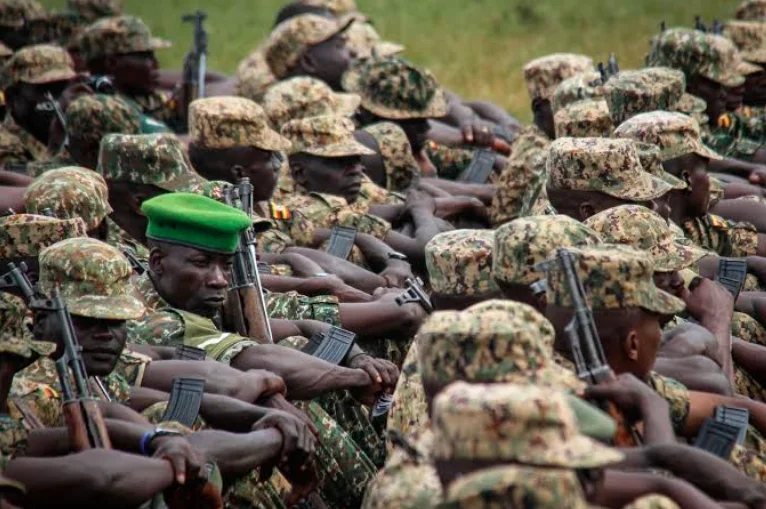
Ugandan soldiers could be sent thousands of kilometres from East Africa to the Gaza Strip after lawmakers approved the country’s participation in a proposed international security mission.
Parliament granted the authorisation on Thursday following a request presented by Defence Minister Kiryowa Kiwanuka. The vote allows the government to prepare a military contingent if the multinational force is activated.
The minister told lawmakers that US President Donald Trump had contacted Ugandan President Yoweri Museveni through representatives in July and requested Uganda’s contribution to the international mission.
Although Uganda had previously been mentioned as a possible participant, the parliamentary debate was the first public confirmation from Kampala that the country was seriously considering sending troops.
The proposed International Stabilization Force forms part of a wider plan intended to maintain security in Gaza, increase humanitarian assistance and create conditions for rebuilding the devastated territory.
The plan also calls for civilian administration by Palestinian technocrats, the disarmament of Hamas and the gradual withdrawal of Israeli troops. Several of those conditions remain unresolved.
Uganda’s approval does not mean its soldiers will immediately travel to Gaza. The multinational force has not yet been fully assembled, its deployment date remains uncertain, and the areas in which it would operate have not been finalised.
Lawmakers raised questions about the legal protections and responsibilities that would apply to Ugandan personnel. The defence minister said a formal status-of-forces agreement would be completed following parliamentary approval.
Such an agreement would define the soldiers’ authority, command structure, legal jurisdiction and rules of engagement. These details would be critical in a territory where armed groups, Israeli forces and civilians may operate close to one another.
Uganda has extensive experience in overseas missions, with personnel serving in countries including Somalia, South Sudan and the Democratic Republic of Congo. Gaza, however, would present a particularly complex political, military and humanitarian environment.
The decision may attract debate inside Uganda over the dangers facing its soldiers, the cost of the mission and the country’s role in a conflict far beyond its borders.
Supporters may view the deployment as an opportunity for Uganda to contribute to international peace efforts. Critics may question whether foreign troops can operate effectively while the central political disputes surrounding Gaza remain unresolved.
Much of Gaza has been destroyed by years of conflict, and its population continues to face shortages of housing, healthcare, food, clean water and other basic services. Any foreign force would be entering a deeply damaged territory where trust remains extremely limited.
The next major development will be the signing of the deployment agreement and confirmation that the wider international force is ready. Until then, Uganda has provided legal approval not dispatched troops.