Sri Lanka’s strained prison system descended into fresh turmoil on Friday as deadly clashes, rooftop protests and emergency security operations unfolded across several detention facilities.
The first major disturbance began late Thursday at Colombo’s New Magazine Prison. Approximately 40 inmates reportedly broke out of their cells and fought inside the facility, leaving one prisoner dead and several others injured.
A separate confrontation erupted on Friday morning at Kuruwita Prison, approximately 80 kilometres from Colombo. Two inmates were killed during the violence, while numerous others required hospital treatment.
Together, the two clashes left three prisoners dead and at least 23 injured, according to information presented to Sri Lanka’s Parliament by Public Security Minister Ananda Wijepala.
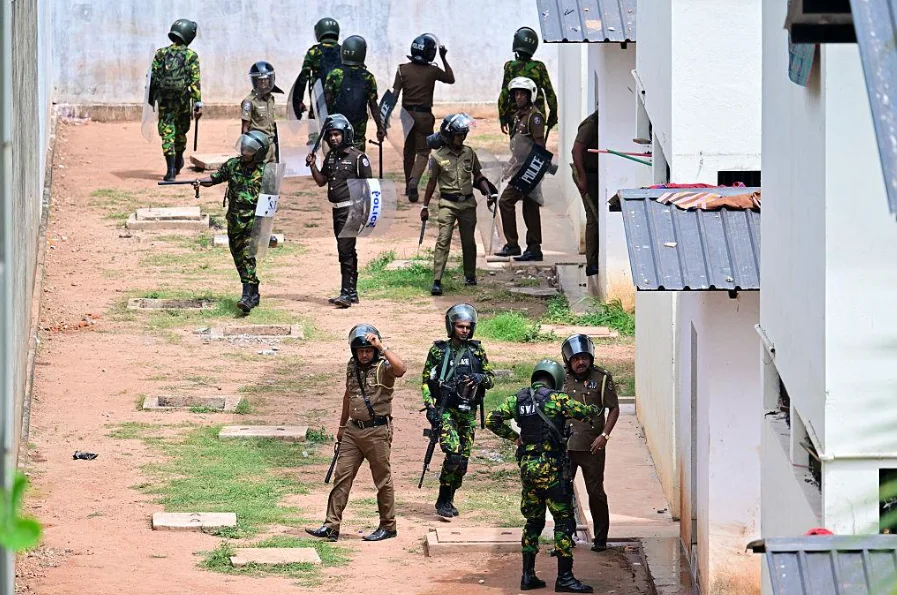
Unrest also developed at the Pallansena open correctional facility near Negombo. Prisoners moved into open areas and climbed onto rooftops during a tense confrontation with authorities. Officers fired tear gas as riot squads attempted to return the inmates to their wards.
Police and specialised security teams were deployed around the affected facilities to prevent escapes and stop the unrest from spreading. Authorities said order had been restored, although security remained elevated as investigators examined how the disturbances began.
The government believes rivalry among criminal groups connected to narcotics trafficking contributed to the violence. However, detailed investigations will be necessary to establish whether the disturbances were coordinated or arose independently from tensions inside the individual prisons.
Beyond the immediate violence, the incidents have exposed an increasingly dangerous overcrowding crisis. Sri Lanka’s prisons reportedly hold more than 39,000 people despite being designed for approximately 10,000. In such tightly packed conditions, minor disputes can escalate rapidly, while prison officers face immense difficulty separating hostile groups.
A large proportion of detainees are being held for drug-related offences or remain in custody while waiting for their cases to move through the courts. Sri Lanka’s enormous legal backlog has prolonged detention for many defendants and added further pressure to already congested facilities.
Friday’s unrest follows other deadly confrontations within the country’s prison system, increasing demands for urgent reform. Human-rights advocates have called for faster court proceedings, alternatives to imprisonment for minor offences and expanded rehabilitation services for people struggling with drug dependence.
The government now faces two immediate challenges: determining who organised or encouraged the latest violence and addressing the conditions that allow tension to repeatedly explode inside the country’s prisons.