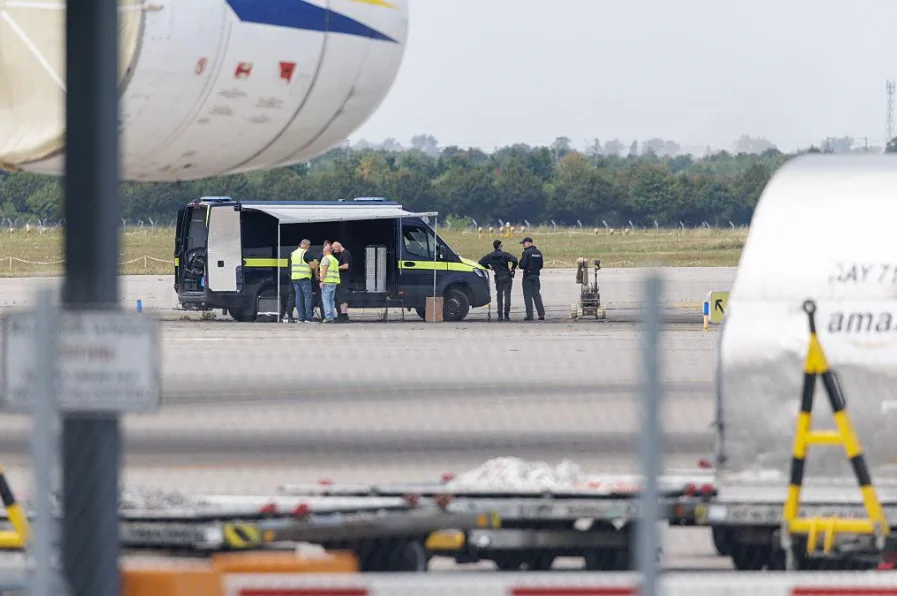
Germany is investigating what authorities describe as a serious attack on national transport infrastructure after an explosives-packed drone entered one of Europe’s most important cargo airports.
On Friday, senior German lawmaker Detlef Seif revealed that an airport bus driver confronted the low-flying device and kicked it, knocking it to the ground. The extraordinary intervention may have disrupted the drone before it reached aircraft or other sensitive infrastructure.
The drone was carrying professionally prepared explosives and a detonator. Investigators believe it was intended to cause an explosion, but the device failed to detonate. Bomb-disposal specialists later secured the scene and safely handled the explosive material.
Authorities have warned members of the public not to imitate the driver’s actions. Although his response may have helped prevent disaster, approaching a suspicious drone could trigger an explosion or expose a person to dangerous chemicals and surveillance equipment.
The incident occurred at Leipzig/Halle Airport, a major European freight centre used by DHL, Ukrainian cargo operator Antonov Airlines and NATO-linked logistics missions. Several large Ukrainian transport aircraft were reportedly positioned nearby, increasing concerns that the drone may have been directed at a strategic target.
A second unidentified flying object is also being investigated after apparently colliding with a cargo aircraft that had abandoned its landing because of the emergency. The plane diverted to Hanover and landed safely with minor damage.
Both runways were temporarily closed while emergency teams examined the area, forcing several aircraft—including a passenger flight—to divert. Operations later resumed after authorities determined there was no continuing danger to passengers or employees.
Germany’s federal prosecutor has taken control of the investigation because of the possible consequences for domestic and international security. Chancellor Friedrich Merz also discussed the incident with senior national-security officials on 7 August.
No organisation or country has been formally identified as responsible. Investigators are examining the drone’s components, flight path, explosive material and potential operator. Although foreign involvement is one possibility under consideration, assigning responsibility before forensic work is completed would be premature.
The case demonstrates how commercially available drone technology can be transformed into a weapon capable of threatening aircraft, airports and supply networks. It may force governments and airport operators worldwide to accelerate the deployment of detection systems capable of identifying and stopping small unmanned aircraft before they reach restricted areas.
The driver’s split-second reaction has become the most astonishing part of the investigation: a potentially devastating aerial attack may have been disrupted not by an advanced defence system, but by one worker standing in the drone’s path.