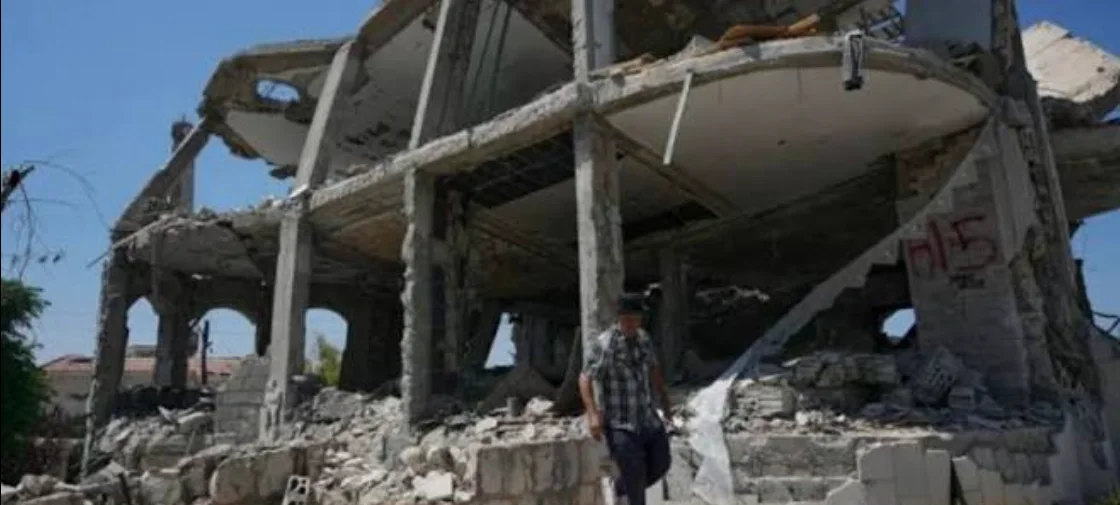
A deadly explosion inside a building in southern Lebanon has triggered fresh airstrikes and raised fears that the fragile calm along the Israel Lebanon border could collapse.
Two Israeli soldiers were killed after entering the building during a security operation. Four additional soldiers were wounded and later transported for medical treatment.
The explosive device may have been hidden inside the structure, but investigators had not determined when it was planted. This unanswered question is important because it remains unclear whether the device was placed before or after the latest ceasefire arrangement.
Israel initially described the explosion as a violation of the ceasefire and launched retaliatory attacks against targets in southern Lebanon. However, later official remarks mourning the soldiers did not directly accuse Hezbollah of carrying out the incident.
In Lebanon, the Ministry of Health said an Israeli strike on the southern town of Tibnin killed at least one person and wounded 12 others. The attack followed an evacuation warning issued for the area.
The renewed fighting arrived at an especially sensitive moment. Israeli and Lebanese representatives were meeting in Rome for talks aimed at reducing border violence and strengthening a security arrangement negotiated in June.
That agreement was intended to create space for de-escalation, but Israeli forces continue operating inside a declared buffer zone in southern Lebanon. Israel says these operations are necessary to remove threats near its northern border.
The explosion now places additional pressure on negotiators. If either side abandons the diplomatic process, communities in northern Israel and southern Lebanon could again face displacement, damaged infrastructure and prolonged military confrontation.
The uncertainty surrounding responsibility also creates a serious risk. Retaliation launched before an investigation is completed can produce another response, creating a cycle in which each attack becomes the justification for the next one.
For civilians living near the border, political negotiations offer little immediate comfort when evacuation warnings, explosions and aircraft remain part of daily life. Families on both sides are watching closely to see whether the Rome discussions can prevent another large-scale escalation.
The confirmed toll stood at three deaths two Israeli soldiers and one person in Lebanon with at least 16 others wounded. Casualty figures and details about the explosion may change as investigations and medical assessments continue.