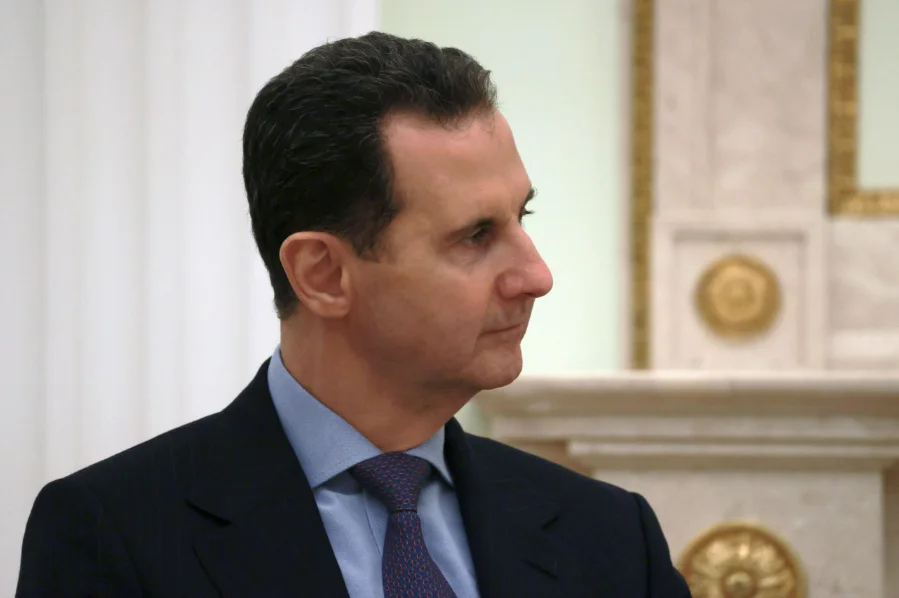
The man who ruled Syria for 24 years was absent when a Damascus judge announced the most severe punishment available under Syrian law.
On 11 August, the Fourth Criminal Court in Damascus sentenced Bashar al-Assad to death following a trial that examined killings, torture and arrests connected to the violent suppression of opposition that began in 2011. The official announcement described the ruling as a conviction for premeditated murder, arbitrary detention and crimes against humanity.
It is the first criminal judgment issued against Assad inside Syria since opposition forces removed him from power in December 2024. His overthrow ended more than five decades of Assad-family rule, beginning with his father, Hafez al-Assad, and continuing after Bashar inherited the presidency in 2000.
The court also handed death sentences to Assad’s brother Maher, the former commander of the Fourth Armoured Division, and Atef Najib, a former security official and Assad relative. Maher was tried in absentia, while Najib—who has been held in Syria since 2025—was physically present for the verdict.
Najib’s role carries particular significance because he led political-security operations in Deraa, where the arrest and alleged torture of schoolboys helped ignite nationwide demonstrations in 2011. The government’s response transformed peaceful demands for change into an armed conflict that devastated cities, displaced millions and killed hundreds of thousands.
Crowds gathered outside the Damascus courthouse after the judgment. Celebrations were also reported in Deraa, where families carried photographs of relatives who disappeared or were killed during the conflict. For many survivors, the sentence represented the first time a Syrian court had formally placed responsibility at the highest level of the former government.
However, the ruling remains largely symbolic. Assad fled Damascus as opposition forces advanced and was granted asylum in Russia. Moscow has shown no indication that it intends to surrender him to the new Syrian authorities.
The death penalty may make extradition even more difficult. Countries frequently refuse to transfer suspects when they could face execution. Syrian legal advocates have therefore warned that the punishment could close one of the few possible routes for bringing Assad into a courtroom where he would be present and able to answer the accusations directly. These concerns were included in same-day case reporting.
The trial also places Syria’s new leadership under examination. Transitional justice requires more than punishing former rulers; it demands independent judges, credible evidence, proper legal representation and fair opportunities to appeal. Without those protections, a historic prosecution could be dismissed by critics as political revenge conducted by the war’s victorious side.
Assad has previously denied responsibility for atrocities attributed to his government, describing armed opponents as terrorists and claiming foreign powers engineered the uprising. International investigators and foreign courts have nevertheless pursued numerous cases involving torture, chemical attacks, disappearances and attacks on civilians. Assad also faces a separate French arrest warrant connected to the 2012 bombing of a press centre in Homs.
The Damascus judgment therefore creates two different realities. Inside Syria, it is a public declaration that the former president is no longer beyond the reach of the law. Outside the country, Assad remains physically protected and far from the sentence imposed upon him.
For Syria, the larger challenge begins after the celebrations: transforming a dramatic verdict into a justice system that victims can trust and future governments cannot manipulate.