PANAMA CITY, PANAMA — 12 August 2026
A new political and military partnership is taking shape across the Americas—and Colombia has just become one of its most important members.
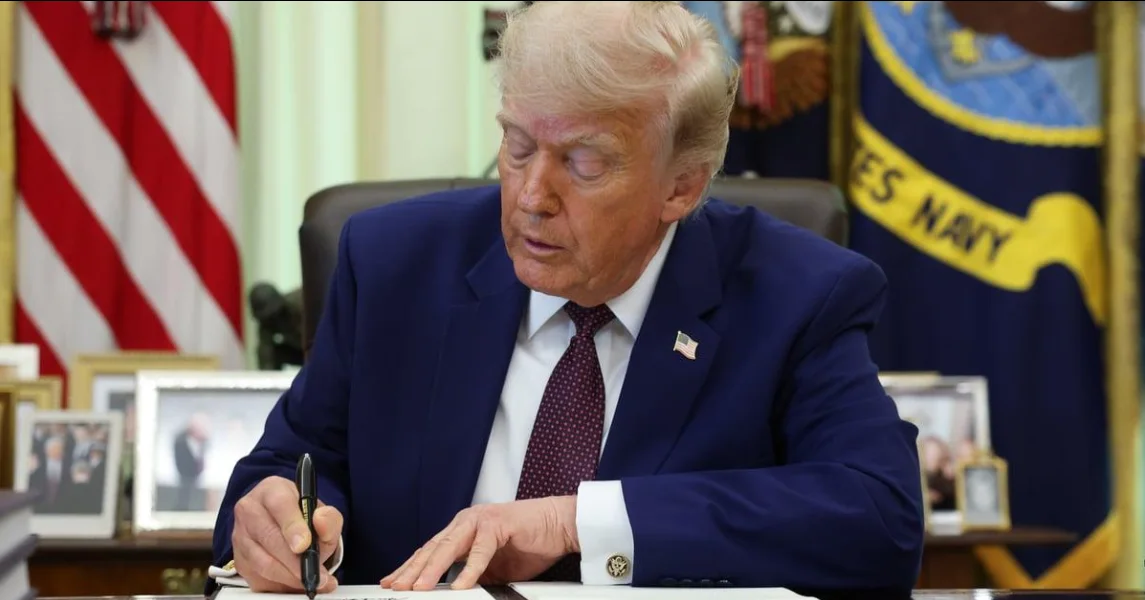
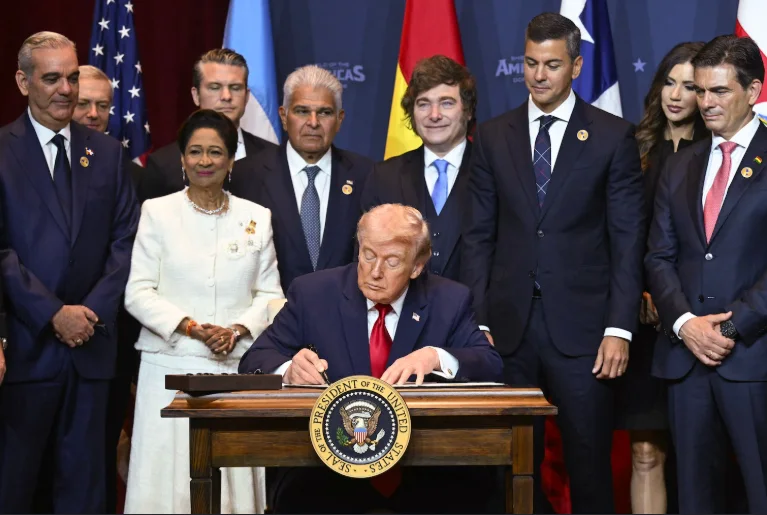
US Defense Secretary Pete Hegseth formally welcomed Colombia into the Americas Counter-Cartel Coalition during a regional security forum in Panama City on Wednesday. The announcement signals a dramatic reset in relations between Washington and Bogotá following Colombia’s recent political shift to the right.
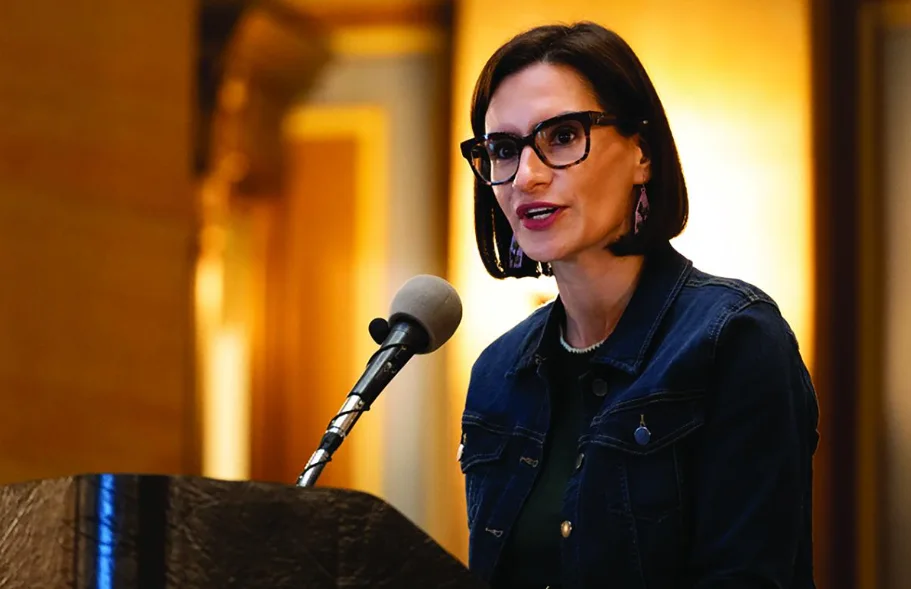
Colombia’s new defence minister, retired Major General Jorge Eduardo Mora, met Hegseth during the gathering. Ahead of their talks, the US official announced that Colombia had authorised joint military operations targeting terrorist groups and criminal networks.
The exact locations, participating forces and timetable for those operations were not immediately disclosed. However, Colombia’s admission gives the coalition access to a military with decades of experience confronting drug traffickers, guerrilla organisations and armed groups operating in difficult terrain.
The US Department of Defense confirmed that Hegseth travelled to Panama on 12 August to address the coalition forum, meet President José Raúl Mulino and hold bilateral discussions with Colombian officials. US Department of Defense
Colombia changes direction
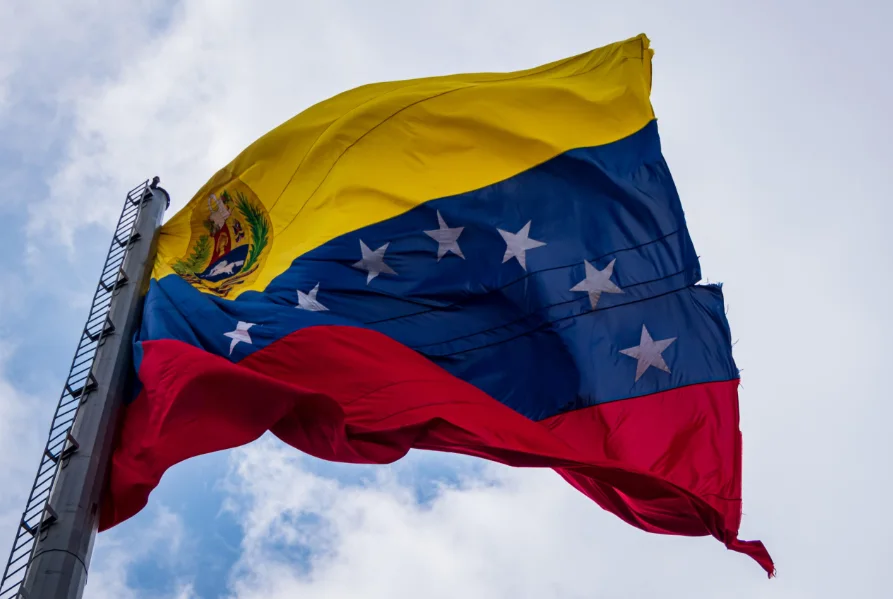
The announcement follows the inauguration of conservative President Abelardo De La Espriella, who has promised a tougher campaign against narcotics production and armed organisations.
His government represents a sharp departure from former President Gustavo Petro’s strategy, which placed greater emphasis on negotiations and what became known as “total peace.” De La Espriella has blamed that approach for allowing armed groups to expand their territorial influence.
The new administration has promised to eradicate illegal crops, strengthen the armed forces and rebuild security cooperation with the United States.
Washington has quickly embraced the change. The Trump administration recently announced plans to provide Colombia with $1 billion in security assistance, supporting operations against drug-trafficking organisations and armed groups.
Colombia also plans to participate in the broader Shield of the Americas programme, another Trump-backed regional initiative focusing on security, migration, trade and political cooperation.
From police operations to military action
The Americas Counter-Cartel Coalition was established earlier in 2026. Colombia’s entry on 12 August substantially increases its operational weight.
For decades, international counternarcotics efforts relied heavily on police investigations, intelligence sharing, extraditions and financial sanctions. The new coalition reflects a more militarised approach.
Hegseth compared major drug-trafficking organisations with international terrorist groups, arguing that their ability to control territory, move weapons and destabilise governments requires a coordinated military response.
That position may create controversy. Human-rights organisations have questioned whether military strikes against suspected traffickers provide sufficient legal protections and accountability. Some critics argue that treating criminals as wartime enemies could weaken judicial oversight and increase the danger to civilians.
Coalition supporters respond that criminal networks already behave like armed forces. They control smuggling routes, possess military-grade weapons, recruit fighters and operate across national borders.
Panamanian President José Raúl Mulino defended the partnership during Wednesday’s meeting, describing organised drug trafficking as the greater threat to national sovereignty. Reuters
Washington revives an old doctrine
During his Panama speech, Hegseth presented the coalition as part of a renewed US strategy for the Western Hemisphere.
He referred to the approach as the “Donroe Doctrine”—a Trump-era reinterpretation of the Monroe Doctrine, the 19th-century policy asserting that outside powers should not interfere in the Americas.
The modern version combines military pressure on cartels with efforts to limit the regional influence of countries such as China.
Panama occupies a central position in that strategy because its canal handles approximately 5% of global maritime trade. Control of ports and infrastructure surrounding the waterway has become an important source of competition between Washington and Beijing.
Colombia’s participation extends the strategy deeper into South America. Its location connects Central America, the Caribbean, the Pacific and the Amazon region, while its long coastline and mountainous borders make it central to both legal commerce and illegal trafficking routes.
A regional political shift
The partnership also reflects a wider rightward movement in Latin American politics.
Crime, weak economic growth and public dissatisfaction have helped conservative candidates gain influence in Argentina, Bolivia, Chile, Ecuador, Panama, Peru and now Colombia. Many have campaigned on promises of stronger borders, expanded policing and tougher action against organised crime.
Their rise has created an opportunity for Washington to build a bloc of governments broadly aligned with President Donald Trump’s security priorities.
However, the alliance could deepen political divisions across the region. Governments outside the coalition may view it as an attempt to restore US dominance, while domestic opposition groups could challenge the presence of foreign forces or intelligence personnel.
What comes next
Colombia and the United States must now determine what “joint military operations” will mean in practice.
Possible activities could include coordinated patrols, intelligence exchanges, military training, surveillance missions and operations against identified criminal infrastructure. Any cross-border action would require careful legal and diplomatic coordination.
Success will depend on more than battlefield results. Coca cultivation and trafficking are also connected to poverty, corruption, weak institutions and limited economic opportunities in rural communities.
Colombia’s entry into the coalition gives Washington a powerful new partner. It also places President De La Espriella’s government at the centre of one of the region’s most ambitious—and potentially controversial—security experiments.
The political message from Panama is unmistakable: Latin America’s campaign against organised crime is entering a more militarised era, and Colombia intends to be on its front line.