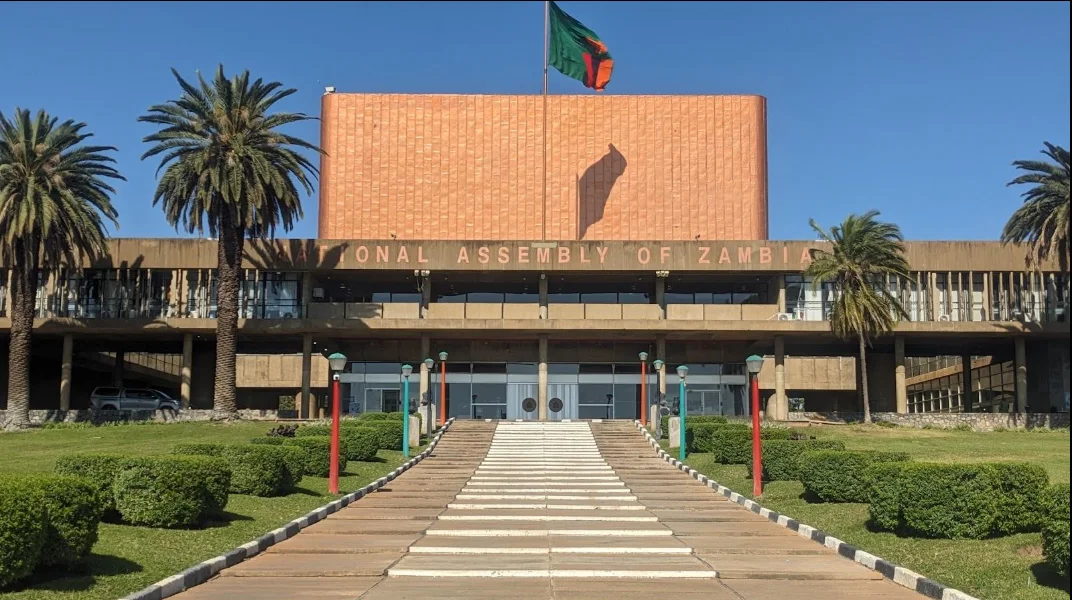
Before daylight reached Lusaka, voters were already gathering outside polling stations.
Some arrived wearing heavy jackets against the August cold, while others waited beside small fires for election officials to begin one of Zambia’s most consequential political exercises in years. By evening, ballot boxes had closed and counting was underway across the country.
The election is widely regarded as a national judgement on President Hakainde Hichilema’s first term. He entered office in 2021 promising economic recovery, stronger institutions and a more attractive environment for investment. Five years later, voters were being asked whether the progress recorded in national economic figures had reached their households.
The Electoral Commission of Zambia’s final voter register lists 8,786,300 registered voters. Citizens were electing a president and vice-president, members of the National Assembly, mayors or council chairpersons, and local councillors during the same national vote.
Hichilema faced 13 other presidential candidates, with opposition alliance leader Brian Mundubile considered his strongest challenger.
The president based his campaign on continuity. His government completed a lengthy restructuring of Zambia’s foreign debt, restored relationships with international lenders and attracted new investment into mining and infrastructure. Supporters argue that these measures rescued the country from a dangerous financial position and created the foundation for longer-term growth.
However, economic recovery reported in government documents has not always matched daily experience.
Many households continue to face expensive food, limited employment opportunities and unreliable electricity. Small businesses have struggled with operating costs, while farmers remain concerned about financing, access to markets and unpredictable weather. These pressures gave Mundubile a powerful campaign message centred on lowering living costs, strengthening agriculture and expanding economic opportunity.
The opposition also accused Hichilema’s administration of weakening democratic freedoms and using state institutions against critics. The government rejected those allegations and maintained that law-enforcement actions were based on public order and legal accountability rather than political persecution.
This tension made the election larger than a competition between individual candidates. It became a choice between patience with an unfinished economic programme and a demand for faster, more visible change.
A presidential candidate must receive more than half of the valid votes to win without a runoff. With 14 candidates dividing the ballot, the possibility of a second round could not be dismissed as counting began.
Zambia’s election was also being watched beyond its borders because of the country’s copper reserves. Copper is increasingly important to electric vehicles, renewable-energy systems and modern power networks. China already has extensive investment in Zambia’s mining industry, while the United States and other Western governments are seeking stronger access to critical-mineral supply chains.
The next administration will therefore make decisions affecting not only local employment and taxation but also the wider international competition for the minerals powering the global energy transition.
Zambia’s democratic reputation adds further importance. Since multiparty politics returned in 1991, the country has experienced several peaceful transfers of power between governing and opposition parties. Hichilema’s own 2021 victory demonstrated that an incumbent administration could be removed through the ballot box.
Maintaining that record will depend on transparent counting, responsible political leadership and public confidence in the official results. Police warned against violence and the circulation of fabricated results, while observers monitored voting procedures and reported delays at some locations.
The Electoral Commission of Zambia remains the authorised source of official results. Figures circulating through political pages or social media before verification should therefore be treated cautiously.
On 13 August, Zambia did more than select officeholders. Its citizens delivered a verdict on whether economic repair is enough when household pressure remains severe and whether promises of future prosperity can survive the realities of today’s kitchen table.