Artificial intelligence is about to face one of its most detailed government examinations after South Australia announced a Royal Commission dedicated to understanding the technology’s opportunities, dangers and long-term social consequences.
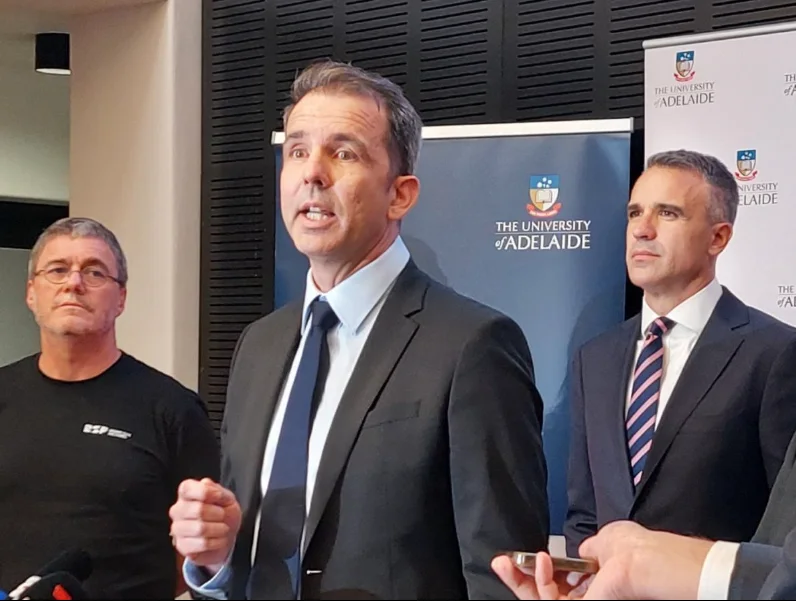
Premier Peter Malinauskas unveiled the A$3 million inquiry on Monday, describing AI’s expansion as a transformation comparable in scale to the Industrial Revolution. The government believes that waiting until the technology is fully embedded in society could make its most harmful effects considerably harder to control.
The commission is expected to commence in October 2026 and will be guided by three international experts. Its work will examine how AI is changing workplaces, classrooms, hospitals, government departments, artistic production and commercial activity. A final report containing policy recommendations is scheduled for 1 July 2027.
Employment is likely to become one of the inquiry’s central subjects. AI systems can increase productivity by completing administrative and analytical tasks quickly, but they may also replace certain roles, change the skills employers demand and concentrate economic power among companies controlling advanced models and computing infrastructure.
Education will present another difficult challenge. Students can use generative systems for research and personalized learning, yet the same tools can complete essays and assessments with little evidence of the student’s own understanding. The commission will consider how institutions can benefit from AI without weakening academic integrity.
Healthcare, privacy, misinformation, copyright and discrimination in automated decision-making are also expected to receive attention. These issues have become increasingly urgent as AI moves from experimental chatbots into recruitment, finance, policing and essential public services.
South Australia already operates the country’s first state-level Office for Artificial Intelligence and supports research in responsible AI. The new inquiry could extend that work by creating recommendations that influence policy beyond the state and potentially across Australia. The Office for AI describes the state’s existing responsible-adoption programme, while details released on 10 August indicate the commission will begin in October and report by July 2027.
The commission will not attempt to stop AI development. Its greater challenge will be finding a balance in which innovation continues, businesses remain competitive and citizens retain meaningful protection when algorithms affect their opportunities, privacy and everyday lives.