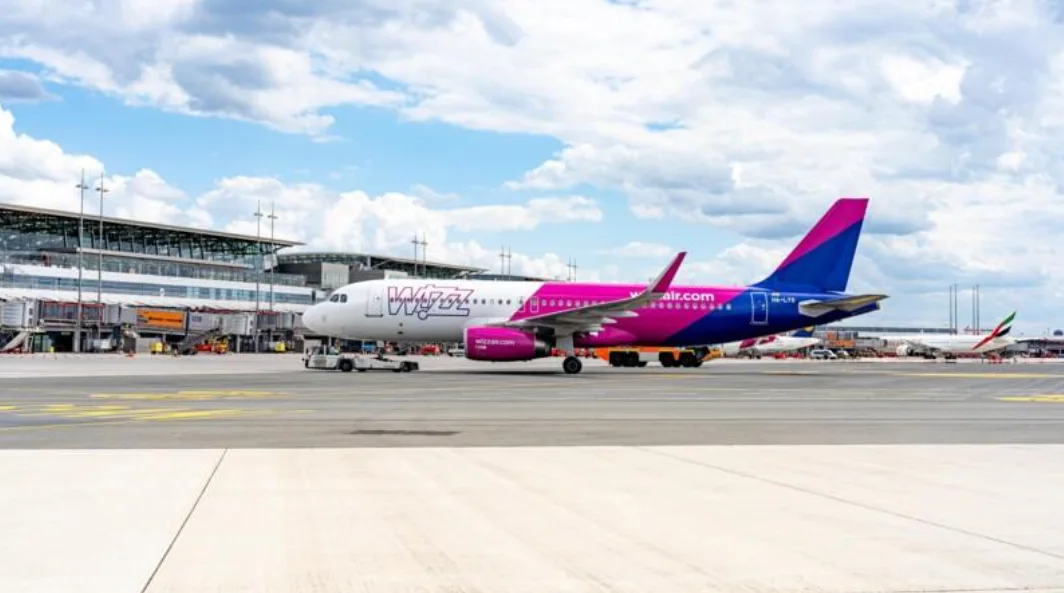
Europe’s low-cost aviation industry has received another warning about the financial consequences of rising fuel prices after Wizz Air disclosed a quarterly net loss of approximately €198 million.
The result represents a dramatic reversal from the €38.4 million profit recorded during the corresponding quarter a year earlier. Its operating loss widened to €183.3 million, marking the airline’s third consecutive quarter of losses.
Wizz Air’s financial difficulties did not result from a shortage of passengers. The airline carried around 25% more travellers during the April-to-June period, while quarterly revenue increased by approximately 5.5% to €1.5 billion.
The central problem was that operating costs grew much faster than income. Jet-fuel prices rose sharply following conflict and supply disruption in the Middle East, but Wizz Air was unable to increase fares enough to recover the additional expense.
Budget airlines face a particularly difficult pricing challenge because many of their customers select flights primarily according to cost. Raising ticket prices too aggressively can quickly push passengers towards competing airlines or cause them to postpone non-essential journeys.
At the same time, Wizz Air increased the number of seats available across its network. This expansion placed downward pressure on the amount of revenue generated for every seat flown, even as aircraft carried more passengers overall.
Management remains committed to increasing capacity and introducing additional Airbus aircraft. The company is concentrating more heavily on European routes while limiting some medium-distance services connected to the Middle East.
This strategy is significantly different from the approach taken by several full-service European airlines, which are reducing or freezing capacity to defend profitability during the fuel crisis. Wizz Air is instead attempting to capture a larger share of the market while competitors operate more cautiously.
The carrier has hedged approximately 76% of its expected annual fuel requirements, providing some protection against sudden price changes. However, hedging cannot completely remove the effect of sustained increases in fuel and operational expenses.
Wizz Air expects revenue generated per available seat kilometre to remain slightly below the previous year’s level during the current quarter. It has not provided detailed financial guidance beyond that period because fuel prices, regional conflict and consumer demand remain difficult to predict.
The results show that passenger growth alone does not guarantee profitability. An airline can fill more seats and collect more revenue while still losing money if the cost of operating each flight rises faster than the income it produces.