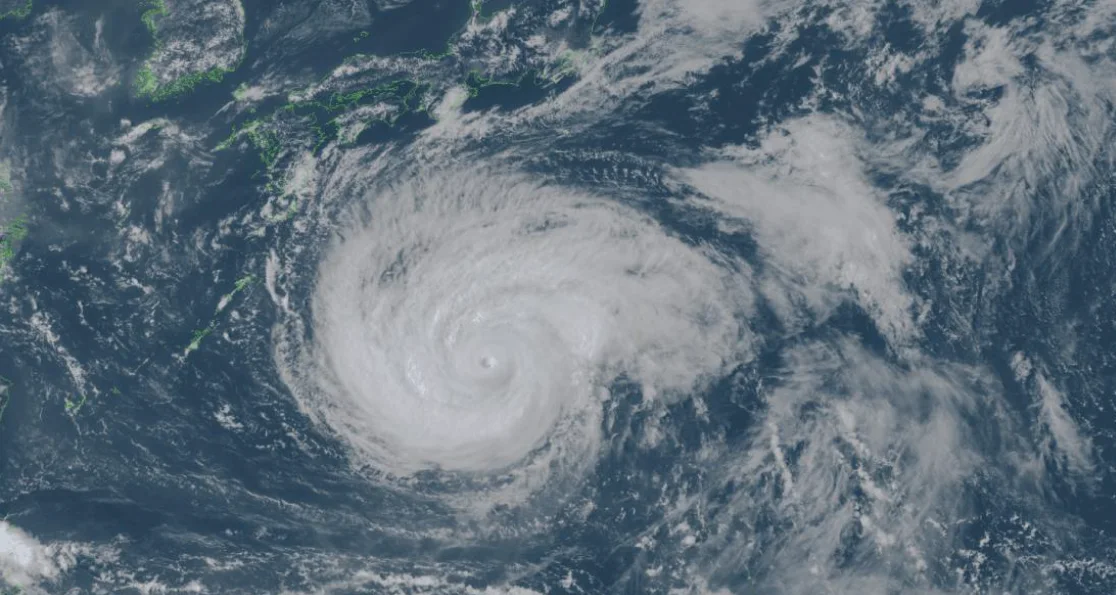
Typhoon Dolphin tore across Japan’s southern islands on Saturday with violent winds, heavy rain and dangerous seas, leaving communities without electricity and disrupting travel across the region.
The storm struck Okinawa with sustained winds of approximately 162 kilometres per hour and gusts reaching 216 kilometres per hour. At least six people were reported injured as powerful winds damaged buildings and made outdoor movement extremely dangerous.
More than 50,000 buildings in Okinawa experienced power outages during the storm. In neighbouring Kagoshima Prefecture, electricity supplies were disrupted at nearly 39,000 additional properties.
Air travel was severely affected. Major airlines cancelled domestic services, while passengers faced delays and uncertainty as airport authorities monitored wind conditions. Ferry operations and other marine transport were also disrupted by high waves.
The typhoon created an additional crisis for communities in southwestern Japan still recovering from the powerful earthquake that struck the region in late July. Some families had covered damaged roofs and walls with temporary sheets, leaving their homes especially vulnerable to heavy rain and strong winds.
After passing Okinawa and the Amami Islands, Dolphin began moving towards China’s eastern coastline. Chinese authorities raised their emergency response to Level III and classified the storm under an orange typhoon warning.
Landfall is expected along the coastline between Zhejiang and Fujian provinces. Forecasts indicate that some areas could receive between 200 and 400 millimetres of rain, creating a serious risk of flash floods, landslides and overflowing rivers.
China has closed port operations in parts of Zhejiang, suspended water-based tourism and ordered vessels to return to shelter. Approximately 800 ships were reportedly secured at Ningbo as officials prepared for the storm’s arrival.
Ningbo Lishe International Airport and other transport services faced suspensions, while schools and tourist locations were ordered to close. Coastal waves could reach eight metres, posing a potentially deadly threat to ships and low-lying communities.
Taiwan also cancelled dozens of flights as Dolphin passed north of the island. The storm created a political dispute after Beijing attempted to issue shipping-control instructions for the Taiwan Strait, which Taiwanese authorities rejected.
Although Dolphin weakened from its earlier peak strength, forecasters warned that it remained a large and very powerful typhoon. A weakening wind speed does not eliminate the danger because prolonged rainfall can continue causing floods and landslides long after the storm’s centre has passed.
The full scale of the damage in Japan is still being assessed, while millions of people in eastern China are now preparing for the typhoon’s next impact.