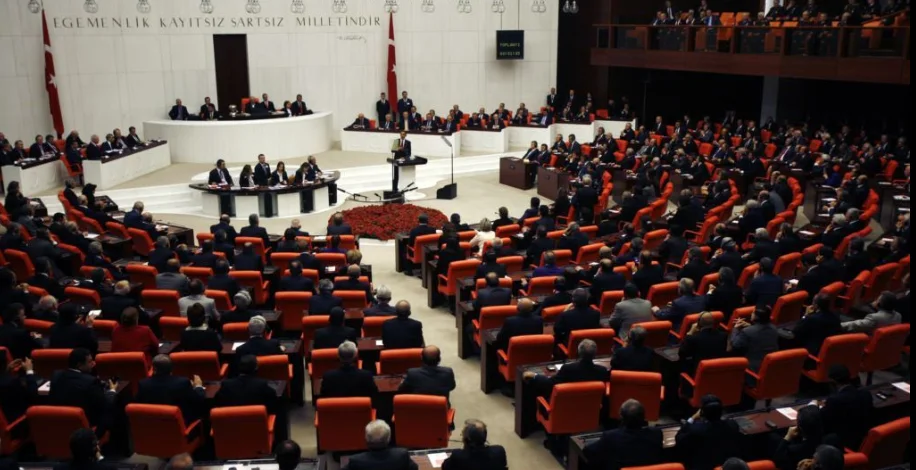
A parliamentary vote in Ankara has opened a narrow but potentially transformative road away from one of the Middle East’s longest-running conflicts. Turkish lawmakers overwhelmingly approved a 12-article framework designed to move thousands of PKK members out of armed activity and into civilian life.
The legislation is not an immediate or unrestricted amnesty. Before anyone can benefit, Turkey’s National Security Council must confirm that the PKK has dissolved its organisation and surrendered its entire weapons stockpile. Government and parliamentary committees will then supervise the disarmament and reintegration process.
Under the new framework, certain prison sentences could be suspended, while eligible investigations and trials may be placed on hold for five or ten years. If an applicant commits no terrorism-related offence during that period, the case could eventually be closed. Eligible individuals will have six months to apply once the disarmament decision appears in Turkey’s official gazette.
The law draws firm boundaries around serious violence. People convicted of intentional killings and those serving life sentences imposed before 2005 are excluded. That restriction applies to imprisoned PKK leader Abdullah Öcalan and several senior figures, meaning the legislation does not provide a path for Öcalan’s release.
The PKK began its insurgency in 1984. Fighting between the organisation and Turkish security forces subsequently spread across borders into Iraq and Syria, destroying communities, displacing families and taking more than 40,000 lives. Turkey, the United States and the European Union classify the PKK as a terrorist organisation. The conflict’s history and estimated death toll were documented during the bill’s introduction.
The organisation has described the law as an opening rather than a complete solution. Its objections include the absence of broader Kurdish-rights protections, democratic reforms and provisions concerning Öcalan. These unresolved demands could determine whether fighters actually surrender their remaining weapons.
The consequences may stretch far beyond Turkey. Successful disarmament could improve Ankara’s relationship with Iraq and influence negotiations surrounding Kurdish led forces in Syria. Failure, however, could revive violence across the same borders.
Turkey’s previous major peace process collapsed in 2015, making caution essential. The parliamentary vote is therefore not proof that the war is over it is a legal doorway. Whether anyone walks through it will depend on verified disarmament, political trust and the willingness of former enemies to protect a fragile opportunity for peace. Details of the 10 August vote and its conditions were confirmed in the breaking report.