What appeared to be an ordinary Vienna-based business was allegedly operating as the entrance to a hidden industrial supply chain stretching across Europe, Asia and the Middle East.
Austria’s Interior Ministry announced that the unnamed company had been exporting specialised metalworking equipment despite European Union restrictions on technology that could strengthen Russia’s military capabilities. Investigators allege that fraudulent end-user certificates were created to hide the machinery’s true destination.
The equipment included computer numerical control, or CNC, machines and other precision tools capable of manufacturing highly accurate metal components. Such machines have legitimate civilian uses, but they can also produce vital parts for aircraft engines, missiles and air-defence systems.
According to investigators, the shipments were concealed behind shell companies located in Turkey, the United Arab Emirates, Hong Kong, Belarus, Kyrgyzstan, South Korea, Poland and Lithuania. Each transfer allegedly added another layer between the original exporter and the final customer, making the route more difficult for customs officials and financial investigators to trace.
Evidence recovered during four raids reportedly indicates that industrial goods valued at more than €3.3 million had reached Russian arms manufacturers since 2022. Austrian authorities believe the eventual recipients included businesses affiliated with Rostec, Russia’s state-owned industrial and defence conglomerate.
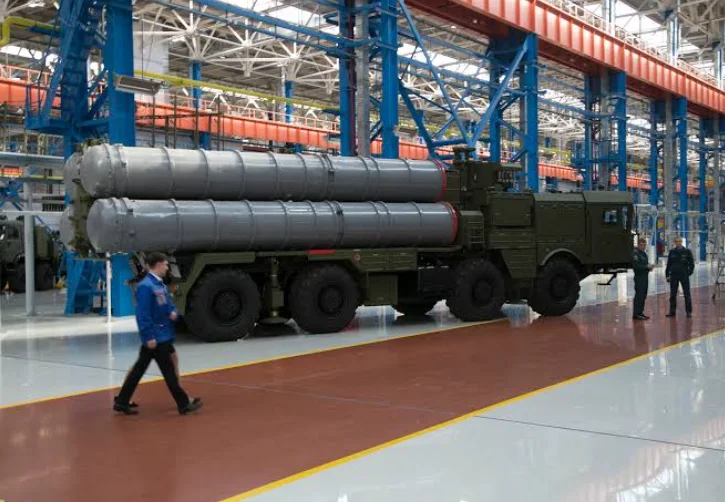
Investigators say the machinery was used to manufacture military equipment, including engines for cruise missiles and fighter jets. If confirmed in court, the case would demonstrate how seemingly ordinary factory equipment can travel through international commercial networks before becoming part of a weapons-production system.
The company’s 28-year-old Belarusian director was arrested in May and remains in custody while the investigation continues. Authorities also seized CNC machinery and specialised tools valued at approximately €140,000. Neither the suspect nor the Vienna company has been publicly identified, and the allegations have not yet been tested at trial.
Russia’s embassy in Vienna declined to comment when approached about the findings, while Rostec had