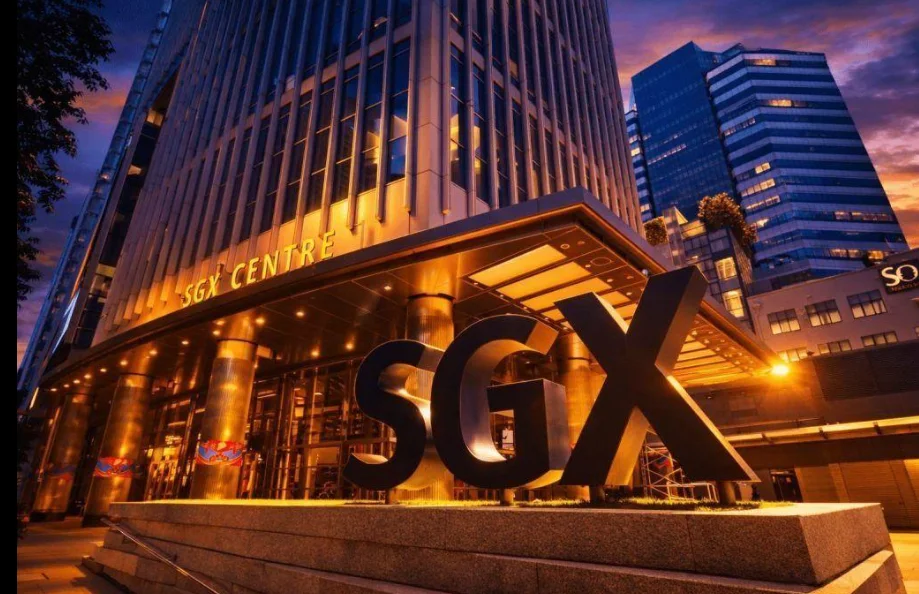
Singapore’s effort to strengthen its position as a global financial centre has delivered a record year for the company operating the country’s securities and derivatives markets.
Singapore Exchange, commonly known as SGX, recorded adjusted net profit of S$759.5 million—approximately US$593 million—for the financial year ending in June. This represents an increase of 24.6% from S$609.5 million a year earlier.
Net revenue rose by 13.9% to an all-time high of approximately S$1.48 billion. Growth was recorded across stocks, currencies, commodities, bonds, market data and technology services.
Cash-equities operations delivered the largest increase. Revenue from this division climbed by 28.1% to S$502.9 million as investors traded more shares and Singapore attracted additional company listings.
Twenty-one businesses listed shares on the exchange during the year, compared with only six in the previous period. Together, the new listings raised approximately S$4.1 billion.
The result suggests that measures introduced by Singapore’s financial authorities to improve market liquidity and encourage public listings are beginning to produce visible changes.
Global uncertainty also contributed to SGX’s performance. Investors searching for relatively stable Asian assets increased their activity in Singapore as currency volatility and geopolitical concerns affected other markets.
Revenue from fixed income, currencies and commodities increased by 17% to S$376.2 million. Foreign-exchange trading volumes reached new highs, while demand for iron-ore and Asian currency derivatives strengthened.
The exchange’s adjusted earnings before interest, taxes, depreciation and amortisation rose by 17.9% to S$980.6 million. Adjusted earnings per share increased from 57 Singapore cents to 71 cents.
Following the record performance, SGX proposed a final quarterly dividend of 11.5 Singapore cents per share. It also announced a one-time additional dividend of 12.5 cents.
If shareholders approve both payments, the total dividend for the financial year will reach 57 Singapore cents per share, compared with 37.5 cents during the previous year.
SGX is not distributing all its additional income to shareholders. The company plans record capital expenditure of approximately S$100 million during the next financial year, with investment directed towards technology, platform modernisation, foreign-exchange services and new gold-market products.
Expenses are expected to increase by between 6% and 8% as SGX hires specialised workers and expands its technical capabilities. This investment will be important as global exchanges compete using speed, market data, cybersecurity and electronic-trading infrastructure.
The results strengthen Singapore’s reputation as a financial gateway connecting global investors with Asian companies, currencies and commodities. Sustaining the momentum will depend on attracting more high-growth businesses and maintaining strong international investor participation.