Rheinmetall has suffered a major setback in its effort to become a leading European naval contractor after Germany abandoned the F126 frigate programme, forcing the company to reduce its annual revenue forecast.
The Düsseldorf-based group now expects 2026 sales of between €13.7 billion and €14.2 billion. Its previous projection ranged from €14 billion to €14.5 billion.
Management estimates that the cancellation will reduce revenue from its newly expanded naval division by approximately €300 million during the current financial year.
The F126 programme was intended to deliver advanced multipurpose frigates to the German navy. However, delays, increasing costs and uncertainty surrounding the project led the government to abandon the existing plan.
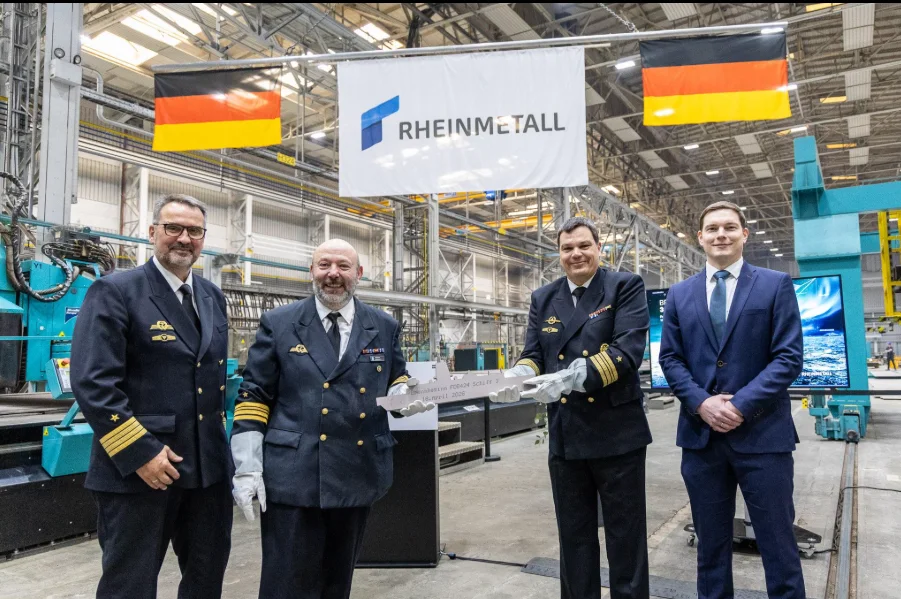
The decision is particularly significant because Rheinmetall has invested heavily in expanding beyond armoured vehicles, ammunition and air-defence systems. Its acquisition of Naval Vessels Lürssen established a new maritime division intended to compete for large shipbuilding contracts.
Despite the naval setback, Rheinmetall reported exceptionally strong financial performance across the rest of its business. First-half sales increased by 39% to approximately €5.23 billion.
Operating profit climbed by 74%, rising from €453 million to €786 million. The company’s operating margin improved from 12.1% to 15%.
Growth accelerated further during the second quarter, when operating profit more than doubled to €562 million. Higher production volumes and a favourable mixture of contracts helped the business generate stronger margins.
Rheinmetall’s order backlog reached approximately €80.5 billion at the end of June, compared with €56 billion a year earlier. Demand remains high as European governments expand military budgets and replace equipment supplied to Ukraine.
The company’s vehicle division is benefiting from orders for Puma and Lynx infantry fighting vehicles, while its weapons and ammunition operation continues expanding production capacity. Air-defence and military digitalisation projects are also contributing to growth.
However, rapid expansion is consuming substantial amounts of cash. Operating free cash flow fell to negative €1.62 billion during the first half, reflecting delayed customer advance payments, rising inventories and continued investment in new factories and production lines.
Rheinmetall maintained its expected operating margin of approximately 19% for the full year, indicating that management believes the cancelled frigate project will reduce sales without fundamentally damaging profitability.
The announcement highlights the risks defence companies face even during a period of rapidly increasing military expenditure. Large government programmes can be extremely valuable, but delays, political decisions and changing procurement priorities can remove expected revenue with little warning.