A helicopter carrying tourists above one of Brazil’s most celebrated landscapes crashed into a densely forested mountainside on Saturday, killing everyone aboard.
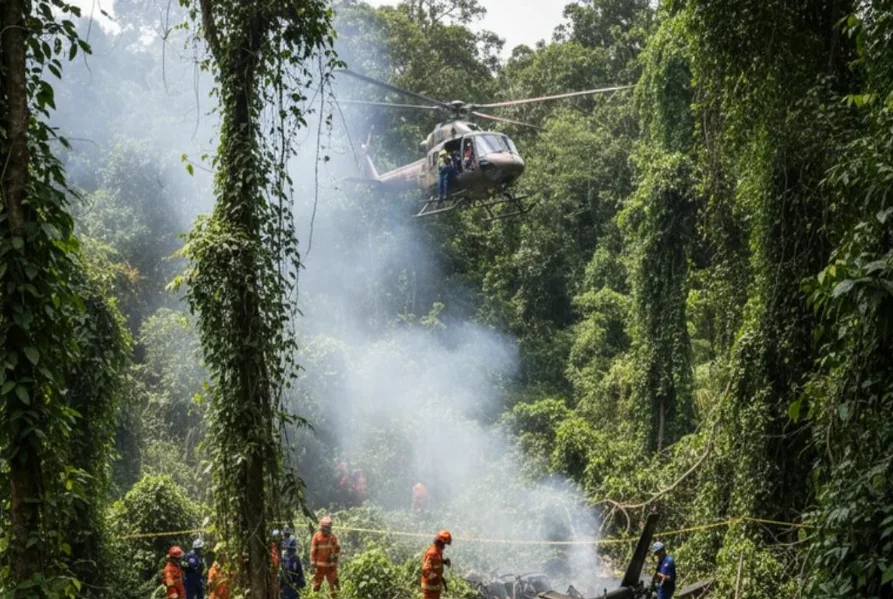
The aircraft went down near Vista Chinesa, a famous viewpoint inside Tijuca National Park overlooking Rio de Janeiro. The difficult terrain and thick vegetation complicated efforts by emergency teams to reach the wreckage.
Firefighters arriving at the scene found the helicopter engulfed in flames on a steep hillside. Authorities confirmed that the pilot and all three passengers had died. The passengers were Colombian women from the same family who had reportedly been taking a sightseeing flight over the city.
The flight was supposed to offer panoramic views of Rio’s mountains, beaches and internationally recognised landmarks. Instead, it ended in one of the city’s protected forests, leaving only burned wreckage among the trees.
Brazilian aviation specialists and forensic investigators are working to identify the circumstances that brought the aircraft down. No official cause had been established in the immediate aftermath, and authorities had not announced whether weather, mechanical failure or human error contributed to the crash.
The tragedy has renewed scrutiny of helicopter tourism in Rio, where aerial tours have become increasingly common. Mayor Eduardo Paes called for aviation regulators to strengthen inspections and suggested that tourist flights could be temporarily suspended while additional safety measures are considered.
The crash is particularly troubling because Rio experienced another deadly helicopter disaster less than two months earlier, when two aircraft collided over the city and killed six people. The two incidents are not known to be connected, but their proximity has intensified questions about flight volumes, regulation and safety standards.
For the victims’ relatives, a joyful family excursion became an irreversible tragedy. For Rio, the accident has transformed a familiar symbol of luxury tourism into an urgent warning about the risks operating above its crowded city and rugged mountains.